
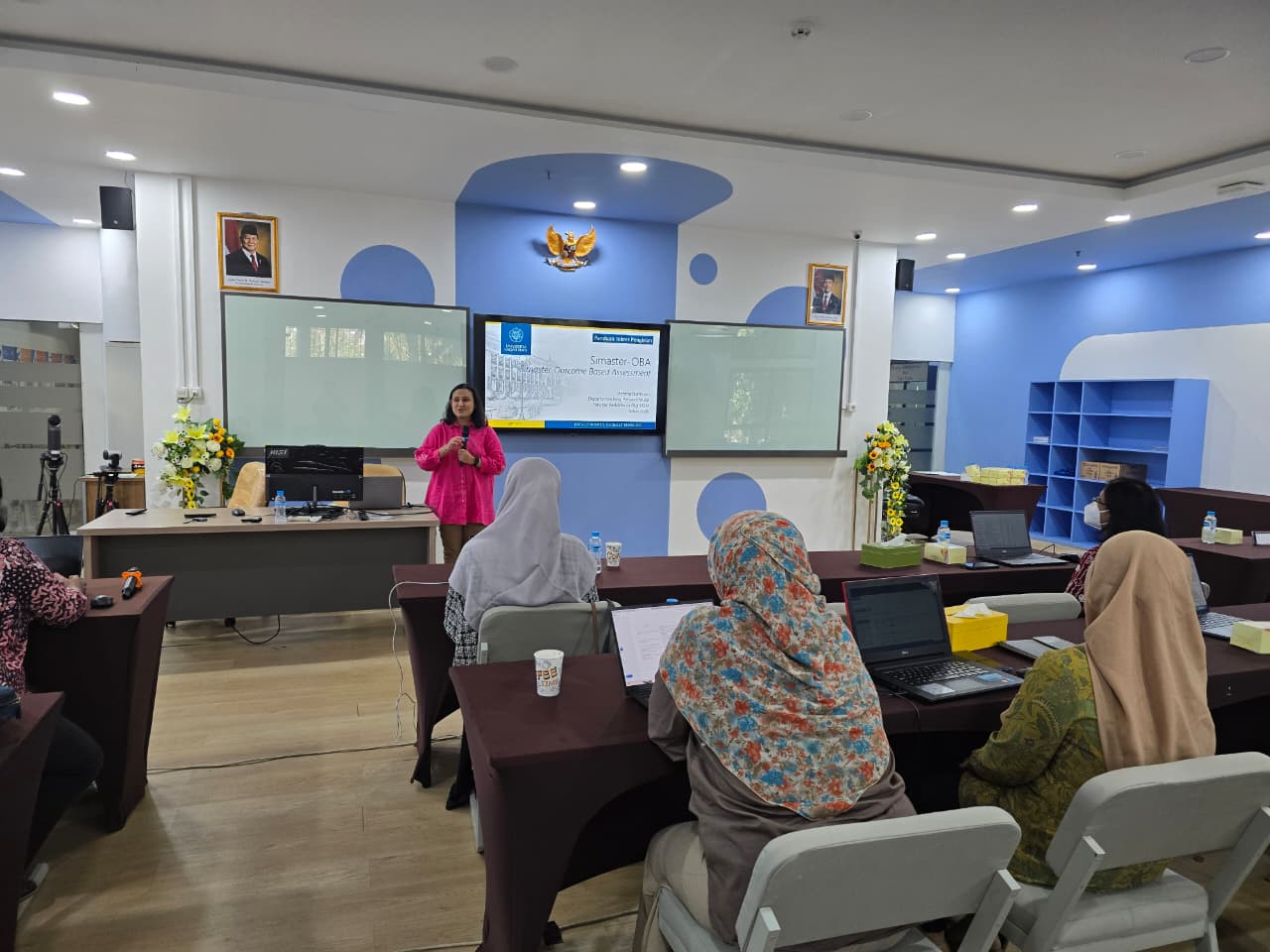
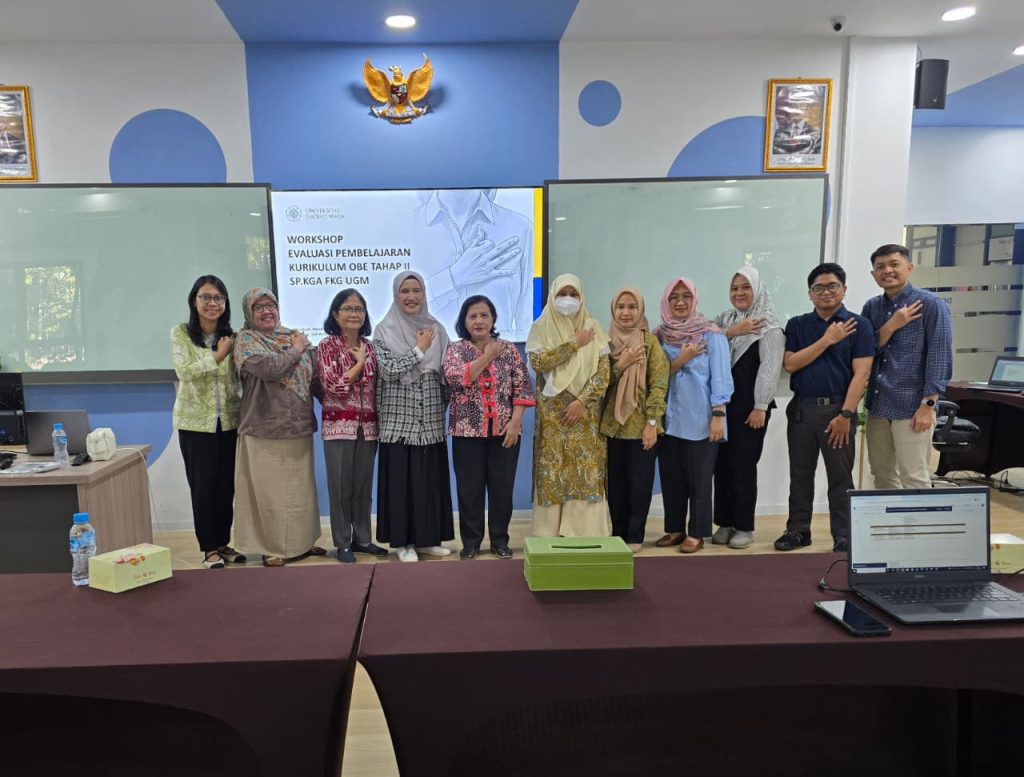
The transformation of specialist dental education is determined not only by sophisticated facilities and technological advances but also by the quality of a curriculum capable of addressing societal needs and developments in scientific knowledge. Driven by this commitment, the Department of Pediatric Dentistry, Faculty of Dentistry, Universitas Gadjah Mada (FKG UGM) held a Phase II Outcome-Based Education (OBE) Curriculum Evaluation Workshop in the New IUP Room on the first floor of the OECF Building, FKG UGM, on 18 July 2026. The workshop was attended by faculty members and representatives of residents from the Pediatric Dentistry Specialist Program as part of ongoing efforts to improve the quality of outcome-based education.
The event continued the curriculum development process that places Outcome-Based Education (OBE) as the primary paradigm for higher education in the health sciences. Unlike conventional learning approaches, which place greater emphasis on content delivery, OBE focuses on measurable graduate competencies. Accordingly, every learning activity, assessment method, and clinical experience is designed to ensure that students achieve professional competencies aligned with the needs of contemporary healthcare services.
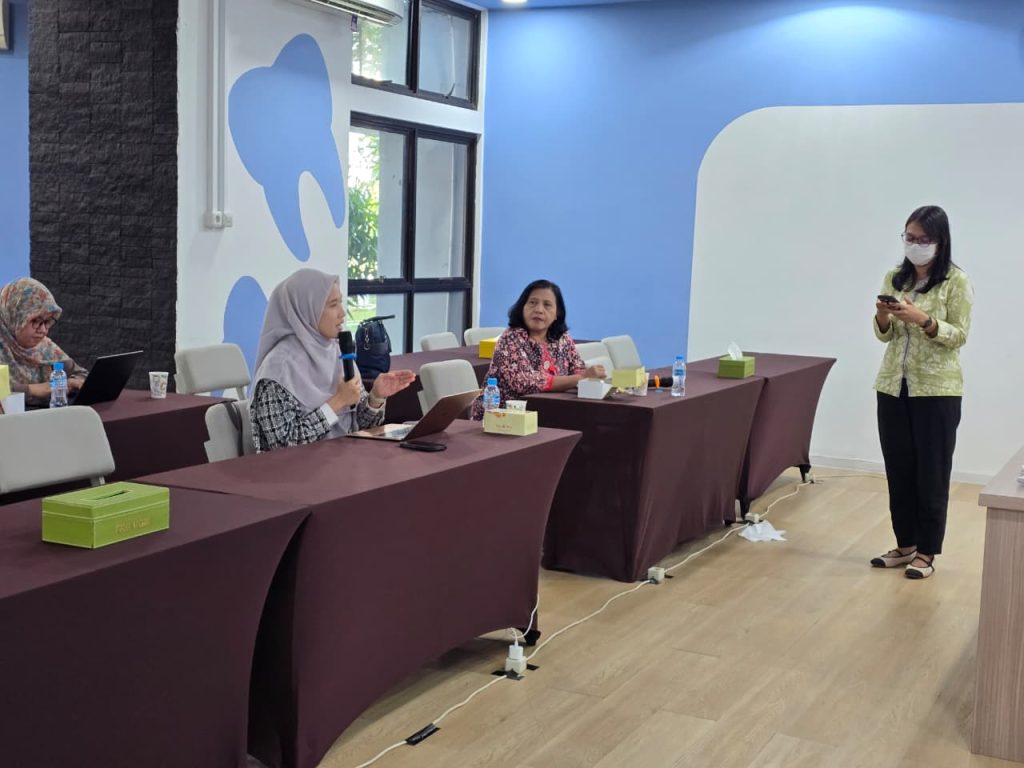
During the workshop, participants actively evaluated curriculum implementation, reviewed the alignment between Graduate Learning Outcomes (Capaian Pembelajaran Lulusan/CPL) and learning strategies, and identified areas requiring improvement. Discussions were conducted collaboratively, emphasizing the principles of Continuous Quality Improvement (CQI)—systematic, ongoing, and evidence-based improvement. This approach represents an important foundation of higher education quality assurance systems, particularly at institutions preparing professional healthcare practitioners.
From an analytical perspective, OBE curriculum evaluation is not merely intended to fulfill accreditation standards. It is also a strategic instrument for addressing rapidly evolving challenges in healthcare. Changes in patterns of pediatric disease, advances in digital dental technology, the growing practice of evidence-based dentistry, and increasing demands for patient-centered care require educational institutions to continuously adapt their curricula.
Through comprehensive academic reflection, workshop participants examined the effectiveness of learning methods, the relevance of competency assessments, the integration of clinical experiences, and the relationship between educational processes and real-world needs. This approach demonstrates that a curriculum is not simply an administrative document but a dynamic instrument that must be continuously updated to produce graduates who can respond to developments in scientific knowledge and societal needs.
Furthermore, OBE encourages a paradigm shift among lecturers—from simply delivering content to becoming learning facilitators focused on competency achievement. At the same time, students are encouraged to become active learners capable of developing critical thinking, clinical problem-solving, professional communication, interprofessional collaboration, and lifelong learning skills. These competencies are essential for pediatric dentists in navigating the complexity of modern healthcare.
The workshop also demonstrated the commitment of the Department of Pediatric Dentistry, FKG UGM, to developing a collaborative academic culture. The involvement of both faculty members and resident representatives reflects the importance of engaging all stakeholders in the curriculum improvement process. Through constructive dialogue, various experiences in implementing learning activities could be identified more objectively, ensuring that the resulting recommendations have a strong empirical foundation.
More broadly, the activity demonstrates that improving educational quality does not end with curriculum development. Educational quality is built through a culture of continuous evaluation, openness to change, and a commitment among all members of the academic community to keep learning and innovating. In the context of specialist dental education, these efforts have an even broader impact because they ultimately contribute to improving the quality of healthcare services for Indonesian children.
Through the implementation of the Phase II OBE Curriculum Evaluation Workshop, the Pediatric Dentistry Specialist Program at FKG UGM reaffirmed its commitment to producing pediatric dental specialists who are competent, professional, adaptable, ethical, and prepared to address the challenges of healthcare delivery in an era of higher education transformation. Scientific, systematic, and quality-oriented curriculum evaluation is expected to provide a strong foundation for producing graduates who are not only academically excellent but also capable of delivering the highest quality healthcare services to the community.
Contributor: drg. Fitta | Editor: Andri Wicaksono