
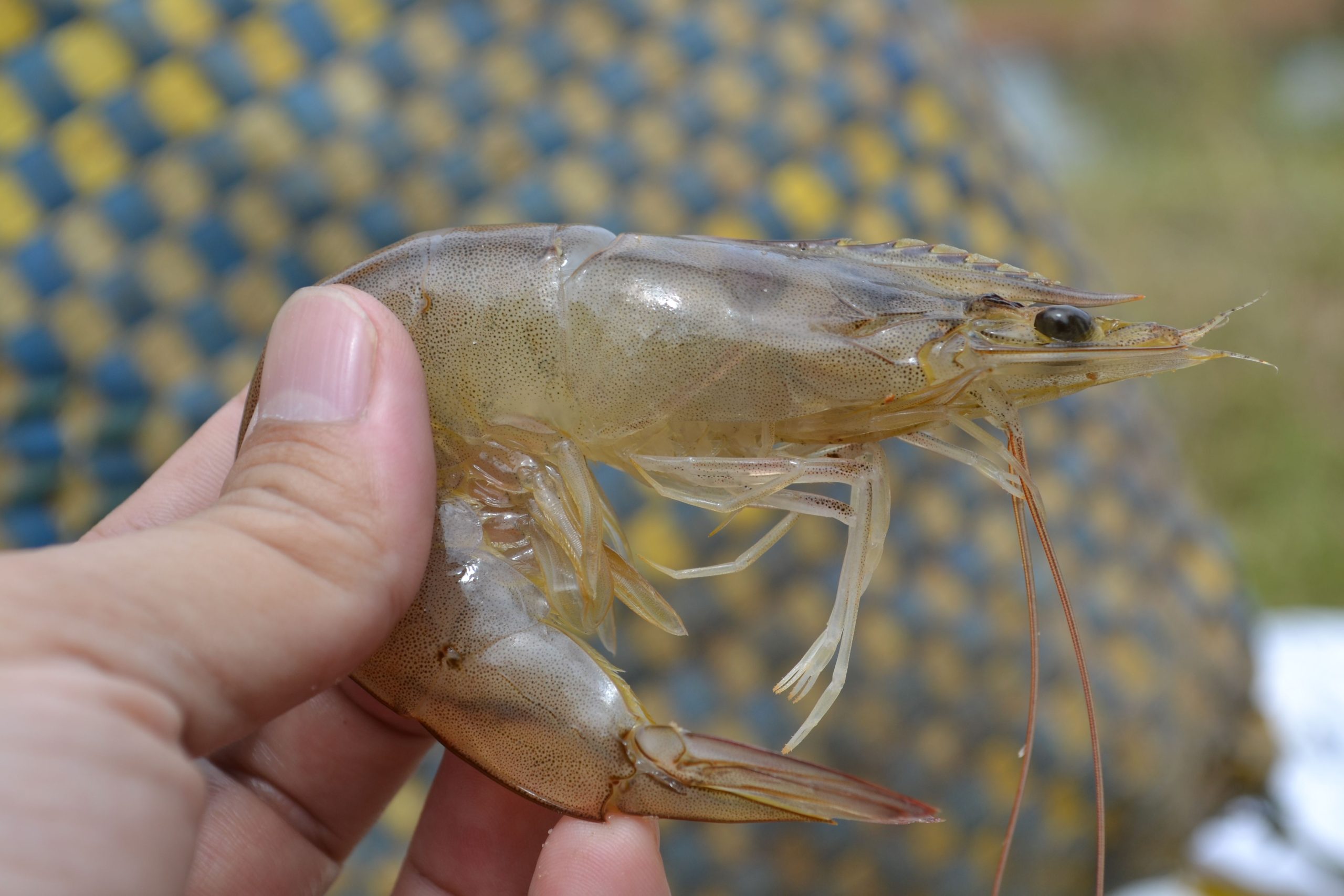
Giant river prawns have long been more familiar on the dining table than in the laboratory. However, at the Department of Oral Biology, Faculty of Dentistry, Universitas Gadjah Mada, the shells of these freshwater animals have become a promising research material — processed into nanochitosan to combat bacterial biofilms responsible for caries and periodontal disease.
This is the essence of findings published by Prof. drg. Tetiana Haniastuti, M.Kes., Ph.D., together with a team of FKG UGM researchers in the International Journal of Dentistry in 2023. The results were striking: nanochitosan derived from giant river prawn (Macrobrachium rosenbergii) shells inhibited the formation of Streptococcus mutans and Streptococcus sanguinis biofilms by 98.92% at the highest concentration — exceeding the effectiveness of the positive control containing 0.2% chlorhexidine, an oral antiseptic that has long been regarded as the gold standard.
An Invisible Enemy in the Mouth
Dental plaque is more than simply dirt that accumulates on the teeth. Scientifically, it is a biofilm — a structured community of bacteria attached to the tooth surface and protected by an extracellular polymeric matrix. This protection makes bacteria within biofilms considerably more resistant to antibiotics than free-living (planktonic) bacteria.
Streptococcus mutans is a major actor in dental caries: it can produce acid, survive in acidic environments, and synthesize extracellular polysaccharides such as glucans that strengthen the structure of the biofilm. Meanwhile, S. sanguinis — initially considered harmless — is now known to contribute to the development of caries and has even been associated with infective endocarditis. The two species interact with and influence one another within the complex ecosystem of the oral biofilm.
Moreover, poorly managed biofilms do not only damage the teeth. Periodontitis caused by plaque accumulation has been closely associated with systemic diseases such as diabetes and cardiovascular disease through inflammatory pathways involving mediators such as hs-CRP, nitric oxide, and miRNA regulation.
From the Fish Market to the Nano Laboratory
Transforming prawn shells into nanochitosan involves a series of precise chemical processes. The shells are washed and dried before undergoing three main processes: deproteinization with NaOH, demineralization with HCl, and deacetylation to produce purified chitosan. The chitosan is then processed using an ionic gelation method with tripolyphosphate (TPP) to produce nanoparticles.
The resulting particles had an average size of 432.9 nm, with a polydispersity index of 0.288 and a molecular weight of 34.67 kDa — characteristics that theoretically allow the molecules to penetrate the biofilm structure and interact directly with bacterial cell membranes. The positive zeta potential (+51.2) of the nanochitosan particles facilitates electrostatic interactions with negatively charged components of the biofilm, such as extracellular proteins and DNA.
The Numbers Speak for Themselves
The research team tested giant river prawn shell nanochitosan (PSNC) at three different concentrations — 1.25, 2.5, and 5 mg/ml — over 24 and 48 hours. The results were consistent: the higher the concentration, the stronger the inhibition of biofilm formation.
After 24 hours of exposure, the 5 mg/ml concentration produced 98.92% inhibition, exceeding the 97.15% achieved by 0.2% chlorhexidine. After 48 hours, the same concentration maintained an inhibition rate of 85.30%, comparable to chlorhexidine (84.94%), with no statistically significant difference.
“PSNC inhibits the development of S. mutans and S. sanguinis biofilms in vitro, indicating the potential of PSNC for clinical applications in the prevention and treatment of oral bacterial infections.” — Prof. drg. Tetiana Haniastuti, M.Kes., Ph.D., and team, International Journal of Dentistry, 2023
These findings were further supported by two advanced visualization techniques. Confocal Laser Scanning Microscopy (CLSM), using the BacLight Viability Kit staining method, showed that bacteria exposed to 5 mg/ml PSNC shifted from a predominance of viable cells (green) to dead or dying cells (red), distributed as individual cells rather than dense colonies. Scanning Electron Microscopy (SEM) revealed a similar picture: collapsed biofilm architecture, disrupted extracellular matrix, and bacteria showing clear structural damage.
Why Nanochitosan Instead of Conventional Chitosan?
Size makes a major difference at the molecular scale. Conventional chitosan has limitations in penetrating the protective layers of biofilms. By reducing the particles to the nanometer scale, their penetration capability can be substantially increased.
Its mechanism of action operates on several levels. The positive charge of PSNC interacts electrostatically with negatively charged bacterial cell membranes, causing intracellular components to leak out and ultimately leading to cell death. In addition, its low molecular weight facilitates binding to bacterial DNA, interfering with the synthesis of proteins required for bacterial adhesion to tooth surfaces. At the same time, interactions with the cell membrane can alter the hydrophobicity of the bacterial surface, weakening its ability to adhere and form colonies.
Another advantage that cannot be overlooked is that chitosan is biocompatible, biodegradable, and non-toxic. Compared with chlorhexidine, which is known to cause tooth staining, taste alteration, and supragingival calculus formation, nanochitosan offers a more attractive safety profile for long-term use.
From Test Tubes to Toothpaste and Mouthwash
This research is still in vitro, meaning that the testing was conducted outside the human body under controlled laboratory conditions. The journey from a petri dish to a commercially available product in pharmacies is still a long one and requires further preclinical and clinical testing.
However, the direction is already clear. The research team identified the potential for integrating PSNC into oral healthcare products such as mouthwash and toothpaste. With an abundant raw material — giant river prawns are a common freshwater commodity in Indonesia — and a relatively standardized extraction process, large-scale production may not be an overly distant prospect.
What makes this research particularly interesting is the way it brings together two seemingly distant worlds: Indonesia’s biological resources and the continuing burden of dental disease on the wider population. The shells that are usually discarded may, in fact, contain potential that has yet to be fully explored.
Source DOI: https://doi.org/10.1155/2020/8857534
Authors: Anny Anggraini; drg. Achmad Zam Zam Aghasy, M.Kes.
Photo: Pexels