
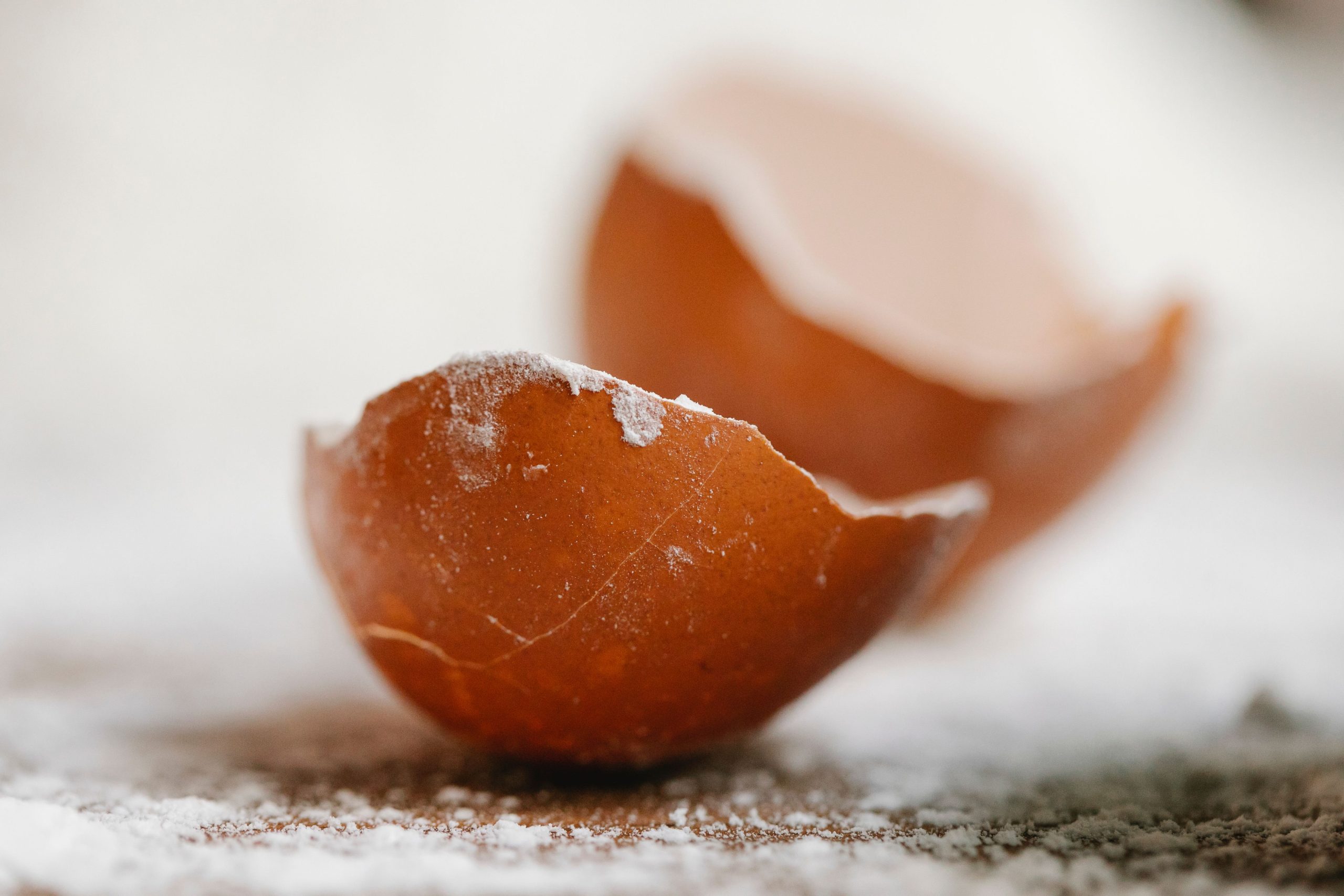
Who would have thought that kitchen waste usually discarded into the trash could become a raw material for battery components? This is what a research team led by Dr. drg. Bambang Priyono, S.U., together with colleagues from the Department of Metallurgical and Materials Engineering, Faculty of Engineering, Universitas Indonesia, successfully demonstrated. In a paper published in IOP Conference Series: Materials Science and Engineering in 2019, the team processed chicken eggshells into a source of calcium carbonate (CaCO₃) to improve the performance of lithium-ion battery anodes. The results were remarkable: energy storage capacity increased significantly compared with conventional materials commonly used today.
A Long-Standing Challenge at the Heart of Modern Batteries
Lithium-ion batteries are now everywhere. From smartphones and laptops to electric vehicles, almost all modern devices rely on this technology. However, behind their widespread use lies a technical limitation that has not yet been fully resolved.
Conventional lithium-ion battery anodes are generally made from graphite. This material is inexpensive and has a relatively high capacity, reaching 372 mAh/g. However, graphite operates at a very low voltage, approaching 0 volts, making it vulnerable to the formation of dendritic layers on the electrode surface. This layer, known as the solid-electrolyte interface (SEI), gradually consumes lithium ions in the electrolyte and reduces battery capacity over time.
An alternative material that has long attracted scientific interest is lithium titanate, or Li₄Ti₅O₁₂, commonly abbreviated as LTO. This spinel material operates at a higher voltage of approximately 1.55 volts, making it significantly safer. LTO also exhibits a zero-strain characteristic, meaning that its structure undergoes minimal changes during battery charging and discharging cycles, resulting in better durability.
Unfortunately, LTO has its own limitation: its electronic conductivity is extremely low, approximately 10⁻¹³ S/cm. This condition makes lithium ions move more slowly within the material, leading to slower charging rates and reduced performance when operating under high current conditions.
From Eggshells to the Laboratory
This is where the simple yet innovative idea from Bambang Priyono’s research team emerged. To improve LTO conductivity, they applied a doping method, which involves introducing foreign ions into the LTO crystal structure to modify its electronic properties. The selected ion was calcium (Ca²⁺), and instead of using expensive chemical sources, the researchers obtained it from chicken eggshells processed into CaCO₃.
The process began with a seemingly simple step: eggshells were cleaned, crushed, and dried at 100°C for 12 hours until they became natural CaCO₃ powder. The powder was then mixed with titanium dioxide (TiO₂) and lithium carbonate (Li₂CO₃), followed by high-speed grinding using a ball mill before being heated at 800°C.
The researchers prepared four sample variations with different calcium doping concentrations: undoped LTO and three Ca-doped variations with concentrations of 0.05, 0.075, and 0.125 mol, coded as LCaTO-1, LCaTO-2, and LCaTO-3, respectively.
Results Beyond Expectations
Testing using X-ray diffraction (XRD) confirmed that Ca²⁺ ions successfully entered the LTO crystal structure without damaging its fundamental framework. This was the first requirement for ensuring that the doping process functioned effectively.
Conductivity testing using electrochemical impedance spectroscopy (EIS) showed a dramatic reduction in charge-transfer resistance. Undoped LTO had a resistance of 86.7 Ω. After doping with the highest calcium concentration (LCaTO-3), the resistance decreased to 29.5 Ω, almost one-third of its original value. This indicates that electrons could flow much more easily through the material.
Energy storage capacity also increased. At a low charging rate (0.2 C), LCaTO-3 achieved an initial capacity of 168.2 mAh/g, approaching the theoretical capacity of standard LTO at 175 mAh/g and significantly exceeding undoped LTO, which only reached 102.6 mAh/g.
Interestingly, for applications requiring extremely fast charging, LCaTO-2 demonstrated the best performance. At a rate of 12 C, this sample maintained a capacity of 30.2 mAh/g, with a retention rate of 21.43% of its initial capacity. In comparison, undoped LTO retained only 6.62% under the same conditions, showing a considerable performance difference.
Mechanically, this phenomenon occurs because the introduction of Ca²⁺ ions into the LTO crystal lattice forces some Ti⁴⁺ ions to transition into Ti³⁺. This transition contributes additional electrons, thereby improving the overall electrical conductivity.
More Than Just an Experiment
This research is interesting not only because of its results but also because of its innovative approach. Using eggshell waste as a dopant source represents an approach that addresses two different challenges simultaneously: improving battery performance and utilizing abundant organic waste.
The world is currently competing to develop better battery technologies to support the transition toward renewable energy. Electric vehicles, solar panels, and smart electricity grids all require energy storage systems that are efficient, affordable, and safe. This small-scale laboratory research from Depok represents one step toward achieving that goal.
Eggshells, which usually end up as household waste, apparently contain potential that has not yet been fully explored.
Authors: Achmad Zam Zam Aghasy, DDS, M.Kes.; Hazra Alifia Muharam
Photo: Pexels
Source DOI: https://doi.org/10.1088/1757-899X/547/1/012040