
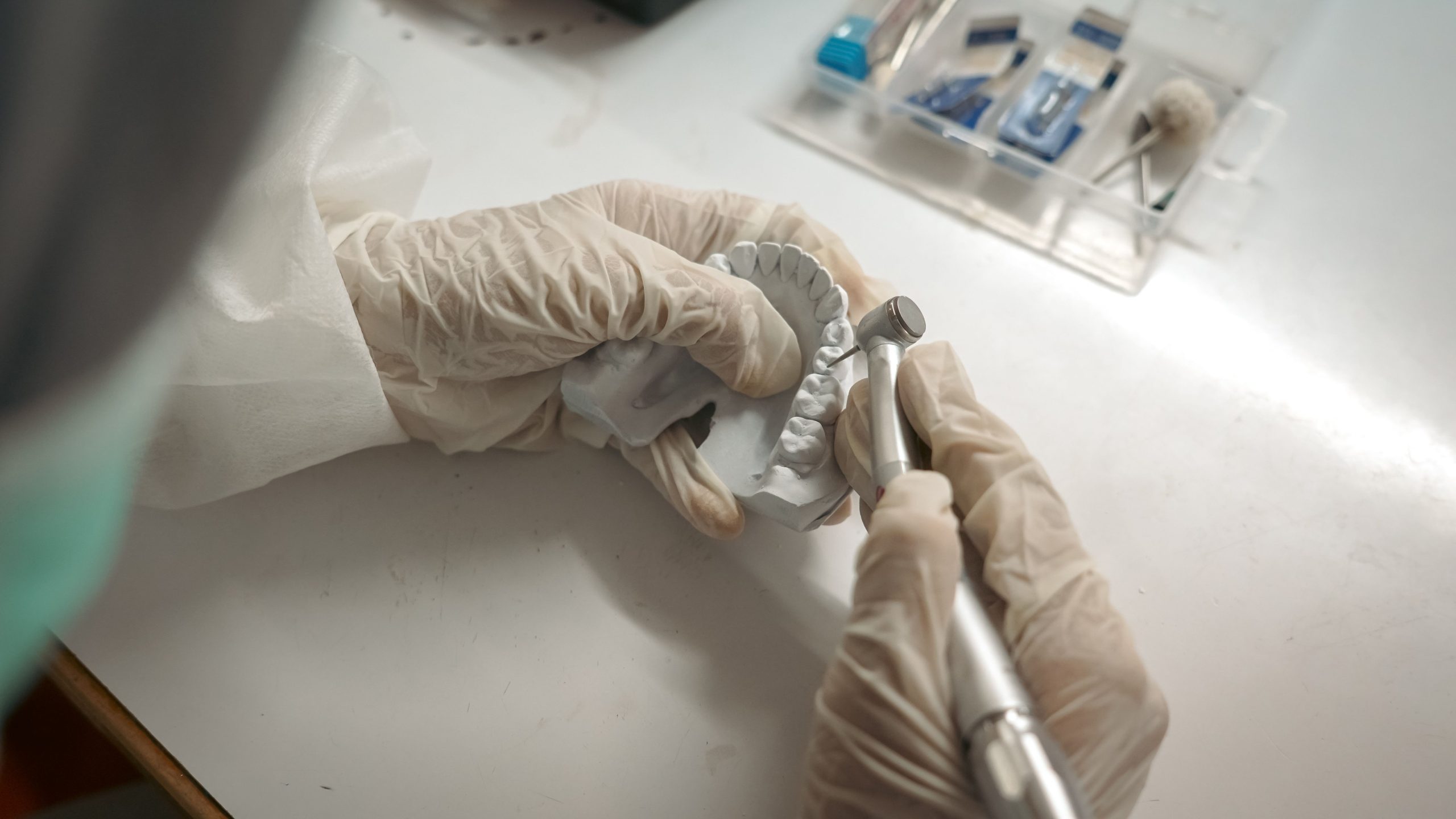
Imagine a narrow groove on the surface of a child's molar—so deep that even a toothbrush cannot reach its base. This is where bacteria hide, food debris accumulates, and caries can gradually begin. Fissure sealants act as a physical shield that closes these grooves. Yet one fundamental question is often overlooked: how much does the method used to prepare the tooth surface before sealant application affect its performance?
A study from the Department of Pediatric Dentistry, Faculty of Dentistry, Universitas Gadjah Mada, provides an answer with a rather surprising finding. The results were published in the Dental Journal (Majalah Kedokteran Gigi) in June 2022.
A Small Gap, A Big Problem
Fissure sealants made from resin-modified glass ionomer cement (RMGIC) are a popular option because of their ability to release fluoride and bond directly to hard dental tissues. However, this material has limitations. Previous literature has reported that its effectiveness may decline by approximately 5–10% each year, particularly because of microleakage—the microscopic leakage that occurs between the sealant and enamel surface.
This leakage is not merely a technical issue. When a gap develops between the sealant and tooth, bacteria gain an entry point. Caries can then develop beneath the very layer intended to protect the tooth.
The research team, consisting of Gesti Kartiko Sari, Sri Kuswandari, and drg. Putri Kusuma Wardani Mahendra, M.Kes., Sp.KGA., designed an experiment to determine whether the type of bur and acid used during tooth preparation influenced the severity of microleakage.
Four Groups, One Question
Twenty-four extracted maxillary premolars that had been removed for orthodontic purposes were divided into four treatment groups. Each group received a different combination: a round bur or tapered bur, combined with either 37% phosphoric acid or 10% polyacrylic acid.
After preparation and RMGIC application, the teeth were stored in artificial saliva for 24 hours at 37°C and then subjected to 100 thermocycling cycles between 5°C and 55°C to simulate temperature changes in the oral cavity. The next step involved immersing the teeth in a 1% methylene blue solution, a blue dye capable of penetrating even the smallest gaps. The teeth were then sectioned and examined under a stereomicroscope at eightfold magnification.
The results were strikingly different. The group treated with a round bur and 37% phosphoric acid demonstrated the shallowest microleakage, averaging 500.70 ± 38.55 μm. In contrast, the group treated with a round bur and 10% polyacrylic acid showed the deepest leakage, at 1,657.87 ± 78.08 μm—more than three times greater. A one-way ANOVA confirmed that the difference was statistically significant (F = 562.14; p < 0.05).
Why Are Round Burs and Phosphoric Acid More Effective?
Two mechanisms help explain the advantage of this combination.
First, there is the issue of geometry. The round bur produced a preparation surface area of 2.46 mm², slightly larger than the 2.27 mm² produced by the tapered bur. Although this difference may appear small, it was meaningful: a larger surface area allows more resin tags to form—microscopic projections of material that mechanically grip the enamel. The greater the number of resin tags, the stronger the bond between the sealant and tooth. The fissure produced by a round bur also has a different shape, more closely resembling the letter “U,” with a wider base that allows the material to fill the groove more effectively.
Second, there is the issue of surface chemistry. 37% phosphoric acid can dissolve the core of enamel prisms and produce a Type 1 etching pattern, creating a porous layer approximately 5–50 μm deep. By contrast, 10% polyacrylic acid, as recommended by the RMGIC manufacturer, produces micro-tagging approximately 8.73 μm deep—considerably shallower. A deeper bond makes the material more difficult to detach and therefore reduces the risk of microleakage.
“Based on this study, when following the manufacturer's recommendation for RMGIC using 10% polyacrylic acid, mechanical preparation with a tapered bur (fissurotomy) is recommended. However, for optimal results, RMGIC is recommended after tooth preparation using a combination of a round bur and 37% phosphoric acid before sealant application.” — Sari, Kuswandari, and Mahendra, Dental Journal, 2022
Implications for Clinical Practice
The findings offer a practical message for pediatric dentists. Fissure preparation is not a step that can be ignored or performed merely as a routine procedure. The choice of bur and etching agent can influence how long the sealant remains effective in protecting the patient's tooth.
In clinical practice, these decisions are often based on habit or solely on the material manufacturer's recommendations. The study by drg. Putri Kusuma Wardani Mahendra, M.Kes., Sp.KGA., and colleagues suggests that a protocol that differs slightly from the standard recommendation—replacing polyacrylic acid with 37% phosphoric acid—can produce a significant difference in clinical outcomes.
A child's teeth have only one opportunity to be properly protected. When a sealant fails, it is not only the material that needs to be replaced—the trust of the young patient and their parents can also be undermined. Within these micrometer-scale differences lies the true significance of making the right clinical decision.
Source DOI: http://10.20473/j.djmkg.v55.i2.p67–70
Authors: Nanda Ayu, drg. Achmad Zam Zam Aghasy, M.Kes.
Photo: Pexels