
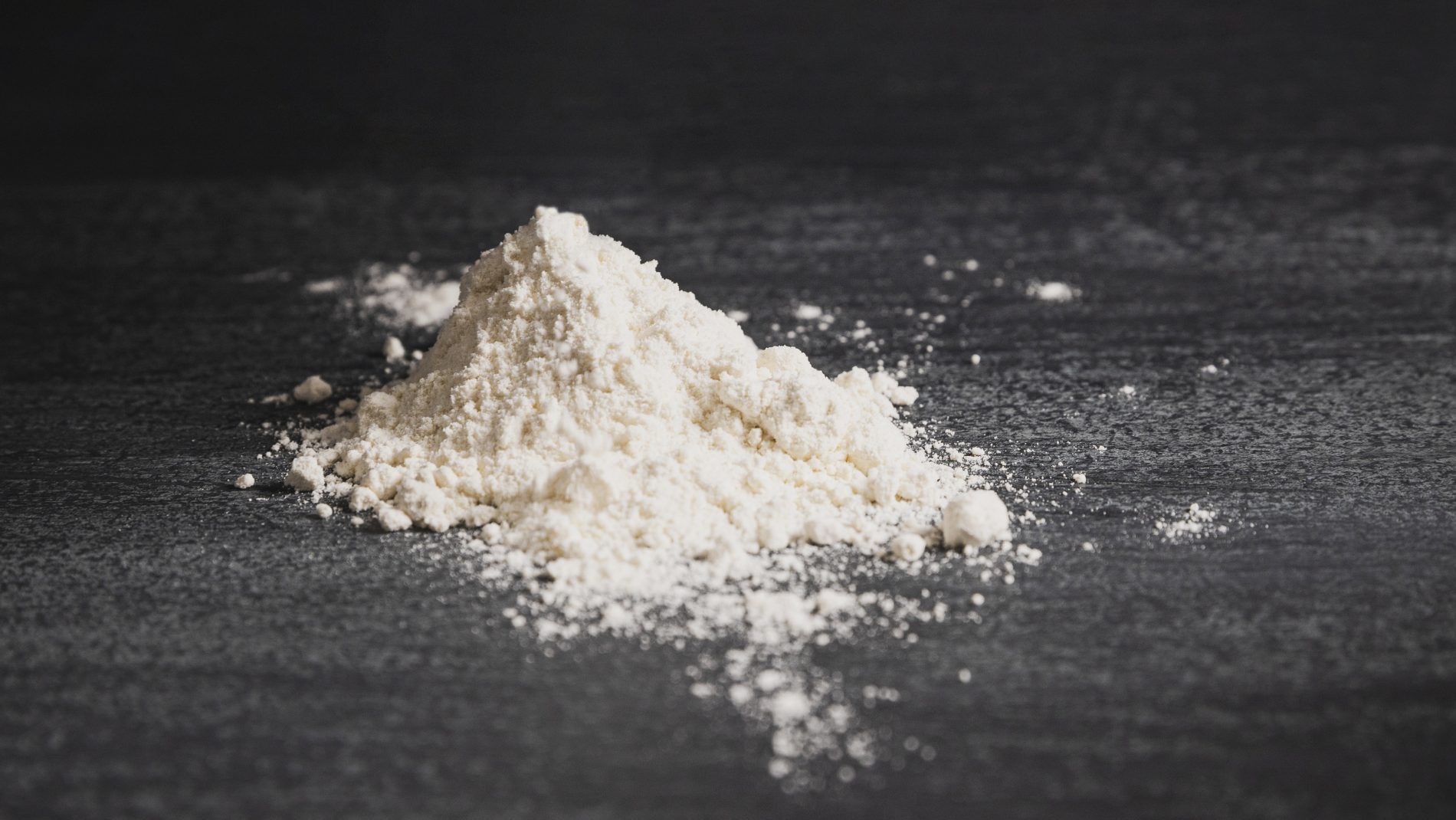
Kabar dari laboratorium Departemen Teknik Metalurgi dan Material Universitas Indonesia ini bisa jadi kabar baik bagi industri kendaraan listrik nasional. Dr. drg. Bambang Priyono, S.U. bersama tim penelitinya berhasil menyintesis material anoda baterai lithium-ion berbasis lithium titanat (Li₄Ti₅O₁₂) menggunakan proses gabungan hidrotermal dan mekanokimia, sebuah pendekatan yang diklaim mampu menghasilkan partikel berukuran nano dengan distribusi lebih merata. Hasil penelitian ini dipublikasikan dalam Journal of Physics: Conference Series pada 2017, setelah dipresentasikan dalam International Conference on Energy Sciences (ICES 2016) di Indonesia.
Pertanyaan yang mendorong riset ini sederhana tapi penting: bisakah lithium titanat menggantikan grafit sebagai elektrode negatif (anoda) baterai lithium-ion, dan berapa banyak aditif konduktif yang diperlukan agar performanya optimal?
Why Graphite Is Beginning to Be Replaced
Graphite has long been the preferred anode material in almost all commercial lithium-ion batteries. It is inexpensive, provides a charging capacity of approximately 375 mAh/g, and enables relatively stable lithium-ion intercalation and deintercalation processes. However, graphite has several limitations that cannot be overlooked. During the first charging cycle, a solid electrolyte interphase (SEI) layer is formed, reducing efficiency, while its ability to respond to high current rates remains limited.
Lithium titanat menawarkan jalan lain. Struktur kristal spinelnya hampir tidak mengalami perubahan volume saat ion litium keluar-masuk, sifat yang disebut zero-strain. Artinya, baterai berbasis LTO bisa menanggung ribuan siklus pengisian tanpa kehilangan kapasitas yang berarti. Untuk aplikasi kendaraan listrik yang membutuhkan pengisian cepat berulang, ini bukan keunggulan kecil.
However, LTO also has a major drawback: its electrical conductivity is extremely low, at only around 10⁻⁹ S/cm. This value is far from ideal for high-power applications. This is where Bambang Priyono and his team’s research becomes relevant: by adding acetylene black (AB), a conductive carbon powder, as an additive to improve electrode conductivity.
Synthesis Process and Performance Evaluation tive.
The research team prepared LTO powder through a series of processes: sol-gel synthesis to produce TiO₂ xerogel, calcination at 300°C, hydrothermal treatment at 120°C for 15 hours, mechanical mixing with Li₂CO₃ using a high-energy ball mill, followed by sintering at 750°C for one hour.
The resulting material was characterized using three methods:Scanning electron microscopy (SEM) to observe particle morphology, X-ray diffraction (XRD) to identify crystal phases, and Brunauer–Emmett–Teller (BET) analysis to measure surface area. SEM analysis showed a relatively homogeneous particle distribution with an average particle size of 0.34 micrometers. XRD confirmed the formation of the spinel LTO phase, although a small amount of impurity in the form of rutile TiO₂ was detected at approximately 15%. The BET measurement showed a surface area of 2.26 m²/g.
After the LTO powder was prepared, the researchers assembled it into coin-shaped half cells with different AB concentrations: 10%, 12%, and 15% by weight. The electrochemical performance was evaluated using three methods: Electrochemical impedance spectroscopy (EIS) to measure resistance, Cyclic voltammetry (CV) to examine oxidation–reduction characteristics,and Charge–discharge testing to evaluate actual battery capacity.
“Quite high capacity at the high current-rate 10C is reached at 10wt% AB, i.e., 40.91 mAh/g… This LTO compound, which could withstand a high current rate of 10C, is certainly well above the anode requirement for Indonesia’s electric car program, which is set at 4C.” — B. Priyono et al., Journal of Physics: Conference Series, 2017
More Additives Do Not Always Mean Better Performance
The most interesting finding from this research was rather counterintuitive. Logically, increasing the amount of AB should improve conductivity, and higher conductivity should enhance battery performance. However, the relationship was not that straightforward.
Indeed, conductivity increased with additional AB content, and charge-transfer resistance (Rct) decreased from 113.09 Ω at 10% AB to 27.56 Ω at 15% AB. However, the specific battery capacity actually decreased. At a 10C current rate, the sample containing 10% AB achieved the highest capacity at 40.91 mAh/g. Meanwhile, the sample with 12% AB achieved only 26.88 mAh/g, and the capacity further declined to 17.23 mAh/g with 15% AB.
The explanation is logical: as more AB is added, the proportion of active LTO material in the electrode becomes smaller. Although electrical current can flow more easily, there are fewer active sites available for lithium-ion interaction. As a result, the overall capacity decreases.
One consistent finding across all samples was that coulombic efficiency approached 100%. This confirms that the zero-strain characteristic of LTO functions effectively, with minimal capacity loss during repeated charging and discharging cycles.
Relevance to Indonesia’s Electric Vehicle Program
A 10C rate in battery testing means that the battery can be fully discharged in one-tenth of an hour, or approximately six minutes. Indonesia’s electric vehicle program sets a minimum standard of 4C for anode materials. In this study, LTO with 10% AB exceeded that requirement by a considerable margin.
This is not merely a theoretical achievement. Electric vehicles capable of being recharged within minutes rather than hours are a key factor in accelerating mass adoption. Furthermore, if the anode material can be produced through relatively simple processes, as demonstrated by the UI research team, there is potential for reducing production costs.
Nevertheless, the capacity of 40.91 mAh/g at a 10C rate remains far below the theoretical LTO capacity of 175 mAh/g. Significant opportunities for improvement remain, particularly in synthesis purity, particle size optimization, and electrode composition. However, the direction of research is becoming increasingly clear: lithium titanate is no longer merely a theoretical alternative.
Author: Drg. Achmad Zam Zam Aghasy, M.Kes, Hazra Alifia Muharam
Photo: Freepik
Source DOI: https://doi.org/10.1088/1742-6596/877/1/012052