
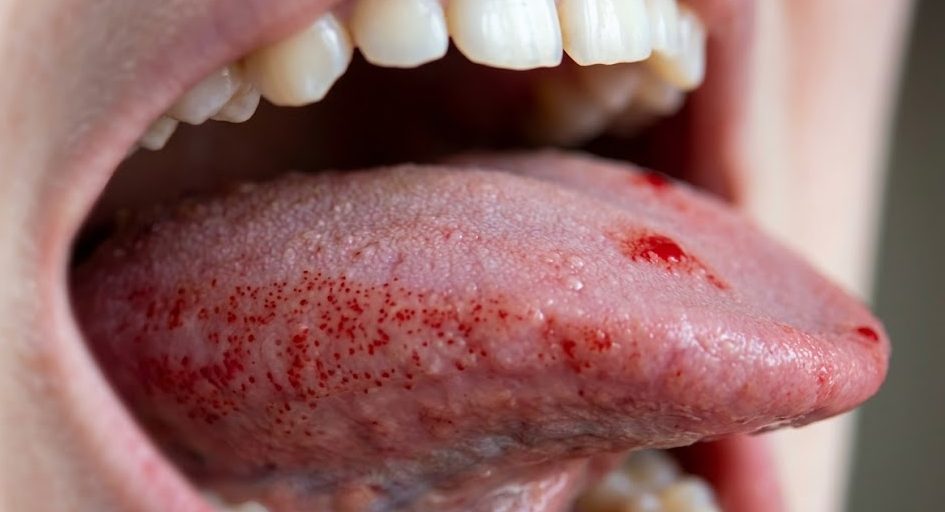
A surprising finding emerged from research involving dr. Dyah Listyarifah, M.Sc., D.Med.Sci., a researcher from the Department of Biomedical Dentistry at the Faculty of Dentistry, Universitas Gadjah Mada, who at the time was collaborating with the University of Helsinki, Finland. In a study published in the Journal of Oral Pathology and Medicine in 2018, researchers found that Treponema denticola, a bacterium long known as a cause of severe periodontitis, was detected in 95% of early-stage tongue cancer tissue samples. More importantly, the bacterium was not merely a “passenger”—its presence was correlated with tumor invasion depth and tumor size. The study involved 60 tongue cancer patients treated at Helsinki University Hospital between 1992 and 2002 and aimed to determine whether oral bacteria might contribute to the carcinogenesis of the tongue.
From the Gums to the Tongue: A Previously Overlooked Pathway
Treponema denticola (Td) is not a new name in dentistry. It is a member of the “red complex,” a group of three highly pathogenic bacteria in the oral cavity that also includes Porphyromonas gingivalis and Tannerella forsythia. Together, these bacteria are known to play a major role in severe destruction of the tissues supporting the teeth.
What makes Td particularly concerning is the enzyme it produces: chymotrypsin-like proteinase, or CTLP. This enzyme can degrade various proteins in the body, penetrate epithelial cell layers, and even activate other tissue-damaging enzymes known as matrix metalloproteinases (MMPs). In short, CTLP is Td’s primary “weapon” for breaching the body’s defenses.
In this study, the researchers used immunohistochemistry—a specialized staining technique performed on preserved tumor tissue—to track the presence of Td-CTLP in three different areas of each tumor sample: the surface, center, and invasive margin. The results were clear: 57 of the 60 samples tested positive for Td-CTLP. Among the positive samples, 40.4% showed high levels of immunopositivity.
The More Bacteria, the Deeper the Tumor
The most troubling finding was not simply the presence of the bacterium in cancer tissue, but the pattern observed. The higher the level of detected Td-CTLP, the deeper the tumor infiltrated the surrounding tissue and the larger its diameter. Both correlations were statistically significant.
Most tumors with high Td-CTLP positivity were located along the lateral border of the tongue—the area most frequently in direct contact with the dentogingival region, where periodontal bacterial biofilms accumulate. This provides a clue as to how Td may travel from gingival tissue to the tongue epithelium.
The researchers also found significant correlations between Td-CTLP and the expression of TLR-7, TLR-9, and c-Myc—proteins involved in immune responses and cancer cell proliferation. TLR-7 and TLR-9 are innate immune receptors activated by intracellular bacteria such as Td. Their activation is known to promote tumor cell survival and resistance to cell death. Meanwhile, c-Myc, which was correlated with Td-CTLP in this study, is a proto-oncogene involved in sustaining epithelial cells and promoting cancer cell proliferation.
Younger Patients with High Td-CTLP: A Risk of Earlier Recurrence
One finding deserves particular attention from clinicians. Among patients aged 60 years or younger, high Td-CTLP expression was statistically associated with shorter disease-free survival. In other words, younger patients with high levels of Td-CTLP in their tumor tissue tended to experience recurrence sooner after treatment.
This is relevant because younger tongue cancer patients generally do not have classic risk factors such as heavy alcohol consumption or long-term smoking. When these factors are absent, microbes such as Td may play a more prominent role in disease progression.
“For younger patients, common causative factors such as alcohol and tobacco may not be as significant. Therefore, the presence and activity of certain microbes may play a greater role.”
This statement, included in the paper’s discussion, opens the door to a new perspective: in some tongue cancer patients, the roots of the problem may begin with neglected periodontal health.
Periodontitis and Cancer: Why Does It Matter?
Squamous cell carcinoma of the tongue is the most common type of oral cancer. The five-year survival rate is only around 62%, a figure that has remained relatively unchanged despite advances in treatment technology. This situation has encouraged researchers to investigate additional factors that may contribute to tumor growth.
This study is not the first to connect oral bacteria with cancer. Porphyromonas gingivalis and Fusobacterium nucleatum have previously attracted considerable attention. However, this is among the first studies to specifically demonstrate the presence of Td-CTLP in tongue cancer tissue while also linking it to clinical characteristics of the tumor.
Of course, a single study is insufficient to establish causality. The researchers themselves emphasized the need for further studies with larger sample sizes, as well as experiments using cell cultures and animal models to directly demonstrate Td’s contribution to tongue cancer development.
Yet the more urgent message from this research is actually much simpler: gum health is not merely a matter of aesthetics. Untreated periodontitis can have consequences that extend far beyond loose teeth or bleeding gums. The bacteria living silently in periodontal pockets may, as researchers are beginning to uncover, be involved in something far more serious in the surrounding tissues.
Authors: Achmad Zam Zam Aghasy, DDS, M.Kes.; Hazra Alifia Muharam
Photo: Freepik
DOI: https://doi.org/10.1111/jop.12729