
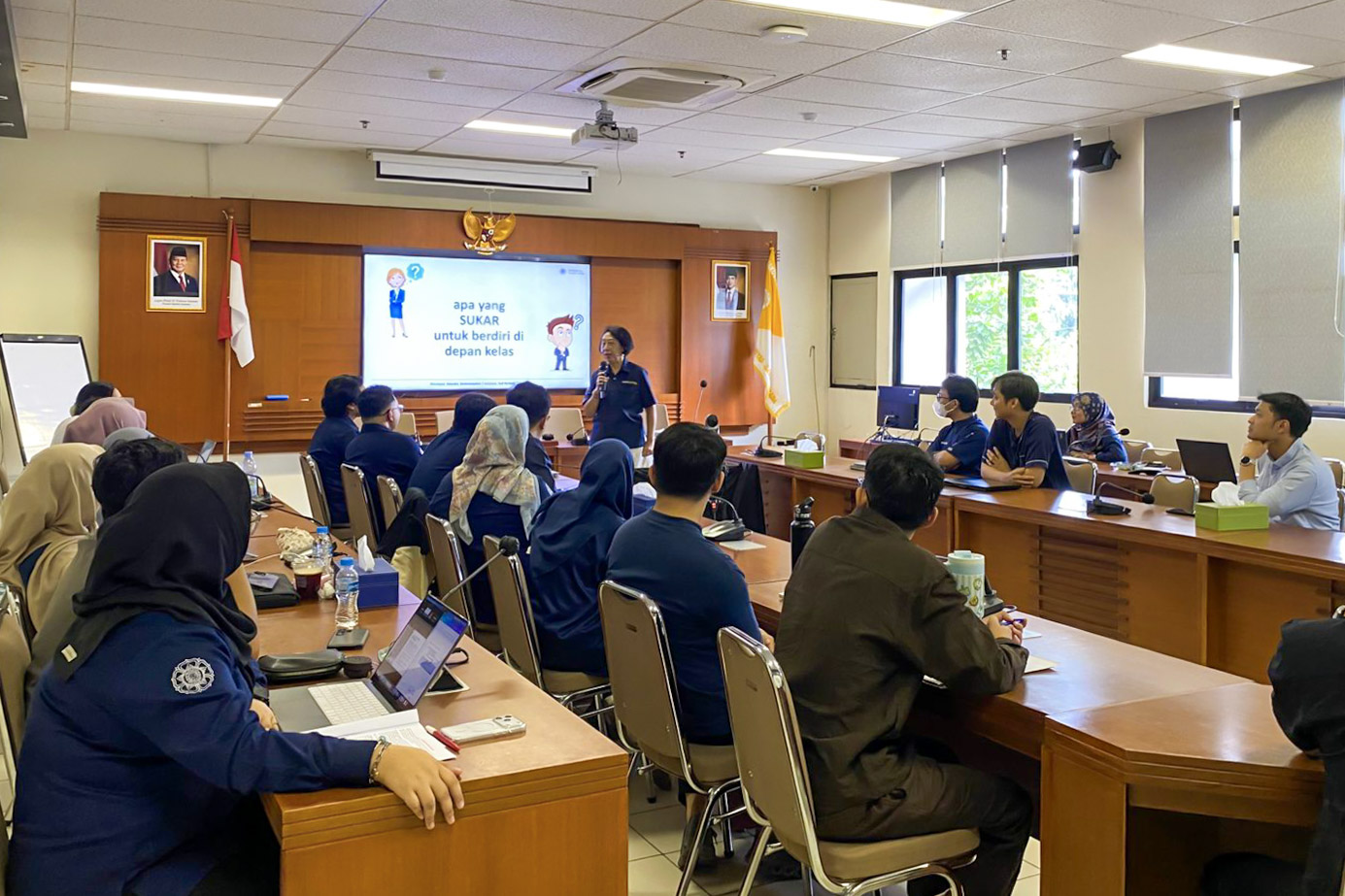
A discussion held by the Faculty of Dentistry, Universitas Gadjah Mada (FKG UGM) on the evolving role of lecturers developed into a broader reflection on the future of higher education in Indonesia. What is at stake is not merely teaching methods, but the quality of future generations who will eventually bear responsibility for public health.
CNBCIndonesia.com (30/06/2026) reported that more than 1,800 mathematics and science lecturers at the University of California had warned that the academic quality of incoming students continues to decline, particularly in fundamental mathematics, reading, and critical thinking skills. As a result, universities are now forced to revisit materials that should have already been mastered during secondary education. This phenomenon has also been observed at prestigious universities such as Harvard, Yale, and in several developed countries, based on data from the OECD (Organisation for Economic Co-operation and Development), which indicate an increasing proportion of students with low literacy and numeracy skills. This decline is influenced by various factors, ranging from the impact of the pandemic, reduced reading habits, curriculum changes, and increased screen time, while changes in student selection systems, grade inflation, and the use of artificial intelligence (AI) in completing assignments have further complicated universities’ ability to accurately assess students’ academic capabilities.
Through the Capacity Building for Lecturer Professional Development programme held on 24 June 2026, FKG UGM did not merely provide young lecturers with teaching techniques. The forum also served as a critical space to discuss the learning culture of the digital generation, which is perceived to be increasingly losing reading endurance, deep-thinking abilities, and the capacity to develop academic integrity.
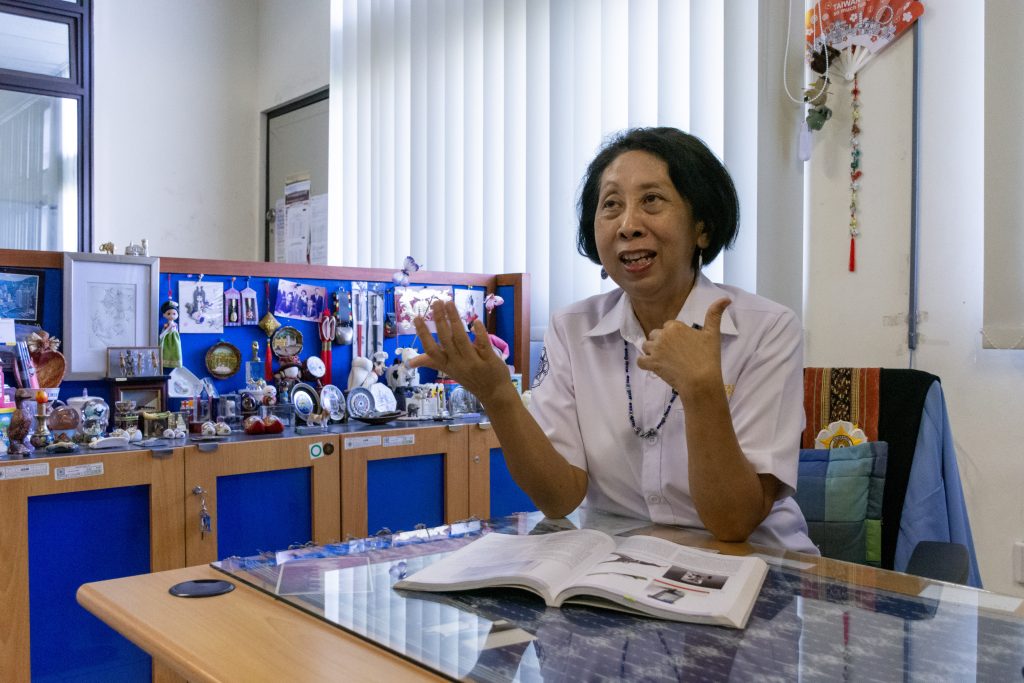
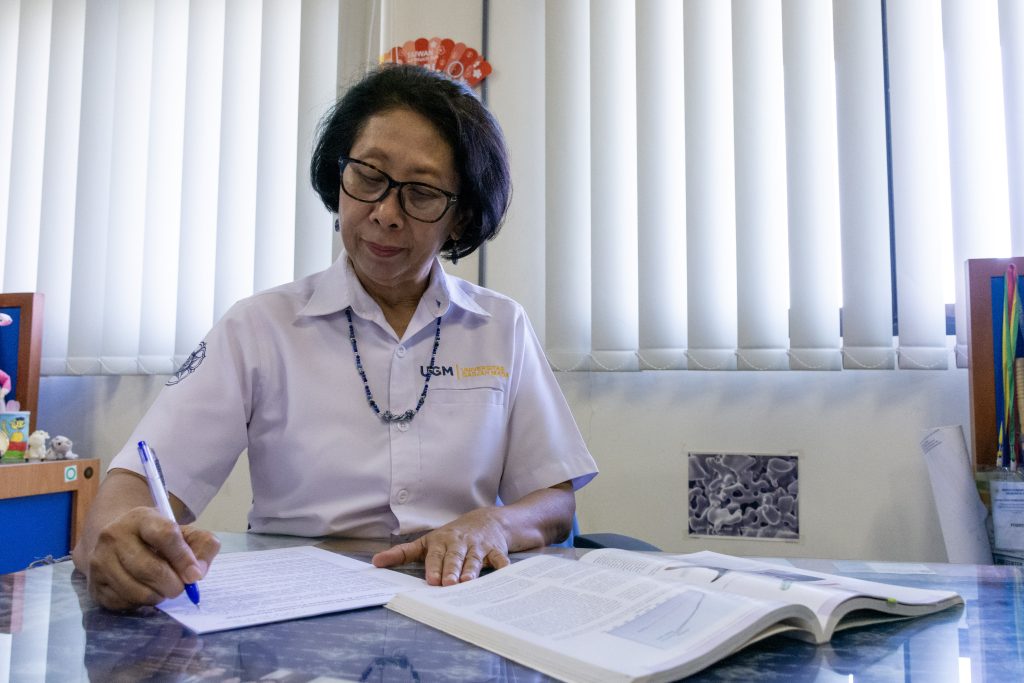
A thought-provoking message was delivered by senior FKG UGM lecturer Prof. Dr. drg. Widowati Siswomihardjo, M.S., widely known as Prof. Bundi, who has experienced and observed generations of students throughout her decades of teaching.
“I refer to today’s children as the tablet generation. They are intelligent children, but their intelligence and sensitivity need to be improved. They can see screens, but they have not yet been able to integrate what they see and hear, and then transform it into their own thoughts.”
The statement was not merely criticism of gadget use. It emerged from her direct experiences in the classroom.
On one occasion, Prof. Bundi asked more than 150 students to put away all digital devices, bring only writing tools, listen carefully to her explanation, and rewrite the important ideas they had understood.
The result was surprising: only around 35 students were able to complete the task properly. Most struggled to connect the process of seeing, listening, thinking, and then expressing ideas again in their own words.
For Prof. Bundi, this phenomenon indicates a more serious issue than simply declining note-taking habits.
“They are smart children, but they are not yet truly intelligent. Intelligence is not merely about achieving high grades. Intelligence is the ability to integrate information, be sensitive to situations, and derive meaning from what has been learned.”
PowerPoint Is Not the Holy Scripture
Another issue highlighted was the changing learning culture among students.
According to Prof. Bundi, many students now consider PowerPoint slides as their only learning source. slide PowerPoint sebagai satu-satunya sumber belajar.
However, PowerPoint should only serve as a roadmap, not the entire academic journey.
“If I create questions based on textbooks listed in the references, there is nothing wrong with that. However, many students never open those books. Eventually, lecturers compromise by creating questions based only on PowerPoint slides.”
This, she argued, reflects a decline in academic literacy.
Students may still achieve high academic performance and graduate with excellent grades. However, when they enter professional education or encounter clinical problems requiring deeper reasoning, many begin to struggle.
This self-reflection is not merely directed at students but at the entire learning system.
PowerPoint materials certainly make information more accessible. However, such convenience can create an illusion of learning when students stop at simplified summaries without exploring the original sources of knowledge.
Literacy Requires Strong Intellectual Endurance
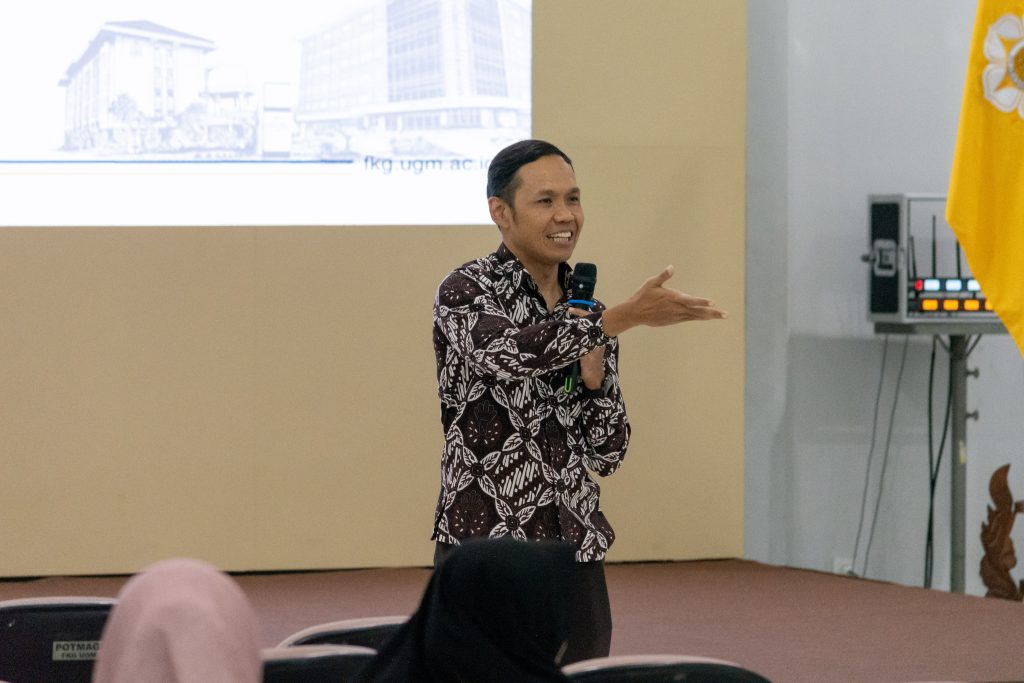
The Vice Dean for Finance, Assets, and Human Resources of FKG UGM, drg. Heribertus Dedy Kusuma Yulianto, M.Biotech., Ph.D., believes that the issue cannot be solved simply by providing more reading materials. More importantly, students’ curiosity must be cultivated.
“If students are only given journals or textbooks, they quickly become bored. However, when lecturers are able to build curiosity, that curiosity will encourage them to read independently.”
For him, PowerPoint should function as a stimulus rather than the final destination of learning.
“We need to present keywords that make students curious. Once curiosity emerges, they will read journals and books willingly.”
This approach reflects a paradigm shift in teaching.
Lecturers are no longer the sole source of knowledge but rather facilitators who cultivate curiosity.
“Teaching is not merely about completing twelve slides and then going home. The most important thing is building chemistry with students.”
Such emotional connections are believed to shape character, rather than merely transfer knowledge.
Integrity Is More Important Than GPA
However, the Capacity Building programme did not stop at literacy issues.
A much stronger emphasis was placed on academic integrity.
drg. Dedy reminded participants that lecturers carry a moral responsibility far beyond simply delivering lessons.
“If someone has excellent academic ability but lacks integrity and ethics, they can actually become a dangerous person.”
Therefore, he explained that FKG UGM aims to produce lecturers who can shape dentists with broad knowledge and strong character.
“We want UGM graduates to be recognised not only for their knowledge but also for their integrity, ethics, and concern for society.”
This message is highly relevant as Indonesian academia continues to face various challenges, including plagiarism, research data manipulation, and a culture of instant achievement in producing scientific works.
Young Lecturers: We Need Mentors
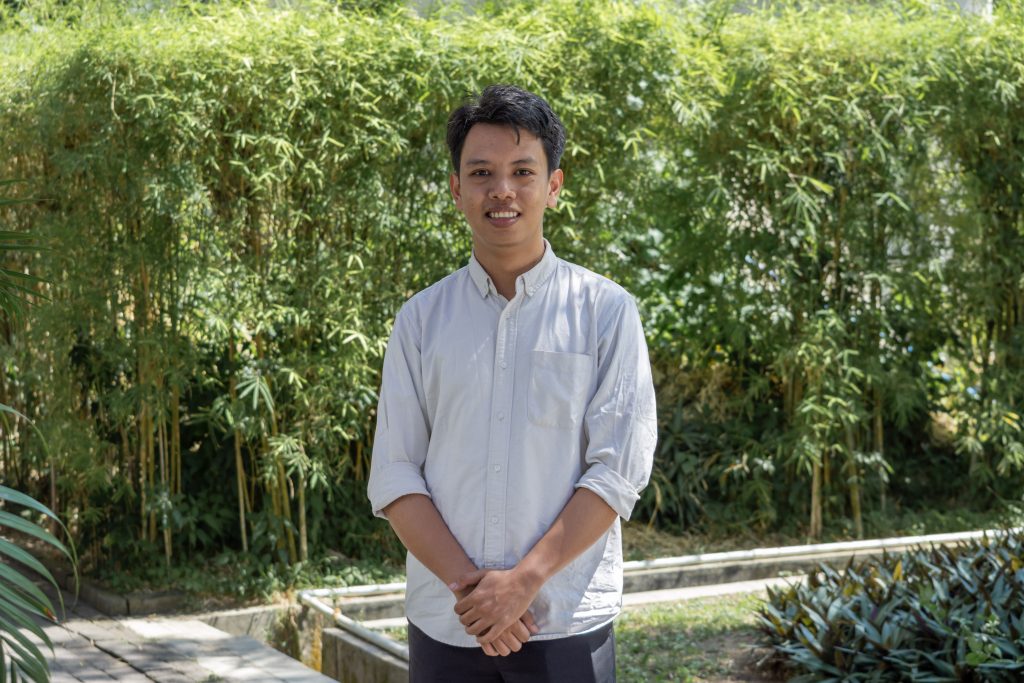
For young lecturers such as drg. Muhammad Akhsan Pridatama, the forum provided important preparation before fully stepping into the classroom.
He acknowledged that one of the greatest challenges, beyond managing a classroom, is understanding the changing characteristics of students across generations.
“We learned how to respect students, how to deliver materials effectively, and how to receive feedback from them.”
He also highlighted the importance of maintaining integrity in research.
“We were reminded not to engage in inappropriate practices in research, such as using other people’s data.”
According to him, student learning today must become more interactive.
“The important thing is not only how to deliver materials, but how to attract their attention so they want to learn.”
He also agreed that students should not stop learning from PowerPoint slides alone.
“If they only study from PPT without reading textbooks and journals, they will not be able to fully solve clinical problems.”
Guiding with Heart
Behind all the challenges associated with the digital generation, Prof. Bundi actually conveyed optimism. She rejected the idea of entirely blaming students. Instead, she believes that the way lecturers educate must evolve.
“Guide students with heart. I do care.” I do care.“
For her, students remain intelligent individuals who have successfully passed highly competitive university admission processes.
What they need are lecturers who can awaken curiosity, teach ways of thinking, and provide examples of integrity.
Technology is not the enemy. Tablets, digital devices, and even artificial intelligence will continue to develop.
However, one thing must not disappear: the human ability to read deeply, write reflectively, think critically, and uphold moral values.
Books, journals, and lecture presentation slides from the world’s best universities are now available within seconds. Yet, this convenience can also produce superficial learning, where students simply rely on and memorise presentation slides, pursue grades, and forget the substance behind knowledge. Prof. Bundi emphasised that referring to students as the “tablet generation” should not be interpreted as a rejection of technology.
“The issue is how technology is used. When digital devices only become tools to accelerate information consumption without deepening scientific understanding, education begins to lose its essence.”
Ultimately, universities are not only responsible for producing graduates who can answer examination questions, but also for developing human resources capable of responding to future challenges through scientific knowledge, strong character, and moral awareness.
(Reporter: Andri Wicaksono, Photographer: Fajar Budi Harsakti)