
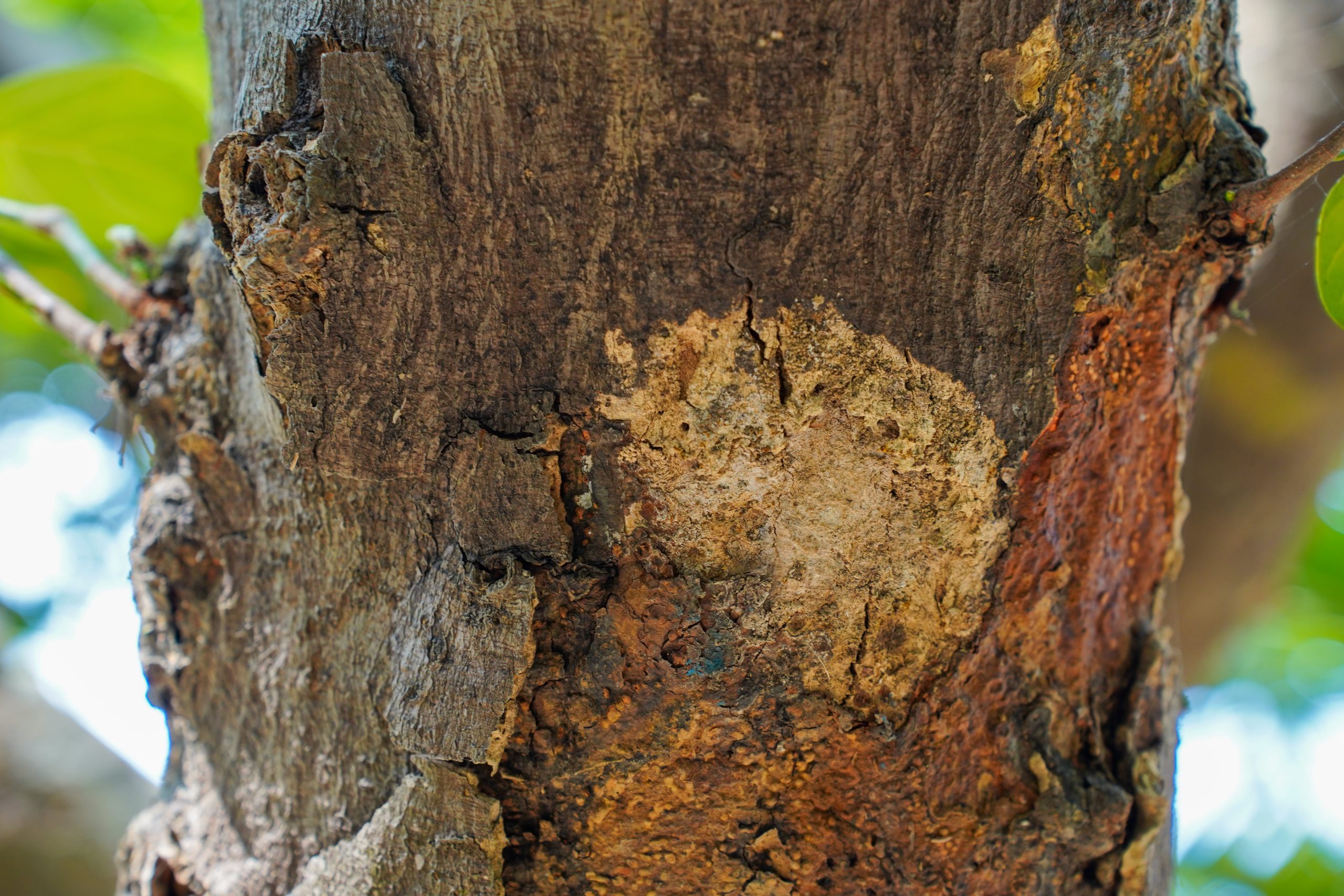
From the bark of a tropical tree growing in the Bogor Botanical Gardens, researchers have successfully isolated a compound never before described in the scientific literature. They named it pentandricine —a newly identified limonoid extracted from Chisocheton pentandrus, a member of the Meliaceae family that has long been recognized as a source of natural insecticidal compounds.
The study was conducted by Prof. drg. Supriatno, M.Kes., MDSc., PhD from the Faculty of Dentistry, Universitas Gadjah Mada (FKG UGM), in collaboration with researchers from Universitas Padjadjaran, Universiti Sains Malaysia, and Yamagata University, Japan. Published in Natural Product Research in 2018, the findings open new avenues for exploring Indonesia's rich tropical flora as a source of potential anticancer compounds.
From Tropical Forest to Research Laboratory
Chisocheton pentandrus is no ordinary plant. The Chisocheton genus is widely distributed across tropical Asia—including India, Thailand, Malaysia, and Indonesia—and has long attracted the interest of natural products chemists because of its rich diversity of limonoids. Limonoids belong to the triterpenoid class of natural compounds and are known for a wide range of biological activities, including insecticidal, antifungal, and anticancer properties.
The research team collected bark samples of C. pentandrus from the Bogor Botanical Gardens in June 2016. Approximately 1.8 kilograms of dried bark were extracted sequentially with methanol before being fractionated using n-hexane, ethyl acetate, and nn-butanol. Multiple chromatographic separation techniques were then employed to isolate individual compounds from the complex plant extract.
The researchers successfully isolated four limonoid compounds. One of them proved to be entirely new: pentandricine (compound 1), an amorphous, colorless solid with the molecular formula C₂₆H₃₂O₆. The remaining three compounds—ceramicine B, 6-de(acetyloxy)-23-oxochisocheton, and 6-de(acetyloxy)-23-oxo-7-O-deacetylchisocheton—had previously been reported in other Chisocheton species.
Revealing the Structure of a Previously Unknown Molecule
Demonstrating that a compound is genuinely new requires extensive structural characterization. The researchers employed a suite of advanced spectroscopic techniques, including: High-resolution electrospray ionization time-of-flight mass spectrometry (HR-ESI-TOFMS) to determine the precise molecular mass; One- and two-dimensional nuclear magnetic resonance (NMR) spectroscopy, including HMBC, COSY, and NOESY experiments, to establish the carbon framework and locate functional groups; and Ultraviolet (UV) and infrared (IR) spectroscopy to identify chromophores and characteristic chemical bonds.
These analyses confirmed that pentandricine possesses the characteristic six-ring framework of limonoids. What distinguishes pentandricine from its close structural relative, ceramicine D, is the presence of a hemiacetal group at the C-23 position, formed through modification involving a newly introduced hydroxyl group. The compound's relative stereochemistry was further established through NOESY experiments, which identify spatial interactions among hydrogen atoms within the molecule.
Cytotoxic Activity: An Encouraging but Early Finding
The central question of the study was straightforward: Could these compounds inhibit the growth of cancer cells?
All four limonoids were evaluated against the MCF-7 human breast cancer cell line using the MTT assay, with cisplatin serving as the positive control (IC₅₀ = 27.0 μM). The compounds displayed varying degrees of cytotoxic activity, although overall their effects remained relatively modest.
Among them, compound 4 (6-de(acetyloxy)-23-oxo-7-O-deacetylchisocheton) demonstrated the strongest activity, with an IC₅₀ of 120.09 μM. It was followed by: Compound 2: IC₅₀ = 150.86 μM, Compound 3: IC₅₀ = 208.93 μM, and Pentandricine: IC₅₀ = 369.84 μM. For comparison, compounds are generally considered to exhibit strong cytotoxic activity when their IC₅₀ values are below 20 μM.
"The presence of an acetyl group, a hydroxyl group within the lactone ring, and an ether ring in compound 4 appears to contribute to its enhanced cytotoxic activity."
These findings provide valuable insight into the structure–activity relationship of limonoids. Modifying specific functional groups within the limonoid skeleton can substantially influence a compound's ability to inhibit cancer cell growth. Although pentandricine itself demonstrated relatively weak activity against MCF-7 cells, its discovery remains significant because it expands the known chemical diversity of the Chisocheton genus and provides a new structural framework for future drug discovery.
One New Molecule, Many Questions Yet to Be Answered
This research was funded by the Indonesia Endowment Fund for Education (LPDP) and the Directorate General of Higher Education through postgraduate research grants awarded during 2016–2017. Collaboration with research institutions in Malaysia and Japan further strengthened the study, particularly in confirming the structure of this complex natural product.
The significance of the study lies not only in the discovery of a new compound but also in its contribution to a broader effort to identify cytotoxic molecules from Indonesian Chisocheton species. The chemical diversity within this genus remains far from fully explored, and each species may contain unique combinations of bioactive compounds. Every newly identified molecule, including pentandricine, represents another piece of the puzzle in understanding the remarkable chemical evolution of tropical plants.
Although pentandricine's IC₅₀ value falls well short of the threshold typically associated with potent anticancer agents, this does not diminish its scientific value. In drug discovery, compounds with novel molecular scaffolds often serve as starting points rather than finished products. Chemical modification, evaluation against other cancer cell lines, and combination studies all remain promising avenues for future research. The tree standing quietly in a corner of the Bogor Botanical Gardens, it seems, may still have many stories left to tell.
Source DOI: https://doi.org/10.1080/14786419.2018.1428600
Authors: Anny Anggraini; drg. Achmad Zam Zam Aghasy, M.Kes.
Photo: Freepik