
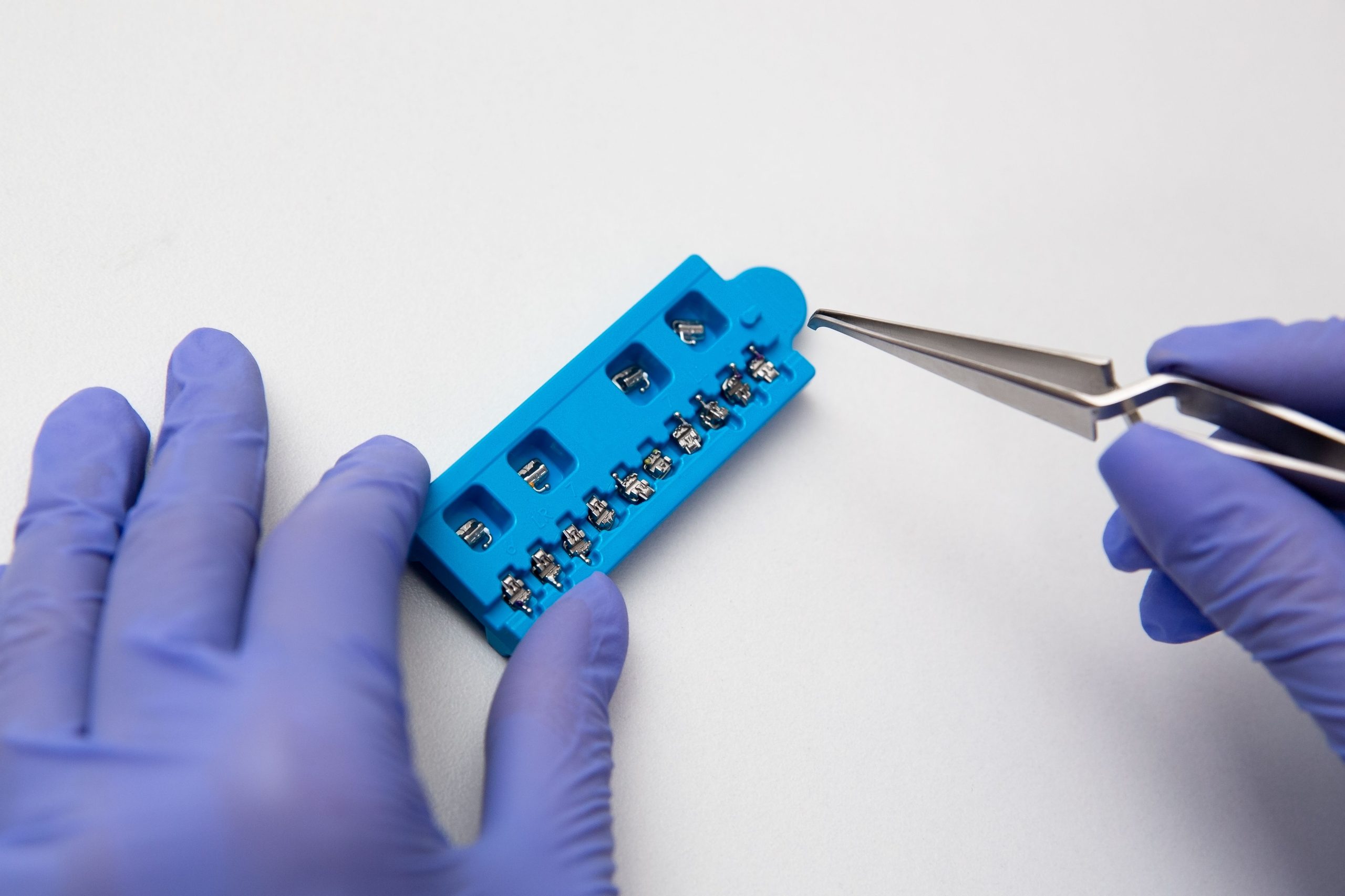
A patient may never suspect it. The orthodontic wire on their teeth appears shiny, the amalgam filling on a posterior tooth has faithfully sealed a cavity for years, and everything inside the mouth feels perfectly normal. Yet, at the molecular level, two metals in contact within a pool of saliva may be undergoing a silent chemical reaction, gradually releasing nickel ions into the body.
This is the core finding of a laboratory study published by Dr. drg. Andi Triawan, Sp.Ort. in Mutiara Medika. The research investigated the extent to which a galvanic cell formed between orthodontic archwires and amalgam fillings influences nickel ion release, and the findings are concerning.
When Two Metals Meet in One Electrolyte
The oral cavity is not merely a place for chewing. It is a complex electrochemical environment: temperatures fluctuate, pH levels change, enzymes function, and bacteria colonize. When two different types of metals come into contact in this environment, a process known as galvanic corrosion occurs, in which the more reactive metal acts as the anode and undergoes accelerated degradation.
Nickel, a primary component of orthodontic wires, has an electrode potential value of −0.23, while mercury in amalgam has a value of +0.80. This substantial difference causes nickel to act as the vulnerable anode when paired with amalgam. The greater the difference in electrode potential between two metals, the stronger the galvanic current generated and the faster the corrosion process.
This fact is clinically relevant because many orthodontic patients arrive at clinics with amalgam restorations already present on their posterior teeth. Orthodontic treatment itself typically lasts two to three years, providing a sufficiently long period for metal ions to continuously leach into saliva.
The Numbers Speak for Themselves
In this experiment, Dr. drg. Andi Triawan, Sp.Ort. divided samples into four groups: Australia wire alone, Australia wire paired with amalgam, NiTi wire alone, and NiTi wire paired with amalgam. All samples were immersed in artificial saliva with normal pH at 37°C for seven days, simulating human oral conditions. Nickel ion measurements were performed on the third, fifth, and seventh days using an Atomic Absorption Spectrophotometer (AAS) at the Integrated Research and Testing Laboratory of Universitas Gadjah Mada (UGM).
The results were clear. Australia wire paired with amalgam released an average of 0.042 ppm nickel ions on the third day, increasing to 0.047 ppm on the seventh day. In comparison, Australia wire without amalgam released only 0.013 ppm on the third day. A similar pattern was observed in NiTi wires: those paired with amalgam released approximately three times more nickel ions than NiTi wires used independently.
“The use of amalgam in combination with Australia wire and NiTi wire increased the amount of nickel ion release from both Australia wire and NiTi wire.”
Statistical analysis using two-way ANOVA and t-tests confirmed that these differences were highly significant (p < 0.01). This was not a random occurrence. It was not merely experimental noise.
Australia Wire vs. NiTi: Unequal Vulnerability
Another important finding was that Australia wire consistently released more nickel ions than NiTi wire, both when used alone and when combined with amalgam.
The explanation lies in their material composition. Australia wire is a stainless steel wire that relies on a passive chromium oxide layer for corrosion protection. This protective layer is less durable compared with the titanium oxide layer naturally formed on NiTi wires. Titanium, a metal known for its high corrosion resistance and biocompatibility, provides more effective protection for the nickel contained within the alloy. As a result, NiTi wires demonstrate greater resistance, although they are still not completely immune to the galvanic effects of amalgam.
The clinical implications are significant. Beyond the risk of toxicity and allergic reactions in patients sensitive to nickel, the release of these ions may also accelerate the degradation of the physical properties of the archwire itself. A wire that corrodes more rapidly may lose its mechanical strength earlier than expected, potentially reducing its effectiveness in tooth movement.
A Frequently Overlooked Consideration in the Dental Chair
Until now, orthodontists and restorative dentists have often worked within separate disciplines. A patient may arrive with orthodontic braces on one side and amalgam fillings on another, without any interdisciplinary discussion regarding the potential interaction between these two materials.
The research by Dr. drg. Andi Triawan, Sp.Ort. provides a scientific basis for encouraging such discussions. According to the study, the simultaneous use of amalgam restorations and fixed orthodontic appliances should be reconsidered, particularly in patients with a history of nickel sensitivity.
Several questions remain unanswered, and the researchers themselves encourage further investigation: How long do nickel ions continue to accumulate? At what concentration do they become clinically concerning? How long does it take before wire degradation reaches a level that significantly affects mechanical performance?
A mouth that appears healthy on the outside may still contain an unfinished chemical conversation within.
Authors: Nanda Ayu, drg. Achmad Zam Zam Aghasy, M.Kes.
Photo: Pexels