
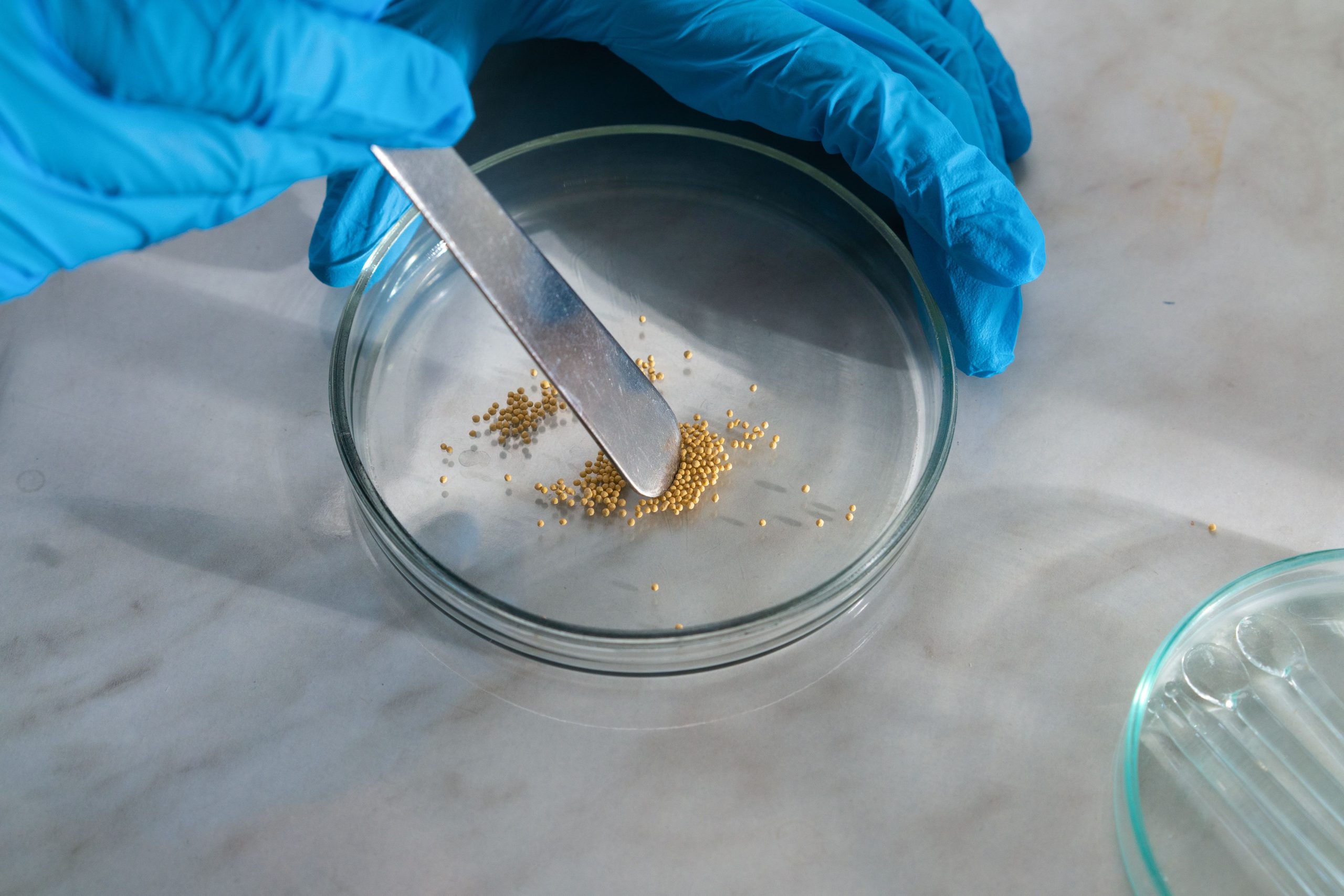
A simple question led a group of researchers from the University of Indonesia into an invisible world: how can electric vehicle batteries be made safer, longer-lasting, and more efficient? Their answer lies in a white powder measured at the nanometer scale called lithium titanate, or LTO. The research, published in the Jurnal Sains Materi Indonesia in October 2015, was led by Dr. drg. Bambang Priyono, S.U., together with a research team from the Department of Metallurgical and Materials Engineering, Faculty of Engineering, University of Indonesia. The team successfully synthesized LTO with crystallite sizes below 100 nanometers — a target that had been the primary objective of the study from the beginning.
Why Is Particle Size So Important?
Lithium-ion batteries are now everywhere: from smartphones to electric vehicles. However, not every component within a battery plays the same role. The anode, which is the negative electrode responsible for storing lithium ions during the charging process, greatly determines the overall performance of the battery system.
For years, conventional lithium-ion battery anodes have generally been made from carbon. LTO emerges as a promising alternative because it offers several advantages: its structure remains stable during charging and discharging cycles, it has high safety characteristics, a long operational lifespan, and relatively low production costs.
However, LTO has one inherent limitation: its electrical conductivity is low. Lithium ions move slowly within the material, limiting its ability to rapidly accept and release electrical current. The most promising solution is to reduce the particle size. Smaller particles provide a larger contact surface area between the electrode and electrolyte, shorten the distance travelled by lithium ions, and improve reaction kinetics.
This is where the nanometer scale becomes crucial.
Two Methods, One Goal
The research team combined two approaches simultaneously to achieve the desired particle size. First, the sol-gel method was used to prepare titanium dioxide (TiO₂) as a raw material in the form of a xerogel, a dried gel with an extremely large surface area, reaching 148.04 m²/g. The calcination process was conducted at 300°C for two hours, significantly lower than previous studies that used 420°C. This lower temperature was intentionally selected to prevent excessive crystallite growth.
Second, the hydrothermal method was applied to mix anatase TiO₂ produced from the sol-gel process with lithium carbonate (Li₂CO₃) inside a high-pressure autoclave at 120°C for 15 hours. This process enabled the formation of LTO crystal nuclei under controlled conditions.
Afterward, the samples underwent another heating process through sintering at three different temperatures: 550°C, 650°C, and 750°C. The purpose was to produce a stable crystalline spinel LTO phase.
Temperature Determines Everything
The test results revealed a consistent pattern: the higher the sintering temperature, the larger the crystallite size became, while the proportion of LTO within the samples increased.
At 550°C, the average crystallite size was recorded at 23.45 nm, with a surface area of 6.65 m²/g. However, the sample was still dominated by rutile TiO₂, rather than pure LTO. At 650°C, the crystallite size increased to 27.70 nm, while the surface area decreased to 1.91 m²/g, with a similar composition. Only at 750°C did the proportion of LTO (Li₄Ti₅O₁₂) increase significantly, reaching a crystallite size of 52.06 nm. All measured values remained below the 100 nm threshold, which was the target of the research.
The presence of rutile TiO₂ in all samples became an important observation. This compound appeared because some anatase TiO₂ did not fully react with lithium ions during the hydrothermal process. As a result, the remaining unreacted TiO₂ transformed into rutile during heating. The presence of rutile may interfere with lithium-ion movement during battery charging and discharging, potentially reducing charge capacity.
Testing using X-Ray Diffraction (XRD), Brunauer–Emmett–Teller (BET) analysis, infrared spectroscopy (FT-IR), and Field Emission Scanning Electron Microscopy (FE-SEM) revealed irregular particle morphology with a tendency to agglomerate, meaning the particles clustered together. This condition presents a challenge for future research.
A Small Step Toward Clean Energy Technology
This research has not yet produced LTO with perfect purity and an ideal surface area. The research team acknowledged that improvements are still needed, particularly in raw material mixing and the lithium carbonate impregnation process.
However, achieving crystallite sizes below 100 nm through a combination of sol-gel and hydrothermal methods demonstrates that this approach is worth exploring further. Behind the numbers and diffraction patterns lies a much greater ambition: helping the world transition toward cleaner and more sustainable energy sources. Better lithium-ion batteries are one of the key elements in this transition. Every nanometer successfully reduced represents one concrete step toward that future.
Authors: Achmad Zam Zam Aghasy, DDS, M.Kes.; Hazra Alifia Muharam
Photo: Pexels