
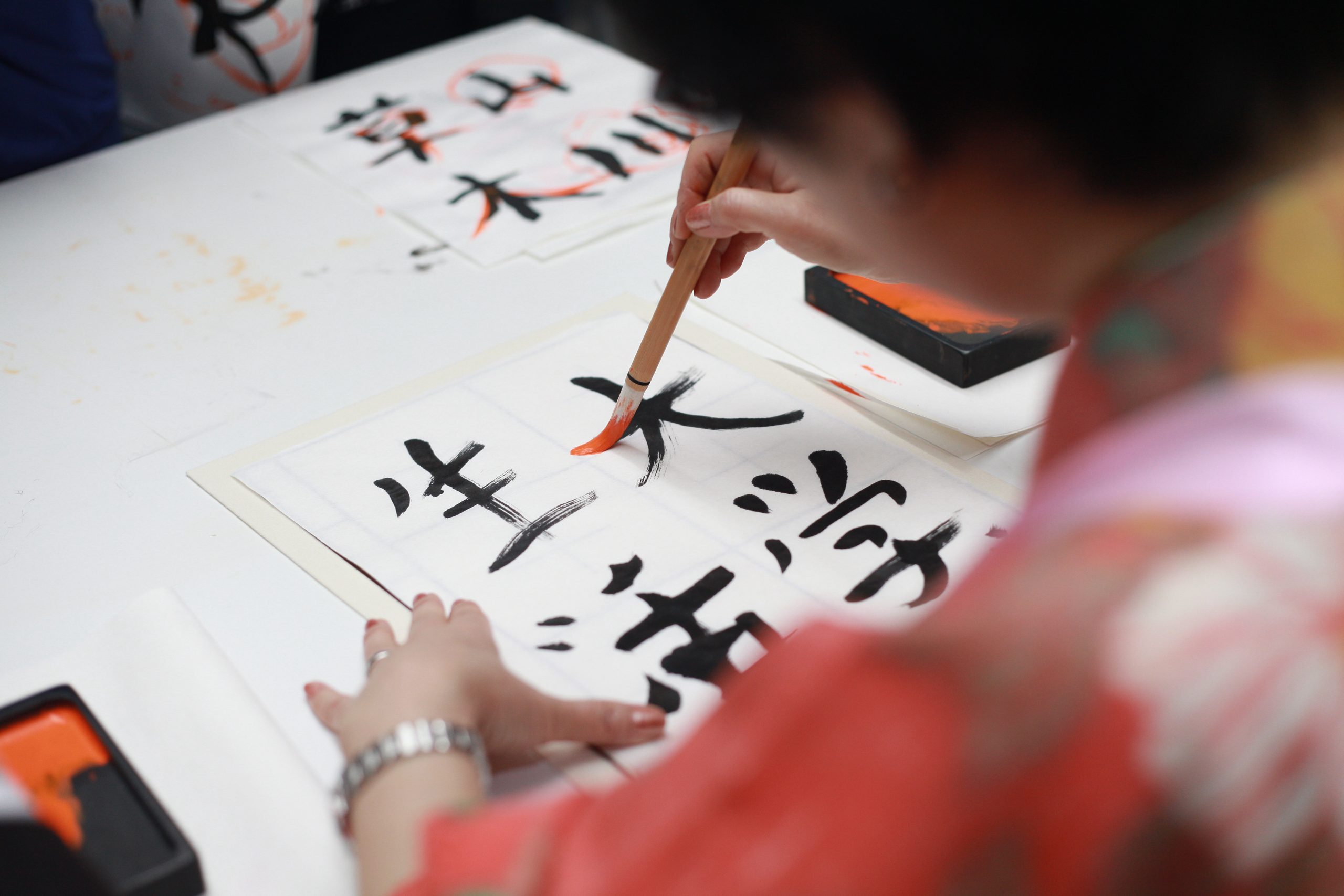
Imagine an Indonesian university student having to introduce gamelan to a classmate in Tokyo but not knowing a single Japanese word appropriate for describing the musical instrument. Such a situation is not merely hypothetical. It represents a genuine gap addressed by a study on the development of Japanese language teaching materials published in LingTera in October 2015. Conducted by Dr. drg. Sri Widiati, MPH, and Prof. Dr. Sugirin, M.A., Ph.D., of Yogyakarta State University, the study produced intermediate-level Japanese speaking materials that incorporated Japanese and Indonesian cultures in a balanced manner. The materials were piloted in the Japanese Language and Literature Study Program, Faculty of Cultural Sciences, Universitas Gadjah Mada, Yogyakarta, during the second semester of the 2012/2013 academic year, as no teaching materials at the time had presented the two cultures in relatively equal proportions.
Two Cultures, One Textbook
Japanese language textbooks used in Indonesia have traditionally been published in Japan, meaning that their content naturally centers on Japanese culture. As a result, Indonesian students may learn about the Obon festival or Japanese New Year traditions, but they have little vocabulary or expressions with which to describe the other side of the cultural exchange: wayang, batik, or queuing traditions, which differ considerably between the two countries.
The study addressed this need by developing teaching materials entitled Nihon to Indonesia no Bunka de Manabu Chuukyuu Nihongo, which roughly translates as “Learning Japanese at the Intermediate Level through Japanese and Indonesian Culture.” The materials consist of five units covering distinctive cultural themes, ranging from unique regional cultures in Japan and Indonesia and traditional games that should be passed down to younger generations to similarities and differences between the two countries and national character building.
Each unit includes exercises covering four language skills: reading, writing, listening, and speaking. Speaking (kaiwa) receives the greatest emphasis, in line with the primary focus of the teaching materials. In addition to the printed textbook, the study also developed a VCD containing five supplementary videos, including one about Papua entitled “The Black Pearl Island,” presented through Japanese-language narration.
Culture as a Bridge, Not Merely Decoration
What distinguishes these materials from conventional textbooks is not merely their content, but also the way cultural content is integrated into language learning.
The study adopted a task-based instruction approach, in which students do not simply memorize vocabulary but are asked to complete authentic communicative tasks, including discussions, role-plays, cultural research presentations, and simulations of cross-cultural conversations. The concept emphasizes that language is best learned when used for meaningful purposes rather than practiced in isolation from context.
The grammar materials followed intermediate-level Japanese language standards, drawing on Minna no Nihongo Chuukyuu II and an expression guide for Indonesian learners corresponding to the Japanese Language Proficiency Test N2 level.
“The developed teaching materials are suitable for use in learning activities, both in the classroom and independently.” — Expert validation conclusion in the study by Dr. drg. Sri Widiati, MPH, and Prof. Dr. Sugirin, M.A., Ph.D., 2015
A “Very Good” Rating from the Experts
Before being tested with students, the materials underwent a rigorous validation process involving two subject-matter experts and three media experts, all of whom were Japanese language lecturers and instructional media specialists from UGM and Yogyakarta State University.
The results were encouraging. The average material suitability score reached 4.76 out of 5, placing it in the “very good” category. The average media suitability score was 4.31, also classified as “very good.” Of the five evaluators, only one media expert requested revisions, namely the addition of a summary at the end of each unit. Two subject-matter experts considered the materials suitable without any revisions.
The trials were conducted in two stages: a limited trial in an advanced Japanese conversation extracurricular activity (kaiwa-kai) and a field trial in the Kaiwa 6 (Speaking 6) course attended by sixth-semester students. Students’ comprehension of the materials across all units ranged from 61% to 90%, with most students scoring between 71% and 80%.
Relevance Beyond the Classroom
Although the study was situated within language learning, its implications extend much further. In an era of increasing academic mobility, students’ ability to introduce their own culture in a foreign language is not merely an added advantage but a genuine necessity.
The teaching materials indirectly equip students with two competencies at once: intermediate-level Japanese proficiency and the confidence to talk about Indonesia to the world. The lecturers involved in the trial even stated that they would use materials from the textbook in their courses as needed, while students considered the materials sufficiently self-contained for independent learning outside the classroom.
A good textbook, as once noted by a language education researcher, is a medium that supports cultural continuity while simultaneously developing literacy. These teaching materials appear to be attempting to accomplish both—one Japanese conversation about gamelan or traditional games at a time.
Authors: Achmad Zam Zam Aghasy, DDS, M.Kes.; Hazra Alifia Muharam
Photo: Freepik