
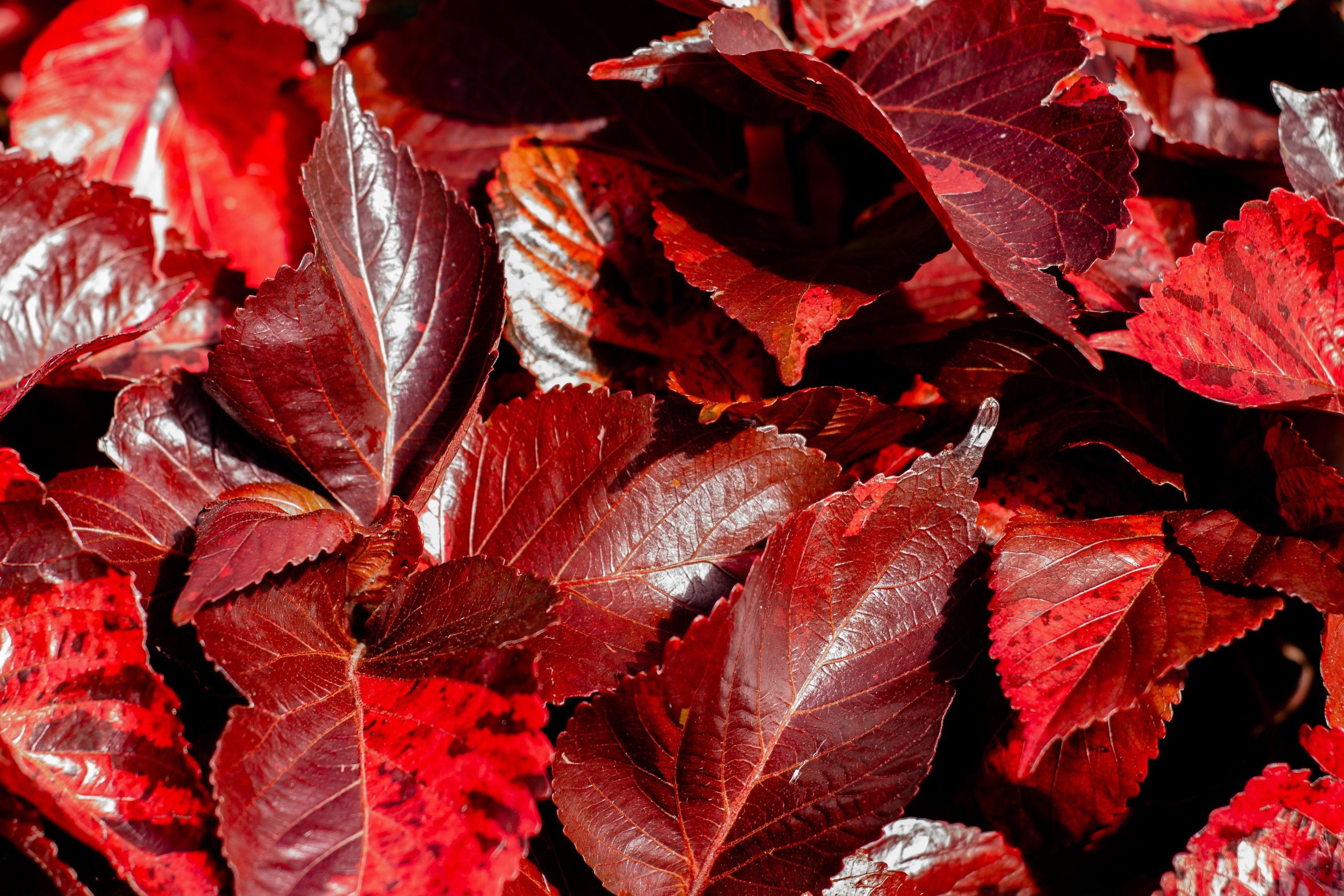
Imagine a climbing plant with reddish-purple leaves growing in pots around your grandmother’s yard. It turns out that this seemingly ordinary plant contains a potential weapon against one of the most common dental diseases in Indonesia. This was demonstrated by Prof. drg. Tetiana Haniastuti, M.Kes., Ph.D., from the Department of Oral Biology, Faculty of Dentistry, Universitas Gadjah Mada, in a study published in the Dentika Dental Journal in 2013.
The findings were quite remarkable: a 10% decoction of red betel leaves (Piper crocatum) was shown to suppress acid production and slow the growth of Streptococcus sobrinus, one of the major bacteria responsible for dental caries.
A Tiny Enemy in the Mouth
Caries is more than just an ordinary “cavity.” It is a chronic infectious disease whose prevalence in Indonesia remains concerning. Data from the 2007 Basic Health Research (Riset Kesehatan Dasar) reported that the prevalence of active caries among Indonesians reached 43.4%, while caries experience — meaning having experienced caries at some point in one’s lifetime — reached 67.2%.
Streptococcus sobrinus is one of the main culprits. This spherical, Gram-positive bacterium lives in the oral cavity and possesses two harmful characteristics: it can produce organic acids (acidogenic) that erode tooth enamel, while also surviving in the acidic environment it creates itself (aciduric). Individuals with high levels of S. sobrinus in their saliva tend to have more carious lesions. Previous research has even shown that this bacterium produces acid more efficiently than its relative, Streptococcus mutans.
Antiseptic mouthwash is a logical option for controlling bacteria such as these. However, its cost is often unaffordable for large segments of the population, while commercial products such as Listerine, although effective at killing bacteria, have a pH below 5.5, which may potentially contribute to enamel erosion when used over the long term. This situation has encouraged the search for alternatives derived from natural ingredients.
From the Kitchen to the LaboratoryFrom the Kitchen to the Laboratory
Red betel leaves have traditionally been used by Indonesian communities to treat bleeding gums, mouth ulcers, bad breath, and even toothache and cavities. Prof. Tetiana and her team sought to determine whether these traditional claims had a strong scientific basis.
The method used was rigorous. A 10% decoction was prepared by boiling 10 grams of red betel leaves in 200 ml of water until the volume was reduced to 100 ml. A 5% concentration was obtained by diluting the decoction by half. Both solutions were then tested in brain heart infusion broth containing 1% glucose and inoculated with 10⁶ S. sobrinus bacterial cells. The cultures were incubated at 37°C, under conditions designed to mimic the environment of the human oral cavity. Distilled water was used as the negative control, while Listerine served as the positive control.
Observations were conducted at 1, 2, 4, 6, and 8 hours to measure the pH and turbidity of the media, while bacterial colonies that remained viable were counted after 24 hours.
The Numbers Speak
The results were quite clear. At 6 and 8 hours, the pH of the culture medium exposed to the 10% red betel leaf decoction was significantly higher than that of the other groups, including the 5% decoction and distilled water groups. This indicated that the bacteria produced less acid. This is important because acid dissolves minerals in tooth enamel and initiates the caries process.
In terms of bacterial growth, the 10% decoction showed an effect comparable to Listerine at 4 and 6 hours: the absorbance of the culture medium did not increase, indicating that the growth of S. sobrinus was inhibited. After 24 hours, the number of bacterial colonies in the 10% red betel leaf decoction group was significantly lower than in the negative control group.
“A 10% red betel leaf decoction has anticar-iogenic potential because of its ability to reduce acid production and the growth rate of S. sobrinus.” — Prof. drg. Tetiana Haniastuti, M.Kes., Ph.D., Department of Oral Biology, FKG UGM
The mechanism is thought to be associated with the active compounds found in red betel leaves: flavonoids, tannins, and saponins. Flavonoids and tannins work by damaging bacterial cell membranes, causing the leakage of ions and macromolecules until the cells undergo lysis. Saponins act like natural detergents that increase membrane permeability and deprive bacteria of the essential nutrients they need to survive.
There is, however, an important consideration: the effect of the 10% red betel leaf decoction did not completely match that of Listerine. After 24 hours, the number of bacterial colonies in the red betel leaf group remained higher than in the positive control group. Listerine was more effective at killing the bacteria, but it also carries a potential risk of enamel erosion. Red betel leaves offer an interesting middle ground.
A Heritage Waiting to Be Optimized
This research raises questions that extend beyond its findings. If a simple decoction made from 10 grams of leaves commonly grown in Indonesian home gardens can already suppress cariogenic bacteria, what could be achieved by extracting its active compounds more precisely? How could it be formulated into a mouthwash that is stable, affordable, and safe for long-term use?
For communities that have traditionally used red betel leaves for generations, this research represents more than simply a confirmation. It marks the beginning of a longer conversation between local knowledge and modern science — a conversation that appears to have only just begun.
Source DOI: https://doi.org/10.32734/dentika.v17i4.1781
Authors: Anny Anggraini, drg. Achmad Zam Zam Aghasy, M.Kes. Photo: Pexels
Photo: Pexels