
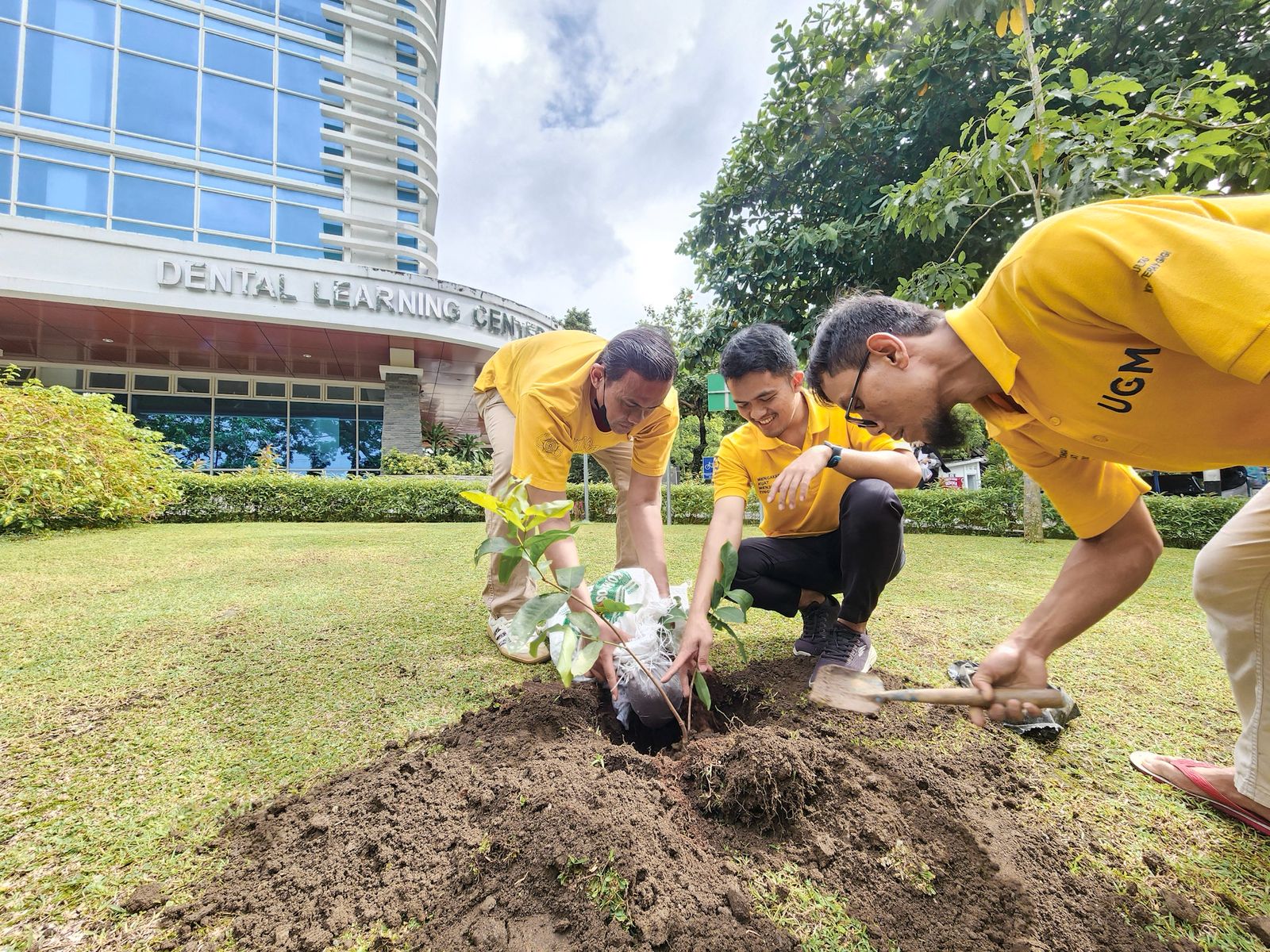
The Faculty of Dentistry, Universitas Gadjah Mada (FKG UGM), once again demonstrated its commitment to sustainability and campus community health through the implementation of the Nutri Garden program. This initiative involved planting fruit trees and vegetables on Friday (14/11/2025) in the courtyard of the Dental Learning Center (DLC). The program was designed to support the implementation of the Sustainable Development Goals (SDGs) while increasing awareness among the academic community about healthy nutrition, vegetable consumption, and sustainable agricultural practices.
The activity began at 7:00 a.m. with a “Clean Friday” agenda, during which participants worked together to clean the surrounding environment. A sense of camaraderie was evident from the outset as staff and faculty interacted while preparing the planting area. The scent of moist soil and the fresh morning air further energized participants before the planting session began.
During the main activity—planting fruit trees and vegetables—the DLC courtyard was filled with enthusiasm. Participants eagerly selected high-quality seedlings such as spinach, water spinach, chili peppers, tomatoes, and various fruit plants to be jointly cultivated. Laughter and cheerful remarks were heard as some participants tried planting techniques for the first time or guided one another on optimal seedling placement. Several staff members captured the moment through photographs, ranging from close-ups of seedlings to group selfies against the backdrop of the newly formed garden.
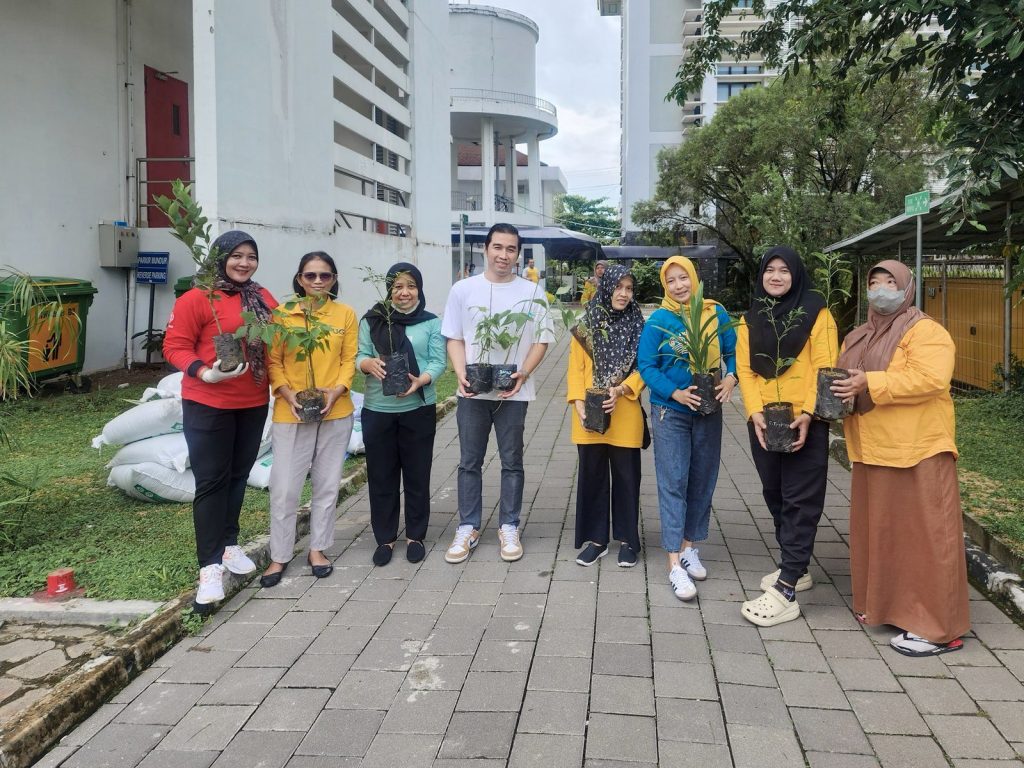
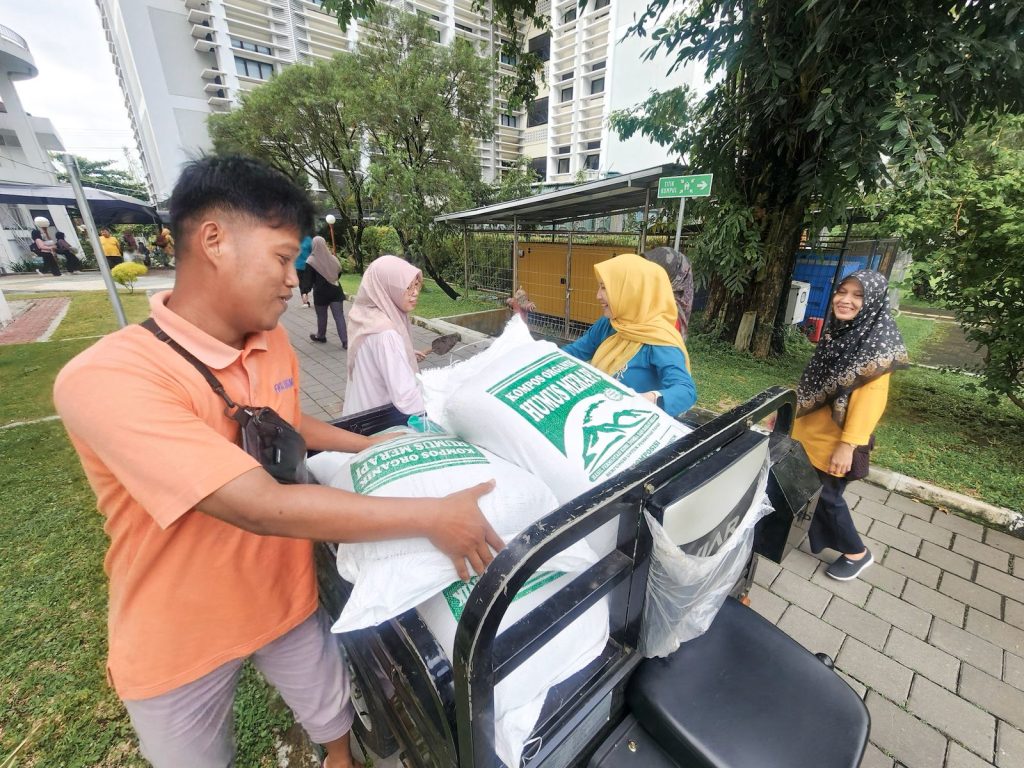
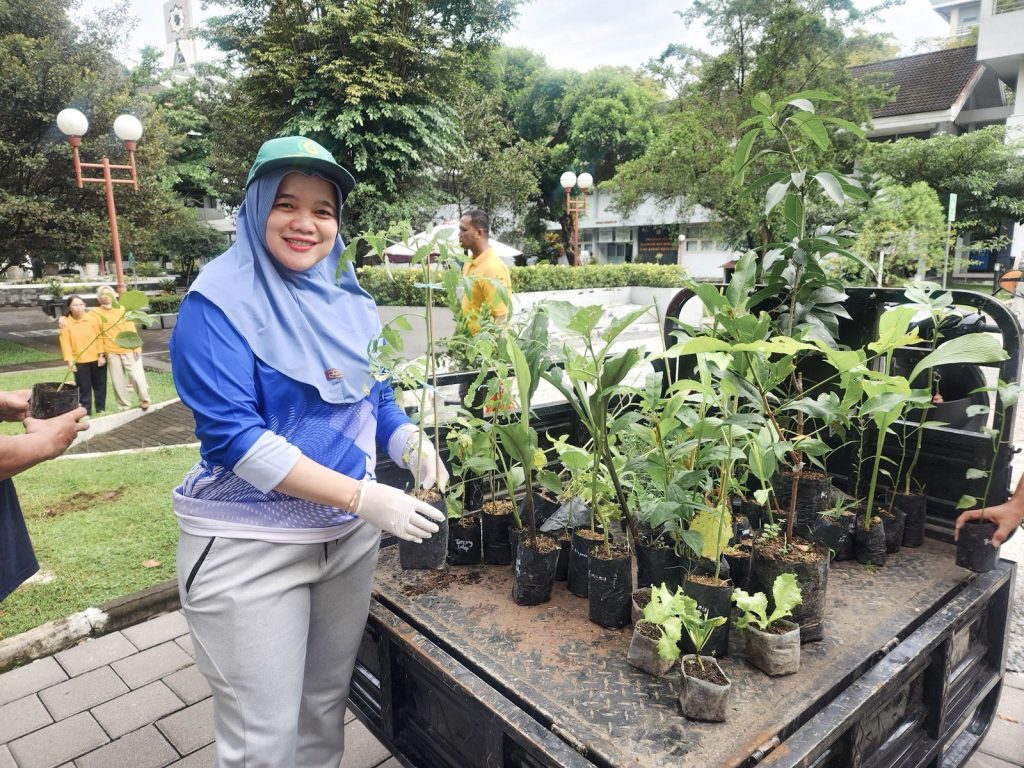
A strong spirit of mutual cooperation was clearly present. Some participants prepared the planting medium, others watered the seedlings, while others arranged pots neatly and aesthetically. Teamwork emerged naturally, reflecting a shared goal: creating a small green garden that would eventually provide health benefits through the distribution of harvested produce.
Beyond planting, the activity also served as an informal learning space. Faculty and staff exchanged experiences about home gardening, plant care tips, and the benefits of consuming fresh vegetables daily. These discussions enriched the participants’ experience and reinforced that Nutri Garden is not merely about planting, but also about continuous education on healthy lifestyles.
The Nutri Garden program directly contributes to several SDGs, particularly SDG 3 (Good Health and Well-being), SDG 2 (Zero Hunger), and SDG 12 (Responsible Consumption and Production). By producing vegetables independently, the faculty aims not only to improve staff health but also to promote responsible and environmentally friendly consumption practices.
The event concluded with a group photo session filled with proud smiles and joy. Participants appeared satisfied as they observed the results of their collective effort—neatly planted rows, well-watered soil, and a new garden beginning to flourish. The organizing committee expressed gratitude for the enthusiasm and cooperation of all participants and hoped that this activity would become a regular agenda, strengthening a culture of healthy, green, and sustainable living within FKG UGM.
Author: Rizky B. Hendrawan | Photo: Fajar Budi H