
drg. Anrizandy Narwidina, M.DSc, Sp.KGA, Ph.D., as the Head of the Cooperation and International Affairs Unit, in his remarks expressed gratitude to the team consisting of academic, student affairs, and cooperation divisions for their hard work so far. Prof. Witjes attended as a representative and an important figure in the Maxillofacial Oncologyprogram. The event titled “Contemporary Strategies in Maxillofacial Oncology: The Assessment Process for Functional Development”was expected to bring further success.
drg. Poerwati Soetji Rahajoe, Sp.B.M.M., Subsp. T.M.T.M.J.(K), Ph.D., as the Head of the Department of Oral and Maxillofacial Surgery, in her remarks, expressed thanks and welcomed Prof. Witjes on his visit to Yogyakarta, particularly at FKG UGM. With his clinical and scientific experience, it is hoped that this collaboration will continue for a long time and enhance cooperation with the University of Groningen.
Guest Lecture by Prof. Dr. Witjes
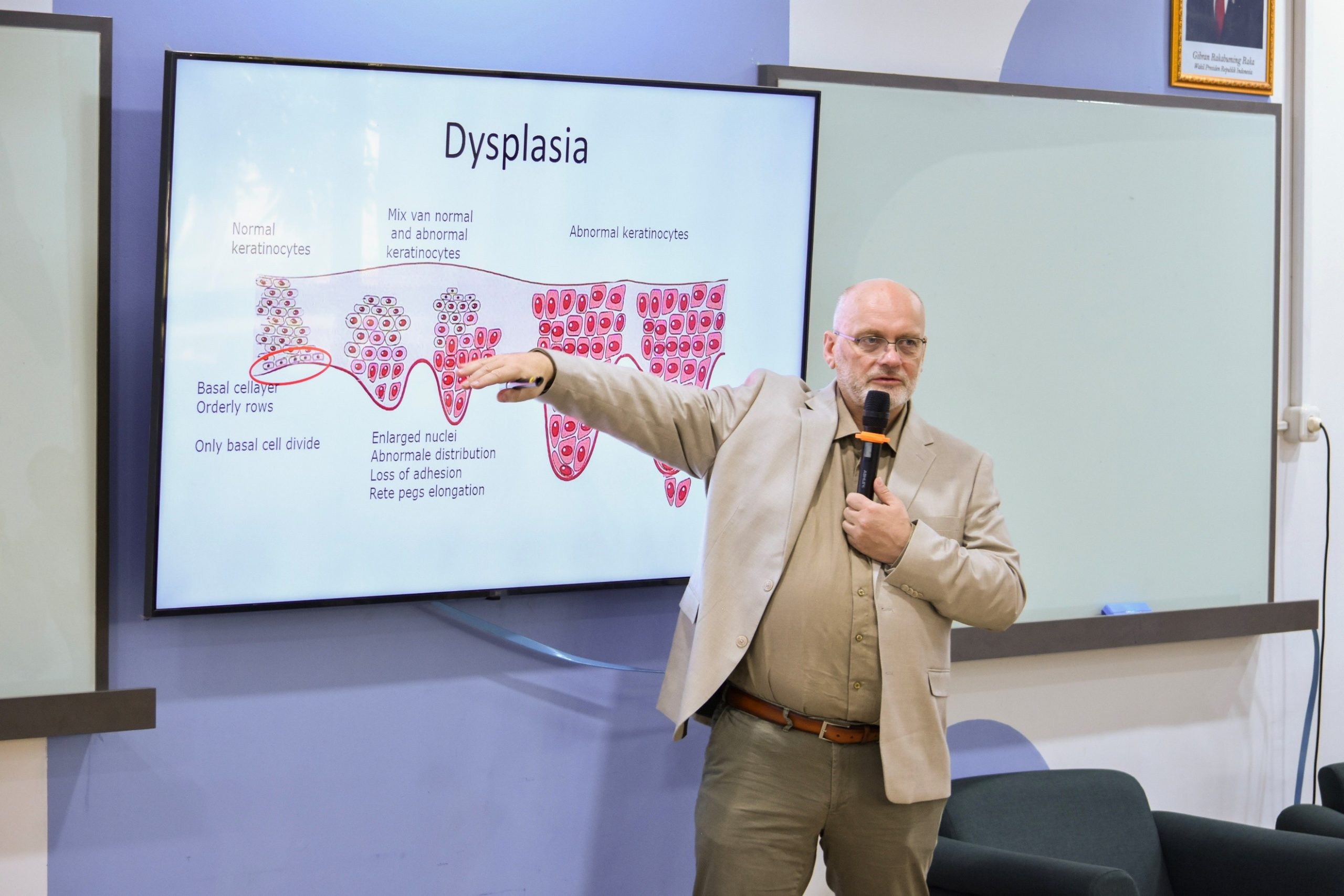
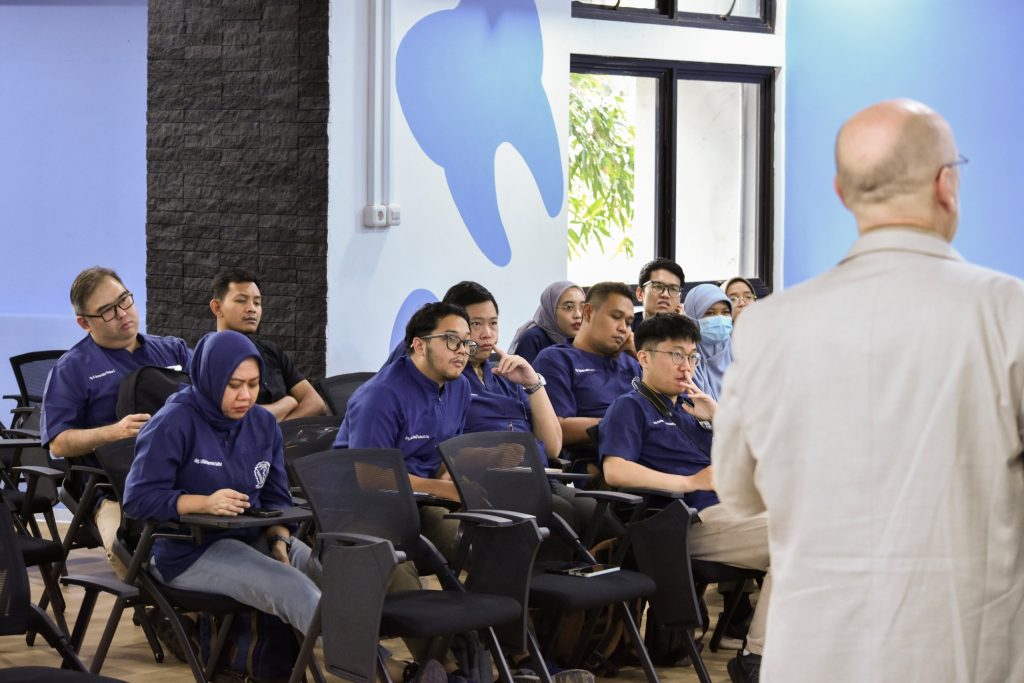
Prof. Dr. Witjes from the University Medical Center Groningen delivered a guest lecture on contemporary strategies in maxillofacial oncology, focusing on potentially malignant oral disorders, including leukoplakia and erythroplakia. He discussed prevalence, risk factors, and malignant transformation rates of these conditions, emphasizing that surgical excision or CO2 laser treatment is the only effective therapy, while also predicting future advances in screening methods and risk assessment tools. During the Q&A session, Prof. Dr. Witjes addressed clinical questions regarding treatment options, characteristics of proliferative verrucous leukoplakia, and follow-up protocols based on risk assessment.
Prof. Dr. Witjes was welcomed as a guest lecturer for a two-day series on contemporary strategies in maxillofacial oncology at the Faculty of Dentistry. drg. Anrizandy Narwidina, M.DSc, Sp.KGA, Ph.D., and drg. Poerwati Soetji Rahajoe, Sp.B.M.M., Subsp. T.M.T.M.J.(K) delivered opening remarks as a form of honor for the presence of Prof. Dr. Witjes from the University Medical Center Groningen, the Netherlands. Prof. Dr. Witjes, with an impressive background, including his appointment as Professor of Head and Neck Oncology in 2021, thanked the hosts for their warm welcome and appreciated the long-standing relationship with the Department of Oral and Maxillofacial Surgery at FKG UGM.
General Overview of Potentially Malignant Oral Disorders
Potentially malignant oral disorders, explaining the shift in terminology from “precancerous lesions” to a broader concept encompassing conditions that increase cancer risk even without visible lesions. He described various types including leukoplakia (white patches), erythroplakia (red patches), and proliferative verrucous leukoplakia, emphasizing that leukoplakia is a clinical diagnosis made by exclusion when no other cause can be identified. Prof. Dr. Witjes explained that the color of the lesions provides insight into the underlying processes—white patches usually indicate thickening of the keratin layer, while red patches reflect thinning or increased vascularization, with erythroplakia carrying a very high cancer risk.
Risk Assessment of Leukoplakia Malignancy
Prof. Dr. Witjes discussed the global prevalence of leukoplakia, about 1% in the general population, but varying significantly depending on the studied patient population. He explained that the risk of malignant conversion ranges from 1.4% to 15% depending on the type of lesion, with proliferative verrucous leukoplakia carrying a particularly high risk despite often showing no dysplasia on biopsy. He stressed the importance of considering clinical appearance alongside histopathology, noting that in the Netherlands the conversion rate has been calculated at around 2.7% over 10 years, and predicting that future risk assessment will increasingly rely on molecular markers, DNA mutation analysis, and artificial intelligence models rather than dysplasia assessment alone.
Advances in Leukoplakia Treatment and Screening
Prof. Dr. Witjes discussed the future of leukoplakia treatment, highlighting the importance of biopsy for diagnosis while predicting a shift toward at-home screening methods such as self-use toothbrush devices. He explained that surgical excision or CO2 laser therapy remains the only effective treatment for leukoplakia, with randomized trials in Italy showing promising results for surgical removal compared to a wait-and-see approach. Regular follow-up is essential, with screening programs showing a 27% reduction in oral cancer mortality among high-risk populations.
Author: Andri Wicaksono | Photo: Fajar Budi Harsakti