

“When we design curricula for dental schools, we often need to look beyond our own experiences and review evidence, especially evidence from specialist groups, to guide us in determining the types of treatments we should teach our undergraduate students, and also the advanced treatments we should teach our postgraduate students as future leaders of the profession,” — Prof. Dr. David John Manton
The Department of Conservative Dentistry & the Department of Pediatric Dentistry held a Guest Lecture on 29 July 2025, inviting Prof. Dr. David John Manton from Groningen University , an Australian national, to share his knowledge and experiences. As dental professionals, understanding how to restore vitality and applying minimal intervention care is essential. With the direct advancement of intensive materials and clinical techniques, vital pulp therapy has become an essential component of conservative endodontic practice. This Guest Lecture was expected to encourage critical thinking and inspire both learning and research.
Prof. David Manton presented on Clinical Pulp Management: An Evolving Approach. The most significant change in clinical management in recent years has been in pulp management. The focus has shifted from a restorative-oriented approach to a disease-management-oriented approach. Although predicted, dental caries remain a major global problem.. High prevalence is observed in both developing and wealthy countries. Risky behaviors beginning in childhood often persist into adulthood.
Paradigm Shift in Caries Treatment:
Traditional Focus: Creating restorations that are aesthetically pleasing. Current Focus: Managing the course of the disease. Restorations alone are not sufficient to reduce the risk of dental caries. The underlying causes must be addressed, such as sugar intake, cariogenic biofilm, and oral hygiene.
Concept of Minimal Intervention
Key Principles: Preserve as much tooth structure as possible. Create restorations that rarely need replacement. Main Goa : Keep teeth healthy and pain-free throughout life.
Definition of Developing Lesions: Deep lesions are now classified as “deep” and “very deep.” Deep lesion: The pulp or one-quarter of the dentin forms a bridge between the pulp and the lesion. The thickness of the bridge, typically at least 1 mm, is crucial in treatment planning.
Current Management of Deep Lesions
Tissue Removal Approaches: Ultra-conservative: Create space for restorations while preserving demineralized tissue. Stepwise approach: Two visits using an intermediary material. Selective removal: A newer concept with varying levels of tissue removal.
Evidence-Supported Findings: Traditional teaching of complete caries removal is now being challenged. Research shows similar outcomes between one-step and two-step procedures. Bacteria sealed under good restorations usually die or become inactive. Without a substrate, caries-causing bacteria cannot survive. Proteolytic bacteria can raise pH, which supports better remineralization.
Pulp Protection: Evidence shows that pulp protection is essential when working close to it. Materials like calcium silicate cements are recommended over traditional materials.
Action List: Review current clinical protocols for managing deep caries. Consider adopting selective caries removal techniques.. Evaluate materials used for pulp protection in deep lesions. Develop patient education materials explaining caries as a disease process, not just “holes in teeth.”
Discussion on Dental Treatment Approaches
Use of Silver Diamine Fluoride (SDF): Not recommended for deep lesions due to the risk of pulp penetration. It may accelerate remineralization of demineralized tissue but leaves difficult-to-remove stains. A two-step process is recommended instead of leaving tissue open and vulnerable.
Management of Deep Caries: The “Three Mix” formula containing minocycline and metronidazole, originally developed in Niigata, is used for pulp management and serves as a disinfectant for deep caries.
Considerations in Pulp Therapy
Conservative Approach: Generally, healthy pulp does not require complicated treatment. Sealing microbes with good restorations has a high success rate. Evidence shows that leaving caries and sealing them (as in the Hall technique) can be effective. The focus should be on clean margins rather than complete caries removal.
Anatomical Challenges in Pediatric Patients: Primary teeth anatomy is more complex than permanent teeth. There are several blind accessory canals in deciduous teeth. Curved canals and physiological resorption processes complicate treatment further.
Instrumentation Recommendations
Rotary Instruments: Strongly recommended over hand instruments. Provide more effective cleaning with less scraping. A three-file system has been developed specifically for primary molars. Single rotary files can be used to increase efficiency under general anesthesia. Special “Kinder files” are available for primary teeth.
Pulpotomy vs. Root Canal Treatment
Vital Pulp Therapy: Comparable or even better outcomes than root canal treatment. Failures are usually due to diagnostic errors, not technique. A cited paper by Asgari showed favorable periapical outcomes. More cost-effective than full root canal treatment.
Action List: Review evidence on the use of SDF in permanent teeth with deep lesions. Consider rotary instrument options for pediatric endodontic procedures. Evaluate vital pulp therapy protocols compared with traditional root canal approaches.
Discussion on Vital Pulp Therapy
Age Considerations in Phytoporb Therapy: Evidence from a Brazilian study showed effectiveness across all ages, including patients up to 80 years old. Long-term follow-up data is available up to 29 years. The old belief that vital pulp therapy was only suitable for children with open apices is now outdated.
Isolation and Bacterial Control:
Proper isolation using a rubber dam is the most critical factor for success. Clinical outcomes should be prioritized over concerns about bacterial presence.
Bleeding Characteristics as Infection Indicators: pulp that has stopped bleeding is unlikely to be infected. Continuous bleeding or necrosis indicates serious infection.
Materials and Success Rates: Calcium silicate materials are preferred over calcium hydroxide. Calcium silicate can increase success rates by about 10% compared to calcium hydroxide. Guidelines from the European Society of Endodontics are more recommended than the American guidelines, described as “fundamentalist.” Dr. Hal Duncan from Dublin is a key expert in this field.
Clinical Considerations
Hemostasis Management: Pediatric approach: Wait for bleeding to stop naturally without chemical intervention. Endodontic approach: Typically uses 2.5% sodium hypochlorite solution. Concerns exist that hemostatic agents may mask diagnostic bleeding signs. Sodium hypochlorite serves as a disinfectant but is less effective at stopping bleeding compared to ferric sulfate.
Pain Management: Prolonged pain is linked to poor outcomes in vital pulp therapy. Most pain fibers are in the coronal pulp, not the radicular pulp. Removing coronal pulp often provides significant pain relief. Emergency care involving coronal pulp removal and temporary dressings can effectively relieve acute pain.
Case Selection: A deeper history of pain increases the likelihood of requiring root canal treatment. Early intervention leads to better outcomes in vital pulp therapy. Patients should seek treatment promptly when symptoms arise.
Action Plan: Review European Society of Endodontics guidelines for vital pulp therapy protocols. Consider the use of calcium silicate materials for improved success rates. Develop clinical decision trees based on pain characteristics and bleeding response.
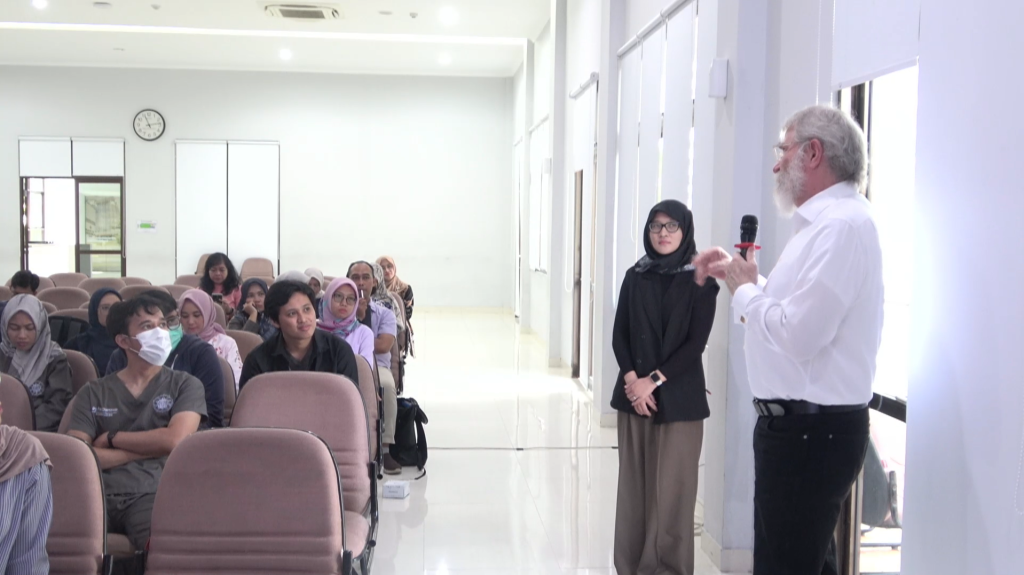
The Guest Lecture was interactive, attended by lecturers from the Department of Pediatric Dentistry & Department of Conservative Dentistry, as well as residents from the PPDGS KGA & PPDGS Conservative Dentistry programs. Prof. David actively responded to questions and feedback from the Guest Lecture participants.
Author: Andri Wicaksono | Photo: Fajar Budi H