
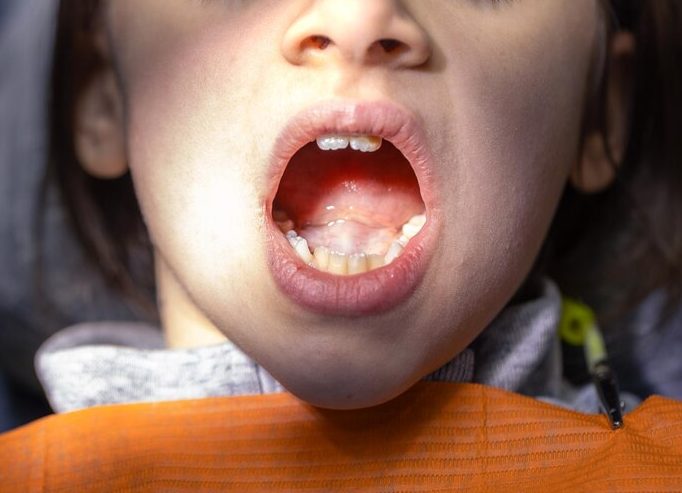
Oral candidiasis, or fungal infection in the mouth, is a condition caused by an overgrowth of Candida fungus, primarily Candida albicans. This condition is more commonly found in children, especially those with weakened immune systems, such as children with Down syndrome. In this context, it is essential for parents to understand the symptoms, causes, and appropriate treatment methods.
Symptoms of Oral Candidiasis
Symptoms may vary, but common signs that parents should look out for include:
- White patches on the tongue and mouth lining: A child’s tongue may appear white or have a coating, which is a typical sign of this infection.
- Pain or discomfort: Children may feel pain while eating or swallowing.
- Difficulty eating: Due to discomfort, children may lose appetite or become fussy during meals.
A study by UGM Faculty of Dentistry student Dhani Indra Permana, supervised by Dr. drg. Bernadetta Esti Chrismawaty, M.Kes., MD.Sc., and Prof. Dr. drg. Dewi Agustina, MD.Sc., examined the oral Candida profile in children with Down syndrome. The study showed that these children are more susceptible to fungal infections, highlighting the need for extra attention to their oral health.
Causes of Oral Candidiasis
Several factors can lead to the development of oral candidiasis:
- Weakened immune system: Children, particularly those with chronic illnesses or specific medical conditions, are more prone to infections.
- Antibiotic use: Antibiotics can disrupt the balance of oral flora, allowing Candida to proliferate.
- Poor oral hygiene: Inadequate oral care increases the risk of fungal infection.
Treatment for Oral Candidiasis
Treatment for children typically involves:
- Antifungal medication: Doctors may prescribe oral or topical antifungal drugs.
- Proper oral hygiene: Teaching children to brush their teeth and maintain oral cleanliness helps prevent infection.
- Balanced DietEnsuring the child receives adequate nutrition and avoids excessive sugar, which can encourage Candida growth.
Another study conducted by UGM Faculty of Dentistry student Mira Hidayanti, supervised by drg. Trianna Wahyu Utami, MD.Sc., Ph.D., and drg. Ruslin, M.Kes., Ph.D., investigated the effect of clove (Syzygium aromaticum) oleanolic acid concentrations on the adhesion rate of Candida albicans. The in vitro study indicated that natural ingredients like oleanolic acid in cloves could inhibit the adhesion of C. albicans, offering potential as a supportive treatment for oral candidiasis.
***
Parents should stay alert to the symptoms of oral candidiasis and maintain consistent oral hygiene for their children. By understanding the symptoms, causes, and appropriate treatments, parents can help prevent more serious complications. If in doubt or if symptoms worsen, do not hesitate to consult a dentist or healthcare professional.
References
Dhani Indra Permana, Dr. drg. Bernadetta Esti Chrismawaty, M.Kes., MD.Sc., Prof. Dr. drg. Dewi Agustina, MD.Sc. MD.Sc., Oral Candida Profile in Children with Down Syndrome at SLB Negeri 1 Bantul Yogyakarta, https://etd.repository.ugm.ac.id/penelitian/detail/129283
Mira Hidayanti, drg. Trianna Wahyu Utami, MD.Sc., Ph.D., drg. Ruslin, M.Kes, Ph.D., Effect of Oleanolic Acid Concentration from Clove (Syzygium aromaticum) on the Adhesion Percentage of Candida albicans (In Vitro Study), https://etd.repository.ugm.ac.id/penelitian/detail/129239
Author: Rizky B. Hendrawan | Photo: Freepik