
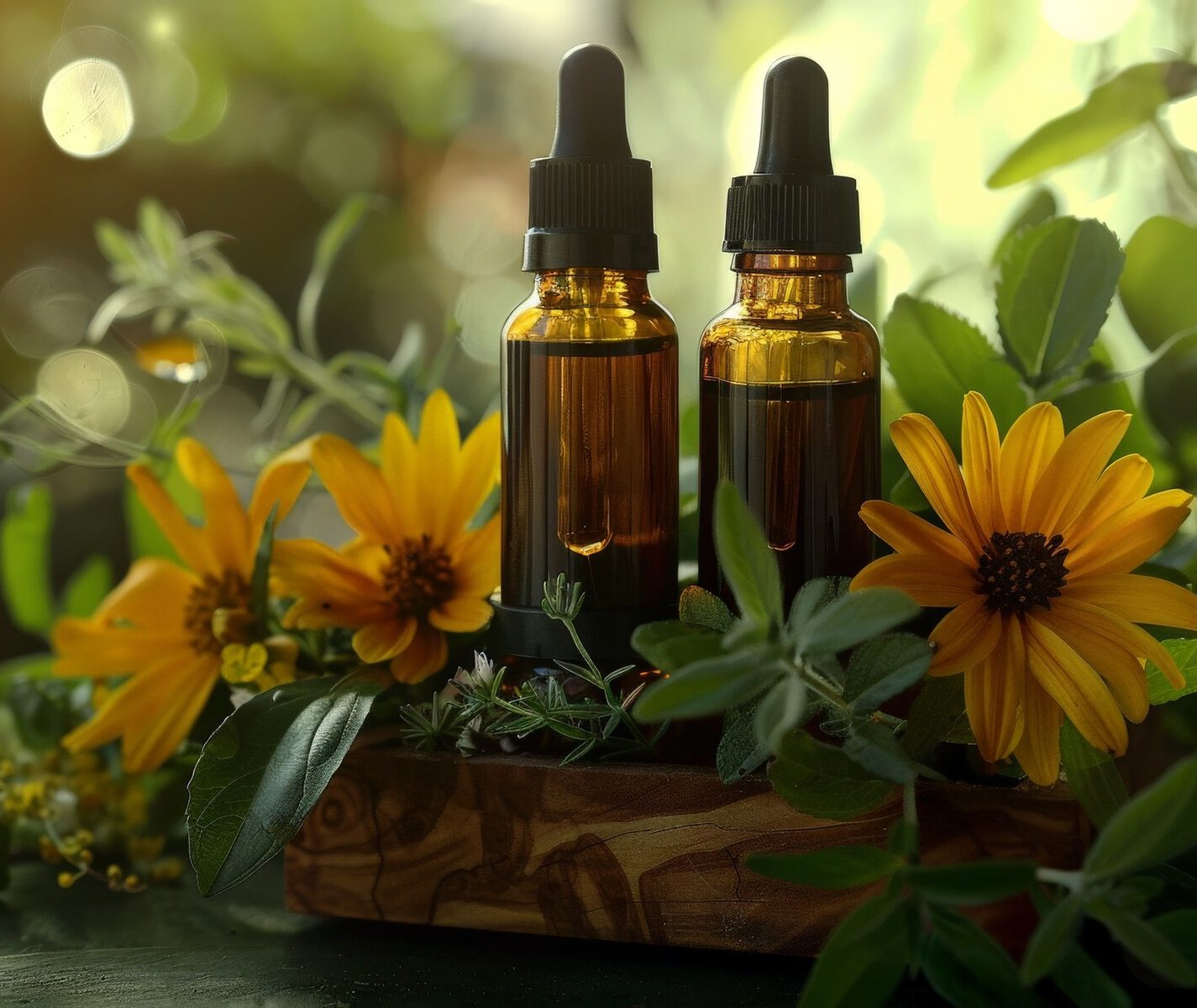
Essential oils have long been used as natural ingredients to support oral and dental health. Numerous studies have shown that essential oils possess antibacterial properties that help reduce the growth of harmful bacteria in the oral cavity. One of the primary benefits of essential oils is their application in mouthwash to decrease the number of bacteria in saliva.
A study conducted by Nadia Fauzia, a student at the Faculty of Dentistry, Universitas Gadjah Mada (UGM), under the supervision of Prof. drg. Tetiana Haniastuti, M.Kes., Ph.D., and drg. Hendrawati, M.Kes., revealed that the activation duration of essential oil-based mouthwash can influence the number of bacterial colonies in saliva. This indicates that the effectiveness of essential oils as antimicrobial agents depends significantly on their usage duration. These findings support the potential of essential oils as a natural alternative to maintain oral hygiene and reduce the risk of dental and gum infections.
In addition, essential oils extracted from certain plants have demonstrated efficacy in inhibiting the growth of bacteria linked to periodontal disease. A study by Dinda Andiniga M. S., also a student at FKG UGM, supervised by drg. Nunuk Purwanti, M.Kes., Ph.D., and drg. Mayu Winnie Rachmawati, M.Sc., Ph.D., found that essential oil from yellow betel leaves (Piper betle L.), when used in mouthwash, can inhibit the growth of Aggregatibacter actinomycetemcomitans, a bacterium associated with gum disease. This suggests that essential oils derived from natural ingredients like yellow betel leaves offer a promising, safe, and effective option for herbal mouthwash formulations.
Overall, the use of essential oils in oral care offers numerous benefits—from reducing harmful bacteria to helping prevent gum disease. With increasing scientific support for their efficacy, essential oils represent a viable natural solution for maintaining oral and dental health. Their use also supports the United Nations Sustainable Development Goals (SDGs), particularly SDG 3 (Good Health and Well-being), SDG 12 (Responsible Consumption and Production), and SDG 15 (Life on Land), through the preservation of herbal plants and biodiversity.
References
Nadia Fauzia, Prof. drg. Tetiana Haniastuti, M.Kes., Ph.D., drg. Hendrawati, M.Kes., The Effect of Essential Oil Mouthwash Activation Duration on the Number of Salivary Bacterial Colonies, https://etd.repository.ugm.ac.id/penelitian/detail/188323
Dinda Andiniga M S, drg. Nunuk Purwanti, M.Kes., Ph.D., drg. Mayu Winnie Rachmawati, M.Sc.,Ph.D., Effect of Yellow Betel Leaf (Piper betle L.) Essential Oil Concentration in Mouthwash on the Growth of Aggregatibacter actinomycetemcomitans (In Vitro Study), https://etd.repository.ugm.ac.id/penelitian/detail/86605
Author: Rizky B. Hendrawan | Editor: Shinta
Photo: Freepik