
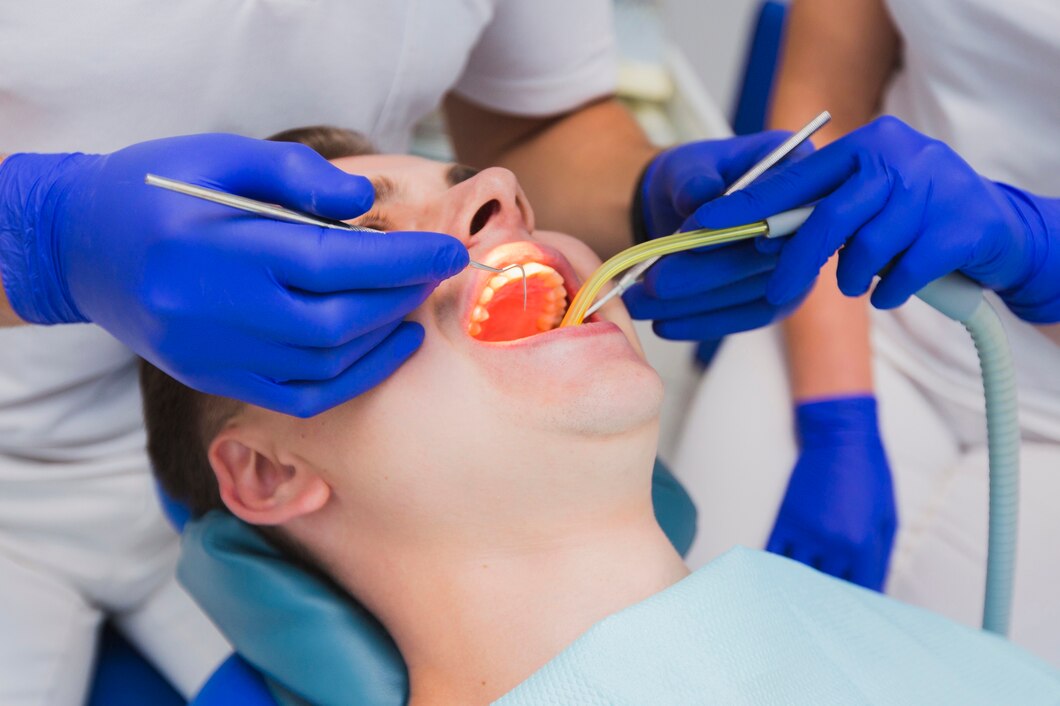
Periodontal disease is a dental health issue that can lead to damage of the supporting structures of the teeth, such as the gums and alveolar bone. Uncontrolled bacterial infections can worsen this condition, causing chronic inflammation and increasing the risk of tooth loss. One of the latest innovations in the treatment of periodontal disease is ozone therapy, which is gaining popularity due to its strong antibacterial properties and its ability to accelerate tissue healing.
How Does Ozone Therapy Work?
In dentistry, ozone therapy utilizes medical ozone (O₃), a gas known for its ability to effectively eliminate bacteria, viruses, and fungi. Ozone can be applied in various forms, including gas, ozonated water, or ozonated oil, and is directly applied to the infected area. Ozone works by oxidizing bacterial cell membranes, causing pathogenic microorganisms to die without harming healthy tissue.
Ozone therapy is gaining more attention in the field of dentistry for its potential in treating periodontal disease. Research by Dr. drg. Dahlia Herawati, SU, Sp.Perio(K) and Prof. Dr. drg. Sudibyo, S.U., Sp.Perio(K) menunjukkan bahwa aplikasi topikal ozone olive oil , shows that the topical application of ozone olive oil plays a role in the angiogenesis of alveolar bone during the healing process of periodontitis. Their study indicates that ozone can promote tissue regeneration by stimulating the growth of new blood vessels, which is vital for the recovery of damaged periodontal tissue.
In addition, research by Dr. drg. Ahmad Syaify, Sp.Perio (K) and Dr. drg. Dahlia Herawati, SU, Sp.Perio(K) , examined the effects of ozonation on propolis-based periodontal dressings made from Trigona itamabee products. The results showed that ozone treatment improved the inhibition of Staphylococcus aureus, a bacterium involved in periodontal infections. These findings strengthen the evidence that ozone is not only effective in killing pathogenic bacteria but can also be used in natural-based formulations to enhance the effectiveness of periodontal therapy.
Benefits of Ozone Therapy in Periodontitis Treatment
- Reduces Bacterial Infection
Ozone has a stronger bactericidal effect than conventional antiseptics , helping to reduce the number of pathogenic microorganisms in the oral cavity and inhibiting the development of biofilm that contributes to periodontal disease. - Reduces Gum Inflammation
Ozone therapy suppresses the body's inflammatory response to periodontal infection, which helps reduce swelling, redness, and bleeding of the gums. This anti-inflammatory effect makes ozone therapy a more comfortable option for patients compared to conventional methods that often cause irritation to gum tissue. - Promotes Tissue Healing
Ozone enhances tissue oxygenation and stimulates collagen production, which plays a crucial role in the regeneration of gum tissue damaged by periodontitis. It also promotes angiogenesis and fibroblast cell proliferation, speeding up the wound healing process in periodontal tissues. - Reduces Antibiotic Dependence
Due to its strong antimicrobial properties, ozone therapy can lessen the reliance on antibiotics. This offers a safer alternative to avoid the risk of antibiotic resistance, which often arises from prolonged medication use. - Minimal Side Effects
Ozone therapy is more biocompatible with healthy tissues compared to chlorhexidine-based antiseptics, which can cause tooth discoloration or irritation in the oral cavity. Patients undergoing ozone therapy report fewer side effects and better outcomes compared to conventional periodontal treatment methods.
Application of Ozone Therapy in Periodontal Care
Ozone therapy can be used as an adjunct in the treatment of periodontitis, alongside standard techniques such as scaling and root planing. In some cases, ozone is also applied directly into periodontal pockets to sterilize areas that are difficult to reach with conventional tools.
***
With its various benefits, ozone therapy has emerged as an innovative solution in the treatment of periodontal disease. Nevertheless, further research is still required to confirm its long-term effectiveness and to standardize procedures in dental practice. For patients with chronic gum disease, however, this therapy offers an effective and comfortable option to improve overall oral and dental health. Due to its proven benefits, ozone therapy aligns with the Sustainable Development Goal (SDG) 3: ensuring healthy lives and promoting well-being for all at all ages. Innovations in the use of ozone in dentistry also contribute to SDG 9, which focuses on developing resilient infrastructure, promoting inclusive and sustainable industrialization, and fostering innovation in healthcare. Moreover, by reducing the need for excessive chemicals and supporting the use of natural resources such as propolis, this therapy supports SDG 12 by promoting responsible consumption and production patterns.
References
Dr. drg. Dahlia Herawati, SU, Sp.Perio(K), Prof. Dr. drg. Sudibyo, S.U., Sp.Perio. (K), The Effect of Topical Application of Ozone Olive Oil on Alveolar Bone Angiogenesis During Periodontitis Healing (An In Vivo Study on Sprague Dawley), https://etd.repository.ugm.ac.id/penelitian/detail/96520
Dr. drg. Ahmad Syaify, Sp.Perio (K), Dr. drg. Dahlia Herawati, SU, Sp.Perio(K), The Effect of Ozonization Time of Trigona itama Bee Raw Propolis Formulated Periodontal Dressing on the Inhibitory Power Against Staphylococcus aureus, https://etd.repository.ugm.ac.id/penelitian/detail/223935
Author: Rizky B. Hendrawan | Photo: Freepik