
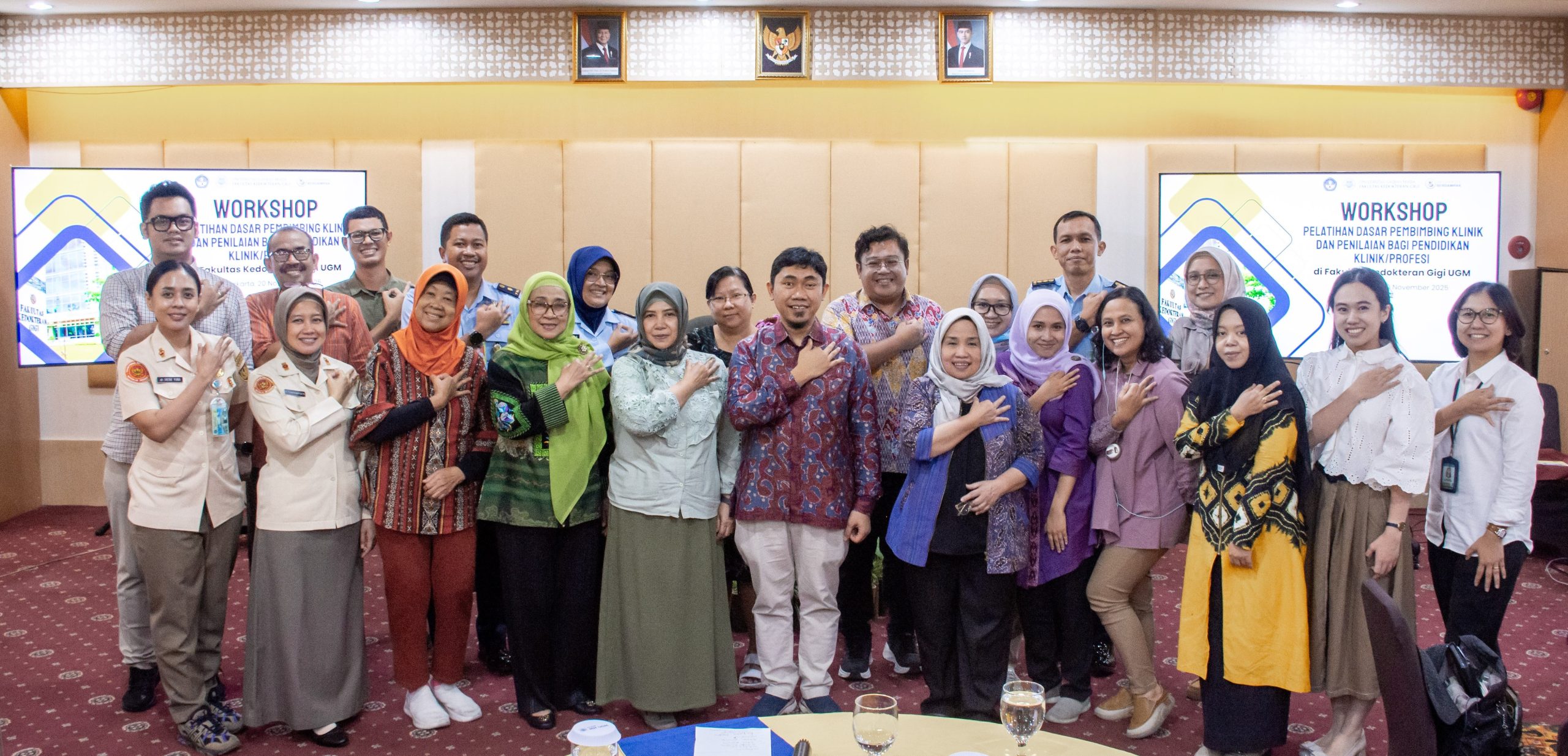
Yogyakarta, 20 November 2025 — The Faculty of Dentistry (FKG) UGM once again organized a Basic Training Workshop for Clinical Supervisors, attended by 46 participants from the UGM Dental Hospital (RSGM) and its network of teaching hospitals. The two-day workshop featured Dr. Ide Pustaka Setiawan, M.Sc., Sp.OG, as the main speaker.
The event opened with a committee report delivered by Dr. drg. Cendrawasih Andusyana Farmasyanti, M.Kes., Sp.Ort(K), who emphasized that the training aimed to align supervisors’ understanding of clinical education principles, bedside teaching, feedback provision, and standardized assessment. “Through this training, we hope to enhance quality, consistency in assessment, and the standard of supervision across all educational settings,” she stated.
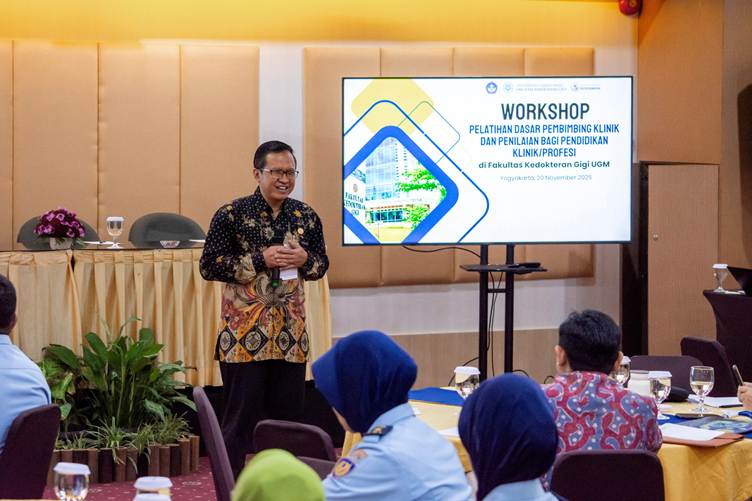
In his remarks, the Dean of FKG UGM, Prof. Dr. drg. Suryono, S.H., M.M., Ph.D., highlighted changes in student learning patterns in the era of artificial intelligence (AI). He stressed that clinical supervisors must understand technological developments and not be misled by student work that appears excellent but may actually be generated by AI. “Please do not be deceived. Students today can produce narratives and analyses using ChatGPT or Gemini. We must balance this with AI literacy, not reject it outright,” he said, prompting laughter from participants.
With his characteristic humor, the Dean encouraged participants to enjoy the supervision process rather than view it as a burden. “Work should not always feel like a burden. Life should be enjoyed. If I joke often, it’s so everyone feels happy,” he added.
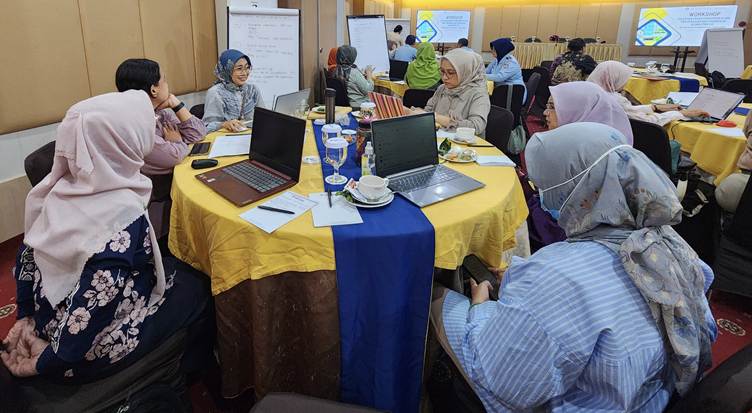
Pre-Test, Post-Test, and an Interactive Learning Atmosphere
Following the opening remarks, participants completed a 10-minute pre-test. The highest scores were achieved by drg. Vima, drg. Yanuarti, drg. Pram, and drg. Vincensia. Special souvenirs were prepared for the highest post-test scores. The training atmosphere was relaxed, friendly, and filled with humor from the facilitators.
Session 1 Material: Principles of Clinical Education in Practice
Dr. Ide Pustaka Setiawan began his session with a brief introduction and personal anecdotes. He emphasized that clinical learning is not only about technical skills, but also about experience, coaching, mentoring, and reflection.
1. Competency-Based Clinical Education
Each clinical case must be linked to student competencies according to their level. Not all cases must be performed by students, but every case offers learning opportunities. “Patients are valuable, so every case must be maximized for learning,” he explained.
2. Student-Centered Learning and Assessment of Student Ability
Supervisors must assess student readiness before allowing procedures. “Students must be ‘diagnosed’ first. Not all students are the same. There are levels from 1 to 4,” he said, noting that excessive expectations can lead to misunderstandings and emotional stress.
3. Patient-Centered Care
Although clinics are learning environments, patients are entitled to the best possible care. “Do not discuss issues in front of patients. Intervention is allowed if a student’s action is dangerous, but discussion must take place afterward,” he emphasized.
4. Stages of Clinical Supervision
Four readiness stages (R1–R4) determine supervisory approaches:
- R1: Student has never seen the procedure → mandatory demonstration
- R2: Student begins practicing → close supervision
- R3: Student is more confident → supervision
- R4: Student is competent → delegation
5. The Importance of Effective Feedback
Feedback should be based on direct observation, specific, behavior-focused (not personal), and delivered promptly after the procedure.
Learning Models: TBL, Simulation, and Quality Enhancement
Dr. Ide shared experiences from FK-KMK UGM in developing simulation-based learning to meet competencies that are difficult to obtain from real clinical cases. He encouraged FKG UGM to expand networking and simulation opportunities so student competencies remain fulfilled despite increasing limitations in clinical patient availability.
The workshop was dynamic, interactive, and practice-oriented. Through shared understanding and enhanced supervisory skills, FKG UGM reaffirmed its commitment to maintaining the quality of professional dental education amid rapid technological developments and evolving clinical challenges.
(Andri Wicaksono, Photo: Fajar Budi Harsakti)

