
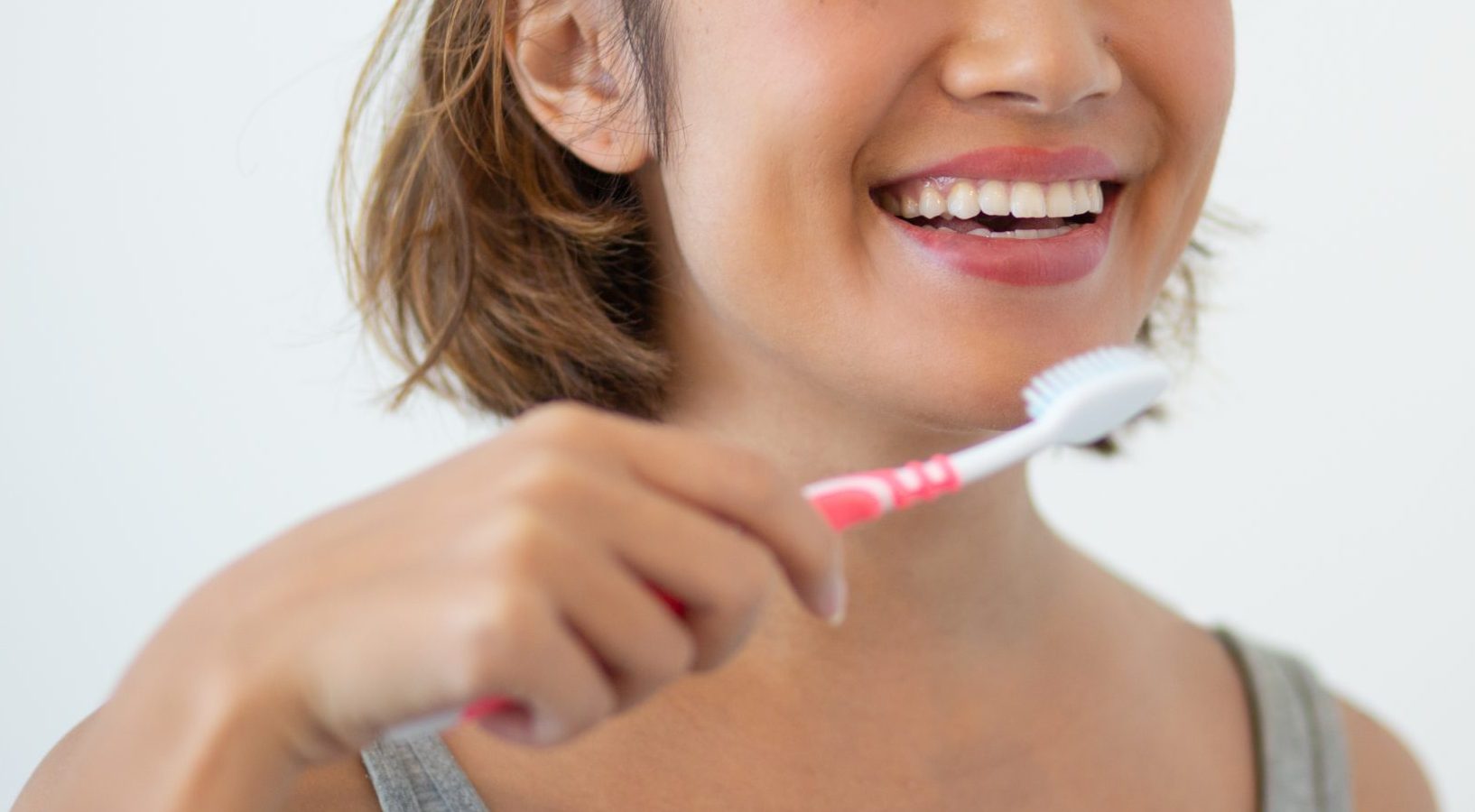
More than half of Indonesia's population, approximately 57.6%, experiences oral and dental health problems. Yet only 10.2% receive treatment. Those figures are concerning enough, but another fact is even more striking: 72.8% of young Indonesians report brushing their teeth twice a day, yet only 7.4% actually do so at the recommended times—after breakfast in the morning and before going to bed at night. They know what to do, but they do not do it. This is the gap that recent research by FKG UGM lecturer Rieski Prihastuti, S.Kp.G., MPH., Ph.D., together with a team from Tokushima University, Japan, sought to bridge. Published in the international journal BDJ Open in 2025, the study showed that watching a three-minute video every day for 21 days could significantly change university students' oral hygiene behavior.
A Gap That Has Been Left Unaddressed for Too Long
Dental health education has traditionally tended to stop at the level of knowledge. People are told that brushing their teeth is important, taught the proper technique, and then left to their own devices. The result is predictable: information goes in, but habits do not change.
Rieski and her team tested a different approach. They designed an intervention based on the Theory of Planned Behavior (TPB)—a psychological framework explaining that a person's behavior is influenced by attitudes, social norms, and their belief in their own ability to make a change. The theory emphasizes that changing behavior requires more than simply telling people what to do. They need to believe that the action is important, that the people around them are also doing it, and that they themselves are capable of doing it.
This randomized clinical trial involved 71 students from the Faculty of Teacher Training and Education at Universitas Ahmad Dahlan, Yogyakarta, and was conducted from November 2022 to March 2023. Participants were divided into two groups: a control group that received only conventional oral health education and an intervention group that participated in a 21-day web-based video program.
The 21-Day Program: From Knowledge to Action
The videos were not long—only three minutes each. Their duration was deliberately designed to correspond to the ideal tooth-brushing time, supplemented by interdental and tongue cleaning, allowing participants to watch them while carrying out their morning or evening routines.
Over the course of three weeks, the video content was introduced progressively. The first week introduced the basics of the oral cavity and the problems that could arise. The second week discussed the relationship between dietary patterns, smoking, and overall health. The third week focused on practical skills: proper tooth-brushing techniques, the use of interdental brushes, and tongue cleaning. Each video was followed by a short quiz. On days 7, 14, and 21, participants received summary videos to reinforce their memory.
The control group did not receive this program. They received only brief instructions at the beginning of the study, similar to what typically occurs during a routine dental visit.
The Results: The Numbers Speak
Three months after the intervention ended, the difference was clear.
The Oral Hygiene Behavior Index (OHBI) score—an index that comprehensively measures oral hygiene behavior—increased from an average of 9.76 to 10.79 in the intervention group. In the control group, meanwhile, the score actually decreased from 10.45 to 9.76. The difference between the two groups was statistically significant.
“Without repeated intervention, oral hygiene behavior may deteriorate over time,” the research team wrote in their article published in BDJ Open.
It was not only behavior that improved. Objective examination results also supported the findings. Caries activity—measured using a resazurin test to detect cariogenic bacterial activity in saliva—improved in the intervention group. Salivary hemoglobin levels, which are associated with gingival inflammation and periodontal conditions, also decreased significantly, indicating healthier gums. Although the total number of bacteria on the tongue did not show a statistically significant difference, a downward trend was still observed.
Oral health knowledge also increased in the intervention group, from an average of 8.27 to 8.94, with a significant difference compared with the control group.
Implications for Oral Health Education
This study does more than demonstrate that short videos can be effective. More importantly, it shows that an approach based on behavioral psychology theories could provide a stronger foundation for oral health education programs, particularly among young people, who are often overlooked.
The measurement methods used in the study are also noteworthy. The team selected methods that were rapid, non-invasive, and practical for use outside clinical settings, including caries activity testing, salivary hemoglobin measurement, and total bacterial counts. This opens opportunities for community-based oral health programs that do not require expensive or sophisticated clinical equipment.
There are, of course, limitations. The study lasted only three months, the participants were predominantly female, and they came from a single institution. Do the effects persist over a longer period? Can the findings be generalized to more diverse populations? These questions remain to be answered by future research.
What is clear, however, is that a three-minute video can be more than just something to watch. It can become a bridge between knowing and doing, between intention and habit, and between knowledge stored in the mind and the actual movement of a toothbrush every night before bed.
Authors: Achmad Zam Zam Aghasy, DDS, M.Kes.; Hazra Alifia Muharam
Photo: Freepik
Source DOI: https://doi.org/10.1038/s41405-025-00368-y