
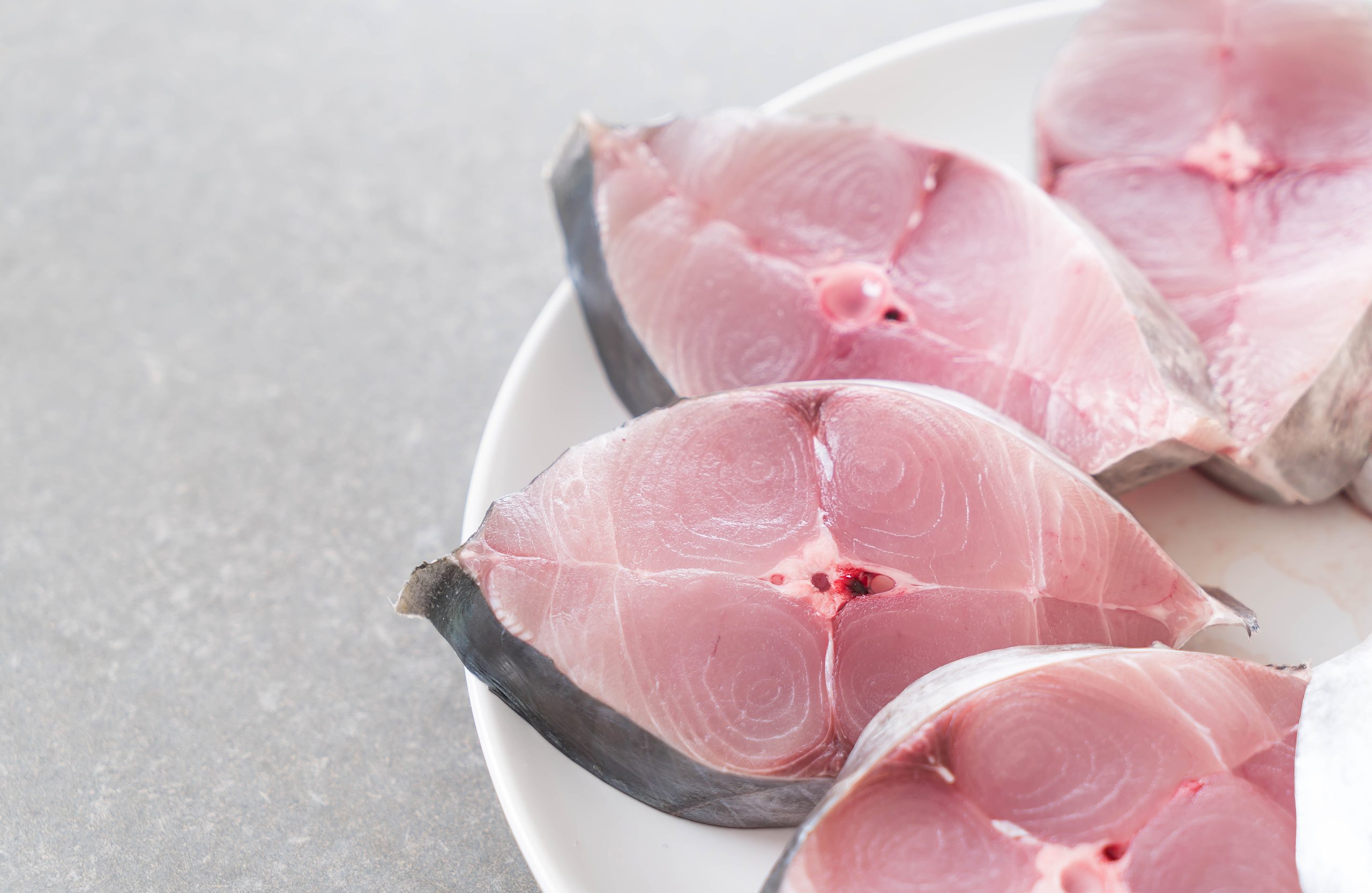
Imagine if fish bones that are usually discarded at fish markets could actually hold significant potential to save your teeth from extraction. This is the finding reported by a research team from the Faculty of Dentistry, Universitas Gadjah Mada, which successfully processed yellowfin tuna bones into a promising material for dental pulp treatment.
Prof. drg. Tetiana Haniastuti, M.Kes., Ph.D., together with her colleagues drg. Heni Susilowati and drg. Margareta Rinastiti, Sp.KG, published their findings in the International Journal of Dentistry in November 2020. The study addressed a fundamental question that has long concerned clinicians: is there an alternative pulp capping material that is more biocompatible than calcium hydroxide, which has traditionally been considered the gold standard?
When the Gold Standard Begins to Be Questioned
For decades, calcium hydroxide (Ca(OH)₂) has been the primary choice for dentists worldwide in vital pulp therapy, a treatment designed to preserve the vitality of the pulp tissue inside the tooth. This procedure is important when the pulp is exposed due to deep caries, cavity preparation, or trauma.
However, the reputation of calcium hydroxide as the "gold standard" has gradually come under scrutiny. Several studies have found that calcium hydroxide can irritate pulp tissue, form a necrotic layer, and even cause reparative dentin to develop with a porous structure, meaning that it does not provide complete protection for the pulp. At the cellular level, human pulp fibroblasts have been shown to undergo morphological changes, reduced DNA synthesis, and impaired alkaline phosphatase enzyme activity following exposure to Ca(OH)₂.
These limitations prompted the FKG UGM researchers to seek an alternative material. They turned to hydroxyapatite (HA), a mineral compound that is chemically and crystallographically similar to the hard tissues of the human body, including bone and dentin.
From the Fish Market to the Laboratory
What makes this study particularly notable is not simply its use of hydroxyapatite, but its source: the bones of yellowfin tuna (Thunnus albacares), the tuna species most widely consumed in Indonesia.
The synthesis process was carefully controlled. The fish bones were cleaned, pressure-heated at 80 kPa for 1.5 hours, and then dried in an oven for eight hours per day over four consecutive days. After being ground into a fine powder, the material was sintered at 700°C for five hours and sieved to obtain particles smaller than 74 micrometers. The resulting tuna-derived hydroxyapatite (THA) powder was then ready for biological testing.
The research team subsequently isolated pulp cells from healthy impacted human third molars belonging to patients aged 18 to 24 years. The cells were exposed to various concentrations of THA, ranging from 6.25 to 200 μg/ml, and observed over several time periods.
The results were quite remarkable. Pulp cell viability after 24 hours of exposure to THA ranged from 91.25 to 97.19 percent and continued to increase, reaching 94.44 to 116.04 percent after 72 hours. According to ISO 10993-5, a material is considered non-cytotoxic when cell viability exceeds 80 percent. THA comfortably exceeded this threshold.
“THA had no cytotoxic effect on pulp cells; furthermore, it enhanced proliferation as well as ALP activity of the pulp cells.” — Prof. drg. Tetiana Haniastuti, M.Kes., Ph.D., et al., International Journal of Dentistry, 2020
More Than Just Safe
More interestingly, THA was found not only to be safe but also to actively promote pulp cell growth and function. Microscopic examination showed that cells exposed to THA appeared more numerous, with elongated spindle-shaped morphology and oval nuclei, forming linear arrangements resembling bundles of fibers. There were no signs of apoptosis or abnormal nuclear changes.
Even more crucial was the finding related to alkaline phosphatase (ALP) activity. This enzyme is an early marker of odontogenic differentiation, the process through which pulp cells begin to transform into odontoblasts and form a new dentin matrix. Put simply, the higher the ALP activity, the greater the potential for healing and reparative dentin formation.
ALP testing after 7, 11, and 15 days of exposure showed that the THA-treated groups consistently had higher ALP activity than the untreated control group (p < 0.05). This increase was proportional to the concentration of THA administered, with the most pronounced effects observed at concentrations of 100 and 200 μg/ml.
These findings are consistent with previous studies showing that hydroxyapatite-based scaffolds can induce osteogenic and odontogenic differentiation in human dental pulp stem cells, as indicated, among other markers, by the expression of important genes such as BMP2, RUNX-2, DSPP, and osteocalcin.
The Long Road to the Dental Chair
Of course, the journey from a laboratory petri dish to clinical application is still a long one. The researchers themselves acknowledged several limitations of the study. Specific biomarkers such as dentin sialoprotein and type I collagen, which are direct markers of dentin formation, were not evaluated. The molecular mechanisms underlying the increase in cell proliferation and ALP activity induced by THA also require further investigation.
Before THA can be used clinically, its effectiveness in promoting the formation of a reparative dentin bridge in injured pulp must first be tested in animal models. Factors such as inflammatory responses, the optimal formulation, and the material's physicomechanical properties also require further development.
Nevertheless, this study has opened a door that was previously barely visible. The abundant tuna fish bones found in Indonesian waters may provide an opportunity to develop a local biomaterial that is biocompatible, bioactive, and potentially superior to existing conventional materials. Waste that has long been overlooked may turn out to be an answer to a clinical problem that has been waiting for a solution.
Source DOI: https://doi.org/10.1155/2020/8857534
Authors: Anny Anggraini; drg. Achmad Zam Zam Aghasy, M.Kes.
Photo: Freepik