
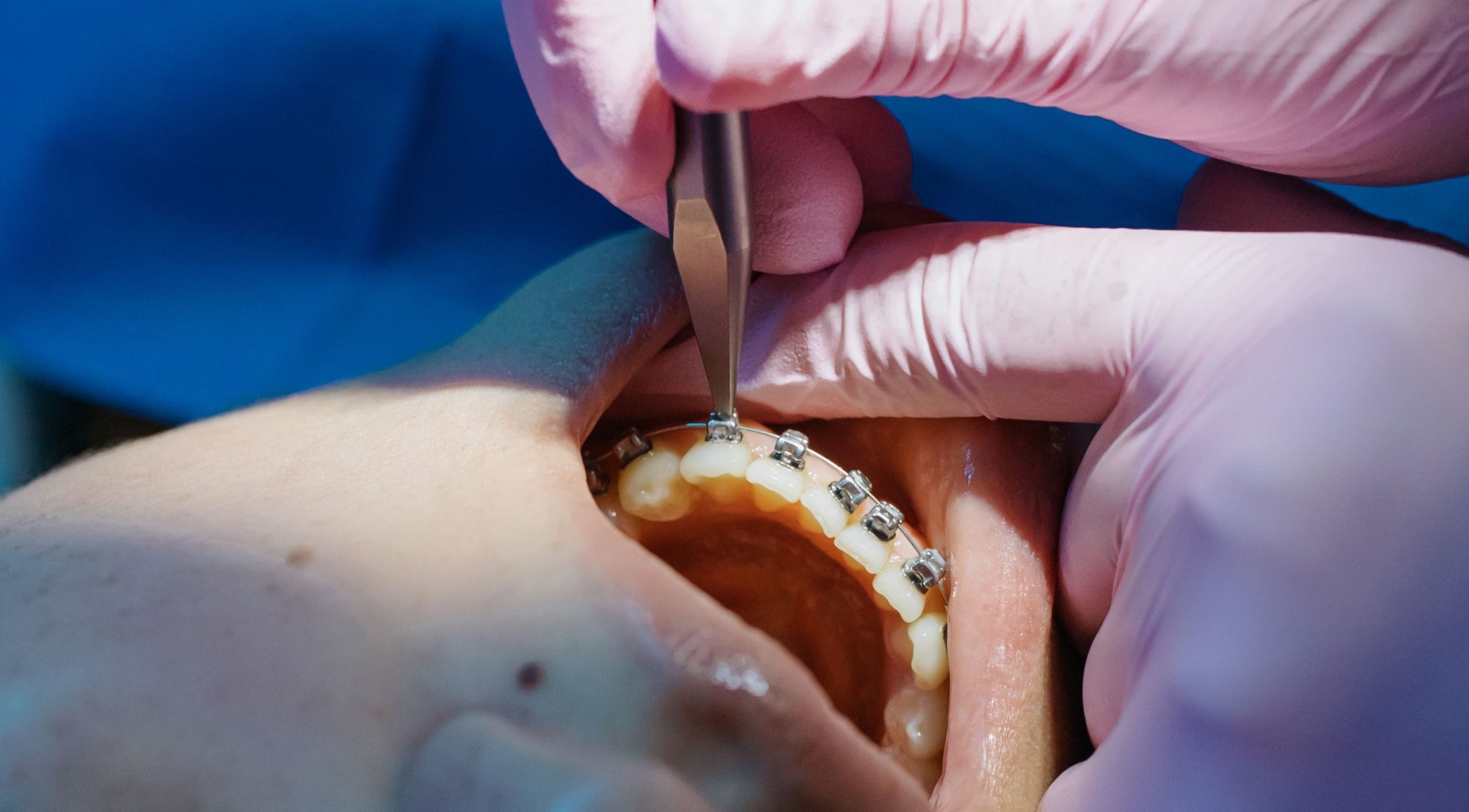
Imagine two types of cells working in opposite directions yet depending on one another: one builds, while the other breaks down. These are osteoblasts and osteoclasts—the two key players behind every tooth movement induced by orthodontic braces. Without the two working in harmony, orthodontic treatment would not succeed. Now, research from the Faculty of Dentistry, Universitas Gadjah Mada, has found that a compound in soybeans—also present in tempeh—can meaningfully influence the balance between these two cell types.
Two Cells, Two Sides of the Tooth
Whenever braces apply pressure to a tooth, two zones form in the periodontal ligament: the compression side, where osteoclasts resorb bone, and the tension side, where osteoblasts form new bone. This process allows the tooth to gradually move to a new position.
However, one variable is often overlooked: the patient's age. In postmenopausal women and older individuals, estrogen levels decline dramatically. As a result, the balance between bone formation and resorption becomes disrupted—osteoclasts become overly dominant, bone formation slows, and the risk of osteoporosis increases. In orthodontic treatment, this condition may potentially hinder treatment success.
This is where genistein comes in. This soybean-derived isoflavone is known to have a chemical structure similar to that of estrogen in mammals, allowing it to bind to estrogen receptors and mimic some of estrogen's activities. Prof. Dr. drg. Pinandi Sri Pudyani, SU., Sp.Ort(K), together with drg. Sri Suparwitri and a multidisciplinary team from the Faculty of Dentistry and Faculty of Medicine at UGM, designed a study to determine whether genistein could modulate bone-cell responses during orthodontic tooth movement, particularly in young and older subjects.
An Experiment with Guinea Pigs and a Tempeh-Based Formula
The study, published in the September 2016 issue of Dental Journal (Majalah Kedokteran Gigi), used 24 male guinea pigs divided into young (approximately four months old) and older (approximately 2.5 years old) groups. Each age group was further divided into four subgroups: control, orthodontic treatment alone, genistein alone, and combined orthodontic treatment and genistein.
The genistein used was not a synthetic compound produced in a chemical laboratory. Instead, it came from a “Genistein Tempe Formula”, a soybean-based product developed by Prof. Mien Karmini of Bogor Agricultural University. The formula consisted of soybeans, fermented cassava (tape), flour, sugar, creamer, salt, and baking powder. The oral dose ranged from 1.2 mg to 0.6 mg per day.
An orthodontic open-coil spring was placed between two brackets on the lower incisors, generating a force of 35 cN. On day seven, all animals were sacrificed and mandibular tissues were analysed histologically using two staining methods: TRAP (tartrate-resistant acid phosphatase) to identify osteoclasts and haematoxylin-eosin (HE) staining to identify osteoblasts.
The Numbers Speak for Themselves
The results were quite surprising. In the group receiving combined orthodontic treatment and genistein, the number of osteoblasts on the tension side increased significantly compared with the group receiving orthodontic treatment alone, in both young and older guinea pigs. The Mann-Whitney test showed significant differences between the orthodontic and orthodontic-plus-genistein groups in older guinea pigs (p = 0.004), between the orthodontic group in young guinea pigs and the orthodontic-plus-genistein group in older guinea pigs (p = 0.016), and between the orthodontic and orthodontic-plus-genistein groups in young guinea pigs (p = 0.025).
On the compression side, the findings were equally striking. In young guinea pigs receiving orthodontic treatment plus genistein, no osteoclasts were detected at all. Similarly, in the older guinea pigs receiving genistein alone without orthodontic treatment, no osteoclasts were detected.
“Administration of soybean isoflavone genistein during orthodontic tooth movement increased the number of osteoblasts on the tension side and decreased the number of osteoclasts on the compression side.”
The mechanism behind this phenomenon is associated with beta estrogen receptors on osteoblasts. Genistein can bind to these receptors, stimulating increased DNA synthesis and osteoblast proliferation. The compound also increases the activity of alkaline phosphatase, a marker of osteoblast differentiation. Meanwhile, the anti-osteoclast effect of genistein is thought to be related to competition between genistein and endogenous estrogen for the same receptors.
Soybeans, Braces, and the Future of Orthodontics
These findings open the door to a broader conversation. Until now, questions about the effectiveness of orthodontic treatment in older patients or postmenopausal women have often been approached with caution. Declining estrogen levels are considered a biological obstacle that is difficult to overcome. This study suggests that phytoestrogens from natural food sources—soybeans and fermented products such as tempeh and tofu—may potentially serve as therapeutic adjuncts worthy of further investigation.
Of course, there is still a considerable gap between animal experiments and clinical application in humans. Optimal dosage, duration of administration, and interactions with patients' systemic conditions all require further investigation. Nevertheless, there is something intriguing about the idea that a food that has been part of Indonesian diets for thousands of years may contain potential that the dental sciences have yet to fully understand.
Braces and tempeh. Few would have expected the two to appear together in a serious scientific discussion.
Authors: Nanda Ayu, drg. Achmad Zam Zam Aghasy, M.Kes.
Photo: Pexels