
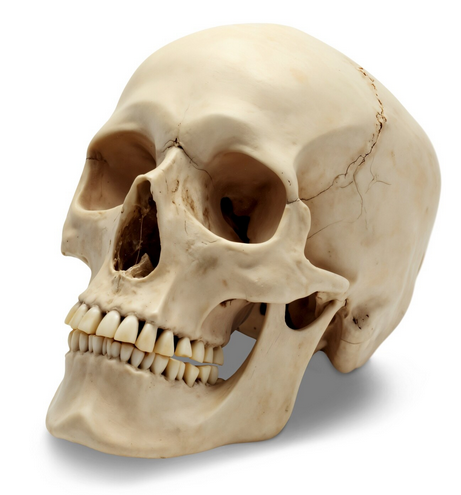
Jaw bone defects or injuries (mandible)—whether caused by trauma, infection, tumors, or surgical procedures—pose a major challenge in maxillofacial surgery. Jaw reconstruction requires graft materials that can accelerate regeneration while remaining safe for clinical use. Autologous bone grafts (harvested from the patient’s own body) are often preferred due to their very low risk of immune rejection and their ability to optimally support bone healing.
A study conducted by a Faculty of Dentistry UGM student, Yustinus Mulyaka, under the supervision of drg. Prihartiningsih, SU, Sp.BM(K), and drg. Bambang Dwiraharjo, Sp.BM(K), compared the effectiveness of autologous cancellous bone grafts and autologous bone
Study Design
The study was conducted using rabbit models in which bone cavities were created in the mandible. The defects were filled with two different types of grafts: cancellous bone grafts and bone marrow grafts, and compared with a control group without grafts.
Evaluations were performed on days 7 and 14 post-application using histological examination to assess the quality of new bone formation.
Key Findings
- Significant differences were observed in new bone formation among the cancellous bone graft, bone marrow graft, and control groups.
- Autologous cancellous bone grafts demonstrated faster and superior bone regeneration compared to bone marrow grafts.
- Bone marrow grafts still showed better outcomes than the control group, although they were less optimal than cancellous grafts.
Clinical Implications
The study provides several practical strategies for jaw bone reconstruction:
- Selection of graft type
- Cancellous bone grafts are recommended due to their superior healing speed and quality.
- Bone marrow grafts may serve as an alternative when harvesting cancellous bone is not feasible.
- Early monitoring
- Differences in outcomes were evident as early as day 7, highlighting the importance of early monitoring to assess graft success.
- Clinical considerations
- Defect location, bone loss size, and surrounding vascularization greatly influence graft success.
- Autologous grafts are superior due to their combined osteogenic, osteoinductive, and osteoconductive properties.
***
Autologous cancellous bone grafts have been shown to be more effective in accelerating new bone formation than autologous bone marrow grafts. These findings reinforce the role of cancellous bone grafts as the primary choice in jaw reconstruction strategies, while still considering the patient’s clinical condition and graft availability.
References
YUSTINIANUS MULYAKA, Drg. Prihartiningsih, SU, Sp.BM(K); drg. Bambang Dwiraharjo, Sp.BM(K), PERBANDINGAN AUTOLOGOUS CANCELLOUS BONE GRAFT DENGAN AUTOLOGOUS BONE MARROW GRAFT PADA PROSES PENYEMBUHAN TULANG (Penelitian Eksperimental Pada Kelinci), https://etd.repository.ugm.ac.id/penelitian/detail/81378
Author: Rizky B. Hendrawan | Photo: Freepik

