
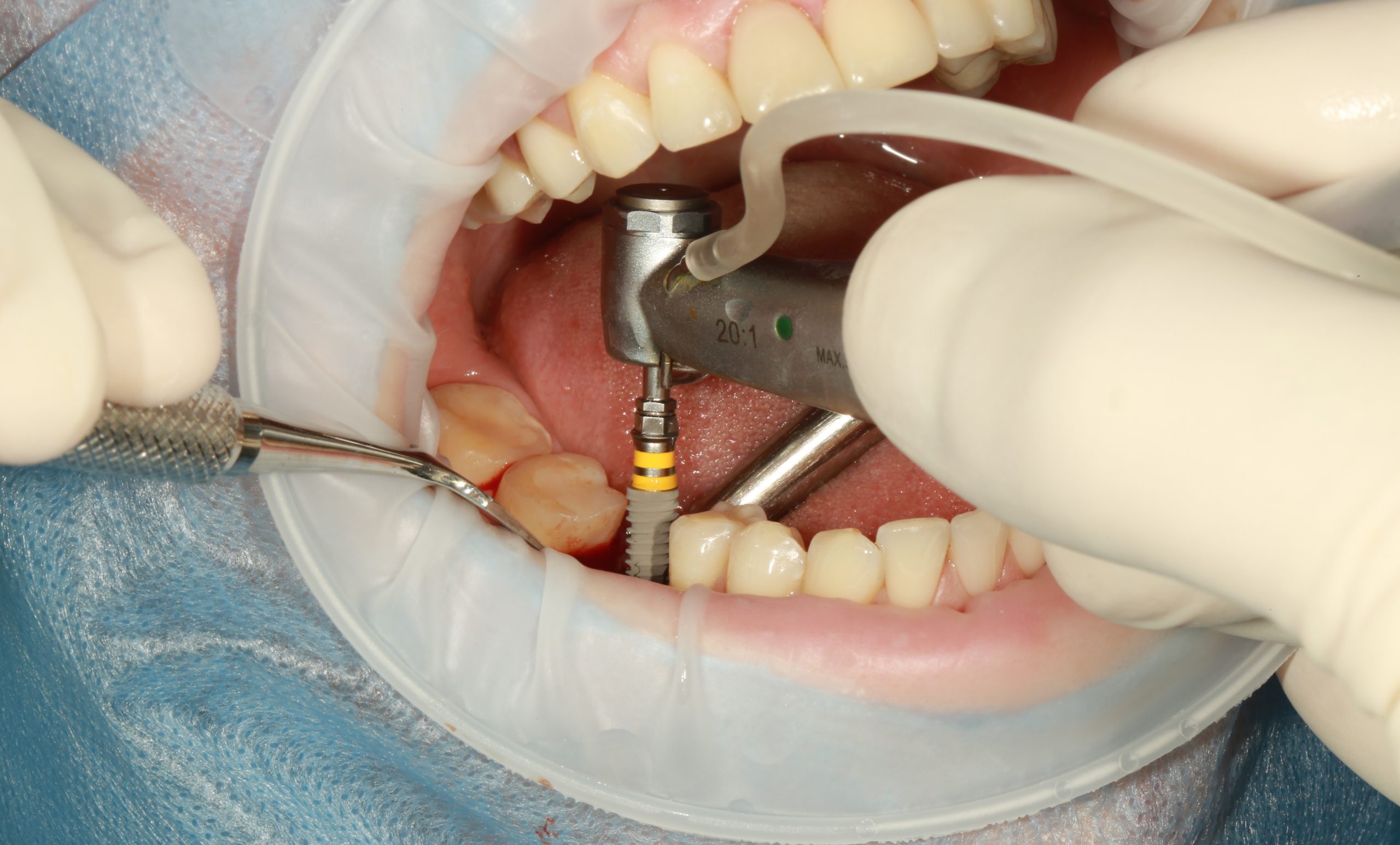
Imagine a bone implant placed in a patient's jaw following dental surgery—not merely a passive object waiting for the body to adapt, but an intelligent structure that actively repels bacteria, prevents biofilm formation, and guides tissue regeneration at the same time. This is the vision that prompted Prof. drg. Ika Dewi Ana, M.Kes., Ph.D., from the Department of Biomedical Dentistry, Faculty of Dentistry, Universitas Gadjah Mada, and her colleagues to publish a comprehensive review in the international journal Results in Surfaces and Interfaces in March 2025. Co-authored with researchers from Spartha Medical and INSERM Strasbourg, France, the article addresses an urgent question: why do biomedical scaffolds—three-dimensional structures that support tissue growth—still frequently fail in patients, and what can be done to change that?
A Double Threat: Bacteria and Climate Change
Biomedical scaffolds work by mimicking the extracellular matrix, the natural protein network that provides a “home” for the body's cells. Their porous structure allows cells to migrate, nutrients to circulate, and new tissue to grow as the scaffold gradually degrades. The market for this technology is growing rapidly, from USD 1.54 billion in 2023 and projected to reach USD 4.39 billion by 2034.
However, that same porosity is also a vulnerability. The tiny spaces within scaffolds can provide an ideal hiding place for bacteria. There, bacteria form biofilms—communities of bacteria protected by a shielding matrix that is extremely difficult for conventional antibiotics to penetrate. In dental implants, this condition can trigger peri-implantitis, an infection of the tissues surrounding an implant that, according to data cited in the article, affects an average of 22.1% of patients within 23 years after implant placement.
Climate change further complicates the situation. Increasingly frequent natural disasters, air pollution, and ecosystem changes increase human exposure to emerging pathogens and weaken the body's immune barriers. According to sources cited in the article, more than half of known infectious diseases affecting humans could potentially be exacerbated by climate change. At the same time, antibiotic resistance continues to rise, making conventional treatments increasingly less effective.
Three New Strategies for Fighting Infection
The researchers summarize three major approaches currently being developed to create scaffolds with inherent antibacterial properties.
First, surface coating with metal nanoparticles. Silver, zinc, and copper have long been recognized as antimicrobial agents. In nanoparticle form, these metals release ions that damage bacterial cell membranes and disrupt their metabolism. Silver nanoparticles are effective against both Gram-positive and Gram-negative bacteria, while zinc nanoparticles offer an additional advantage: besides killing bacteria, they can also stimulate cell proliferation to support wound healing. However, there is a trade-off—high concentrations of metal ions can be toxic to healthy tissue, trigger immune reactions, and interfere with normal protein function.
Second, surface nanotopography modification. Rather than relying on chemicals, this approach mimics physical structures found in nature, such as shark skin, insect wings, and lotus leaves, which mechanically prevent bacteria from attaching to surfaces. Micro- and nanoscale patterns on scaffold surfaces create physical barriers that bacteria cannot easily overcome. Because no chemical antimicrobial agents are involved, this approach also does not promote antimicrobial resistance.
Third, antimicrobial peptides (AMPs). These naturally occurring molecules, typically consisting of 10–50 amino acids, are found in the immune systems of various organisms, including humans. Their mechanism of action is unique: AMPs directly attack bacterial cell membranes, including bacteria in dormant states within biofilms—something conventional antibiotics cannot effectively accomplish. Because their mechanism does not depend on a single specific molecular target, bacteria have a much harder time developing resistance.
“These approaches not only improve scaffold biocompatibility but also reduce the risk of infection-related complications, making them safer and more effective for clinical applications.” — Prof. drg. Ika Dewi Ana, M.Kes., Ph.D., et al., Results in Surfaces and Interfaces, 2025
From the Laboratory to the Clinic: Unanswered Challenges
Despite their promise, the journey from research laboratories to the operating room remains a long one. Polymer coatings containing antibiotics, for example, present their own risks: if the concentration of released antibiotics is too low and exposure is prolonged, bacteria may adapt and become resistant, ultimately worsening the very problem the technology is intended to solve.
The article also highlights more distant possibilities: the integration of supramolecular chemistry, which could allow scaffold surfaces to adapt dynamically to environmental stimuli; 4D printing technology capable of producing materials that change shape over time; and artificial intelligence that could predict optimal material combinations and monitor patients' immune responses in real time before implantation.
The collaboration between UGM and Spartha Medical that produced this article is itself part of the International Joint Research Academy program, supported by the LPDP Endowment Fund for Education—a bridge between Indonesia's academic research community and Europe's biomedical innovation ecosystem.
Relevance to Dentistry
For the dental field, these findings are about more than materials science in the laboratory. Peri-implantitis is one of the major causes of long-term dental implant failure. With an aging population, a growing number of patients with diabetes, and increasingly diverse bone conditions, the need for scaffolds and implants that are more resistant to infection is becoming increasingly apparent.
According to the article, next-generation scaffolds should ideally be more than passive supports for bone growth. They should actively protect the surrounding tissue by repelling bacteria, modulating the immune response, and adapting to changes in the biological environment. On paper, this may sound like science fiction—but it is steadily moving closer to reality.
Authors: Achmad Zam Zam Aghasy, DDS, M.Kes.; Hazra Alifia Muharam
Photo: Pixabay
DOI: https://doi.org/10.1016/j.rsurfi.2025.100481