
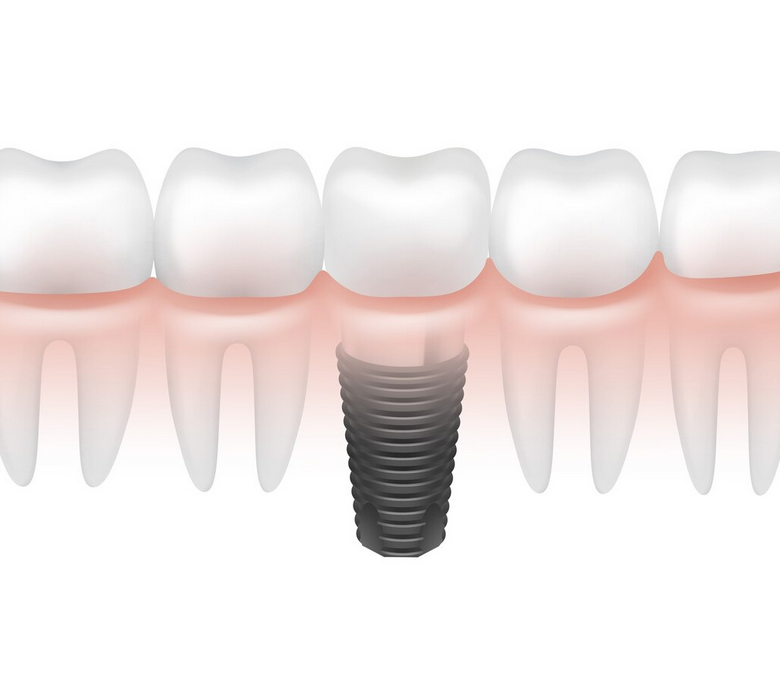
Implant retention is a critical factor in the success of overdenture prostheses. Retentive strength affects patient comfort, prosthesis stability, and masticatory and speech function. Although digital radiography does not directly measure retentive force, it plays an important role in evaluating implant position, supporting bone conditions, and anatomical relationships that influence retention.
References Research
A study conducted by a Faculty of Dentistry student at Universitas Gadjah Mada, Helmi Fathurrahman, under the supervision of Prof. Dr. drg. Titik Ismiyati, M.S., Sp.Pros.(K), and Dr. drg. Suparyono Saleh, Sp.Pros.(K), entitled “Perbedaan Retensi antara Overdenture Implan Gigi Ball dan Bar dengan Permukaan Kaitan yang Sama,” investigated mechanical retention in implant overdenture models using two attachment systems—ball and bar—with equal attachment surface areas.
The models were fabricated using acrylic resin blocks and tested using a universal testing machine. Each group (ball and bar) consisted of 16 samples. Statistical analysis demonstrated that overdentures with ball attachments exhibited significantly greater retention than those with bar attachments (p < 0.05).
These findings indicate that, in terms of retentive performance, the ball attachment system outperformed the bar attachment system under conditions of equal attachment surface area.
The Role of Digital Radiography in Retention Evaluation
Although this study employed mechanical testing, digital radiography—particularly 2D imaging such as panoramic, periapical, and intraoral radiographs—plays a crucial role in:
- Evaluation of Osseointegration and Supporting Bone
- Digital radiographs reveal bone density around implants, marginal bone loss, and the degree of osseointegration. Poor bone support or inadequate integration reduces retention.
- Assessment of Implant Position and Angulation
- Implant positioning and attachment orientation significantly influence force distribution. Radiography ensures optimal implant placement for effective attachment function.
- Monitoring Radiographic Complications
- Detection of peri-implant bone resorption, implant displacement, infection, or signs of compromised attachment retention.
- Comparison of Attachment Systems
- While mechanical testing provides quantitative retention data, radiographic evaluation adds anatomical context, explaining why ball attachments may perform better (e.g., proximity to bone or soft-tissue profile).
Clinical Implications
- If ball attachments demonstrate superior retention, digital radiography should be used to confirm adequate bone support and absence of interference from soft tissue or denture base.
- Radiographic follow-up is essential to monitor changes in supporting bone that may affect retention over time.
- Prosthesis design—including attachment positioning and denture base contour—can be optimized based on radiographic findings to enhance retention, comfort, and stability.
***
Based on the referenced research, ball attachment systems provide superior mechanical retention compared to bar attachments when attachment surface areas are equivalent. Although digital radiography does not directly measure retention, it is essential for optimizing anatomical conditions, implant positioning, and monitoring factors that contribute to retention failure or decline. Appropriate attachment selection combined with thorough radiographic evaluation can significantly improve the clinical success of implant-supported overdentures.
References
Helmi Fathurrahman, Prof. Dr. drg. Titik Ismiyati, M.S, Sp. Pros.(K), Dr. drg. Suparyono Saleh, Sp. Pros.(K), PERBEDAAN RETENSI ANTARA OVERDENTURE IMPLAN GIGI BALL DAN BAR DENGAN PERMUKAAN KAITAN YANG SAMA, https://etd.repository.ugm.ac.id/penelitian/detail/84209
Author: Rizky B. Hendrawan | Photo: Freepik

