
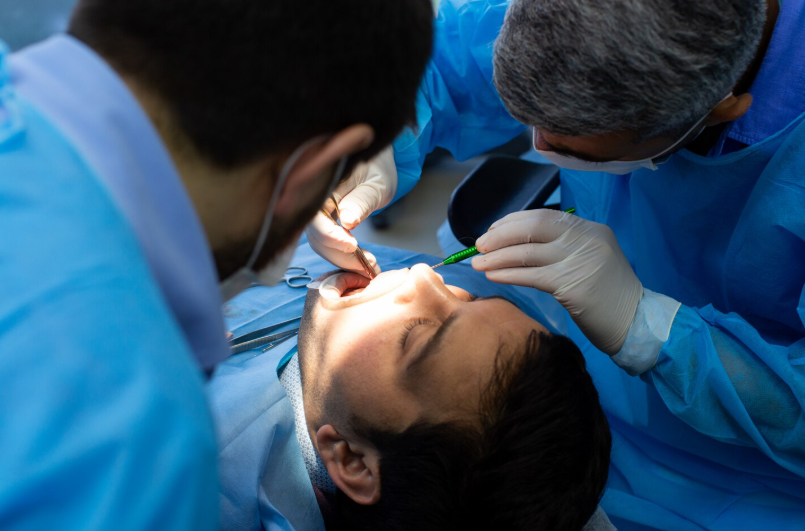
Trauma to the oral region, such as forceful biting, accidents, or other mechanical injuries, often results in damage to sensory nerves, particularly peripheral nerves in the jaw and lip areas. Such nerve damage may cause numbness (paresthesia), tingling sensations, or even permanent sensory loss if not properly managed. Over the past few decades, advances in biomedical research and technology have enabled nerve regeneration in the oral area through biological approaches and tissue engineering.
Mechanisms of Nerve Regeneration in Oral Trauma
Peripheral nerve regeneration following injury depends on the function of Schwann cells, growth factors, and the local microenvironment. After injury, Schwann cells form Schwann tubes that guide the growth of new axons. However, in severe or prolonged injuries, the natural regenerative process may be insufficient, making additional interventions using biomaterials and biological factors necessary.
One promising approach involves the use of activated Platelet-Rich Plasma (PRP) combined with scaffolds (biological frameworks), such as collagen, along with additional molecules that stimulate nerve growth. This combination can create a favorable environment for axonal regeneration and sensory tissue reinnervation.
Experimental Research: Evidence of Nerve Regeneration
An experimental animal study using Wistar rats, conducted by FKG UGM student Pingky Krisna Anindra under the supervision of drg. Masykur Rahmat, Sp.BM(K), and drg. Rahardjo, SU, Sp.BM., demonstrated the regenerative potential of a combination of activated PRP, collagen sponge scaffolds, and cytidine 5′-diphosphocholine (CDP-choline). The study examined regeneration of the mental nerve following crush injury using histomorphometric analysis to assess nerve fiber regrowth and cell density.
The results showed that application of this combination stimulated faster and more significant nerve regeneration compared with the control group. The collagen structure provided physical support, PRP supplied growth factors such as PDGF and VEGF, and CDP-choline supported phospholipid metabolism in nerve membranes. Together, these components worked synergistically to accelerate reinnervation.
Clinical Implications for Dentistry and Oral Surgery
- Sensory Recovery After Surgery
In oral surgical procedures such as tooth extraction, implant placement, or orthognathic surgery, the risk of nerve injury is always present. Regenerative therapy based on PRP, collagen scaffolds, and CDP-choline may serve as an adjuvant strategy to accelerate nerve recovery and minimize long-term paresthesia. - Traumatic Injury Management
In cases of mechanical trauma or bite injuries to the lips or jaw that damage nerves, regenerative interventions may help restore sensory function more rapidly and reduce permanent damage. - Minimally Invasive Treatment
This approach offers a more biological and minimally invasive solution compared with traditional nerve surgery techniques, such as autologous nerve grafting. The use of biocompatible scaffolds and growth factors reduces donor-site morbidity and complication risks.
Challenges and Considerations
- Translation from Animal Models to Humans:: Although animal studies have shown positive results, clinical trials in humans are required to verify safety, dosage, and effectiveness in oral nerve regeneration.
- Selection of Scaffolds and Activators: Variations in collagen types, PRP concentration, and CDP-choline dosage must be optimized to achieve maximum regenerative outcomes without adverse effects.
- Cost and Availability: PRP preparation and specialized scaffolds require laboratory facilities and are not yet widely available in all dental clinics.
- Ethical and Regulatory Issues: Regenerative therapies involve biological materials and must be subject to strict regulations to ensure patient safety.
***
Nerve regeneration in oral trauma is a highly promising field, particularly through the use of combined PRP, collagen scaffolds, and CDP-choline. Experimental research has demonstrated that this approach can accelerate reinnervation and sensory function recovery. If translated into clinical practice, this innovation could reduce the long-term impact of nerve injuries caused by trauma or dental surgery. However, before widespread application, human clinical trials, formulation optimization, and supporting infrastructure are required. Despite these challenges, this technology represents new hope for preserving and restoring nerve function in modern dentistry.
References
PINGKY KRISNA ANINDRA, drg. Masykur Rahmat, Sp.BM(K); drg. Rahardjo, SU, Sp.BM., REGENERASI NERVUS MENTALIS AKIBAT CEDERA PENJEPITAN SETELAH APLIKASI KOMBINASI PLATELET RICH PLASMA YANG DIAKTIVASI SPONS KOLAGEN DAN CYTIDINE 5’-DIPHOSPHOCHOLINE (Kajian Histomorfometri pada Tikus Wistar), https://etd.repository.ugm.ac.id/penelitian/detail/94471
Author: Rizky B. Hendrawan | Photo: Freepik

