
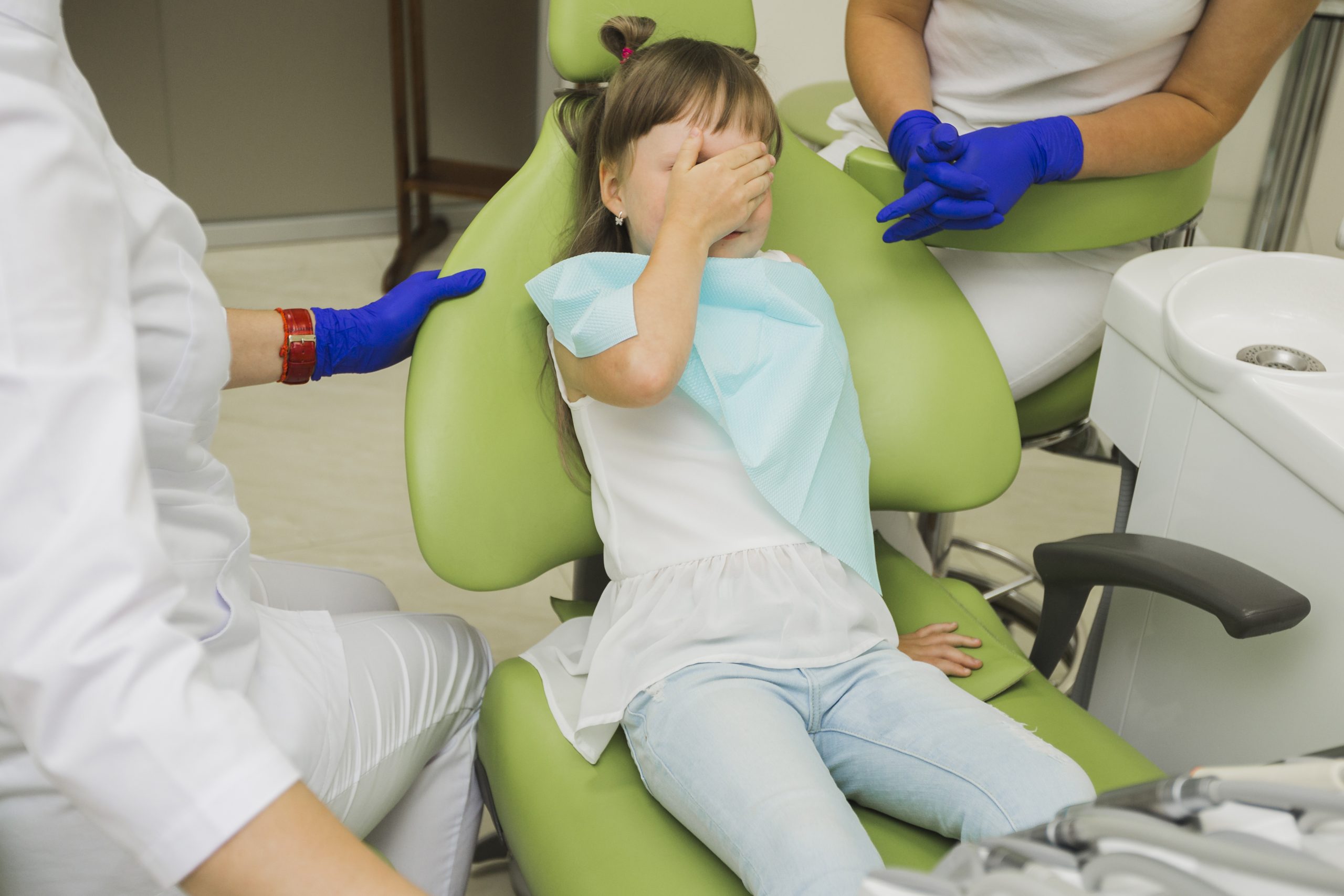
Imagine a first-year dental student being asked to undergo a radiographic examination for the first time. An X-ray machine they have never seen up close, a small film that has to be bitten inside the mouth, and concerns about radiation exposure that they do not yet fully understand—all of these factors can trigger genuine anxiety, even among students who are studying dentistry themselves.
This is one of the interesting findings of a study conducted by a team from the Department of Dentomaxillofacial Radiology, Faculty of Dentistry, Universitas Gadjah Mada, led by drg. Ryna Dwi Yanuaryska, Ph.D. The study was published in the September 2023 issue of the Malaysian Journal of Medicine and Health Sciences and was the first study to specifically examine the factors contributing to dental students’ anxiety toward dental radiographic procedures.
Dental X-Rays Can Cause Anxiety, Too
Anxiety while sitting in the dentist’s chair is nothing new. In Indonesia, its prevalence reaches 22%, higher than the global average. What is often overlooked, however, is that anxiety may arise not from drills or injections, but from a procedure that appears relatively “mild”: dental X-rays.
The study used a cross-sectional design involving 355 UGM dental students from three educational levels: first-year students, second-year students, and clinical students (co-assistant students). Data were collected throughout September 2021 using an online questionnaire covering radiology knowledge, anxiety levels, and previous experience with radiographic examinations.
Of the 355 respondents, only 183 had previously undergone radiographic examinations and proceeded to the anxiety questionnaire. The results? Most students were categorized as having low anxiety (44.51%), followed by those with no anxiety (40.11%). However, these figures concealed a more complex story.
The Younger the Student, the Higher the Anxiety
Multiple linear regression analysis revealed two key factors that consistently influenced anxiety levels: age and the frequency of radiographic examinations.
Younger students, particularly those aged 17–20 years, exhibited the highest anxiety levels. For every one-year increase in age, the anxiety score decreased by an average of 5.7 points. The explanation makes psychological sense: as people grow older, they develop more mature coping mechanisms and accumulate more positive experiences that can help counter fear.
An equally interesting finding concerned examination frequency. Students undergoing dental X-rays for the first time recorded the highest anxiety scores. For every additional examination experience, the anxiety score decreased by approximately 1.74 points. In other words, the more often someone undergoes the procedure, the more familiar they become with it—and the more their fear subsides.
“Age and the frequency of radiographic examinations are the strongest and most consistent factors in predicting students’ anxiety toward dental radiographic examinations.” — drg. Ryna Dwi Yanuaryska, Ph.D., Malaysian Journal of Medicine and Health Sciences, 2023
Radiology Knowledge: Necessary, but Not Enough
One of the central questions of the study was whether knowledge of radiation risks and protection influenced anxiety. The results were surprising: although there was a negative correlation between knowledge scores and anxiety levels, the relationship was not statistically significant.
Clinical students did have the highest radiology knowledge scores compared with first- and second-year students, consistent with their substantially greater amount of clinical and academic exposure. However, knowledge alone was not sufficient to directly alleviate anxiety.
The researchers suspected that this finding may have been related to the fact that all respondents came from a single institution with relatively similar educational backgrounds. To better understand the actual impact of knowledge on anxiety, more diverse populations—including individuals with lower levels of education—would need to be studied.
Other factors, such as sex, radiographic technique (intraoral or extraoral), and the presence of an accompanying person during the examination, showed no significant correlation with anxiety. This suggests that anxiety toward dental X-rays is more personal and closely tied to individual experience than simply to social circumstances or technical aspects of the procedure.
What Does This Mean for Clinical Practice?
These findings have direct implications for radiographic operators and clinicians. Young students undergoing dental X-rays for the first time require additional attention: detailed explanations of the procedure, reassuring communication, and an empathetic approach before the examination begins.
The study also highlights the long-term value of repeated positive experiences. This is not merely about the technical aspects of dental imaging, but also about how patients build trust in medical procedures as a whole.
The study has several limitations. It was conducted at a single institution, with a substantially higher proportion of female participants (86.5%), and the best regression model explained only 7% of the total variation in anxiety. This means that the remaining 93% still awaits exploration in future studies.
Behind these numbers lies a question that remains unanswered: what exactly is a person most afraid of when entering an X-ray room—the machine, the radiation, or their own lack of understanding?
Source DOI: https://doi.org/10.47836/mjmhs.v19i5.778
Authors: Anny Anggraini; drg. Achmad Zam Zam Aghasy, M.Kes.
Photo: Freepik