
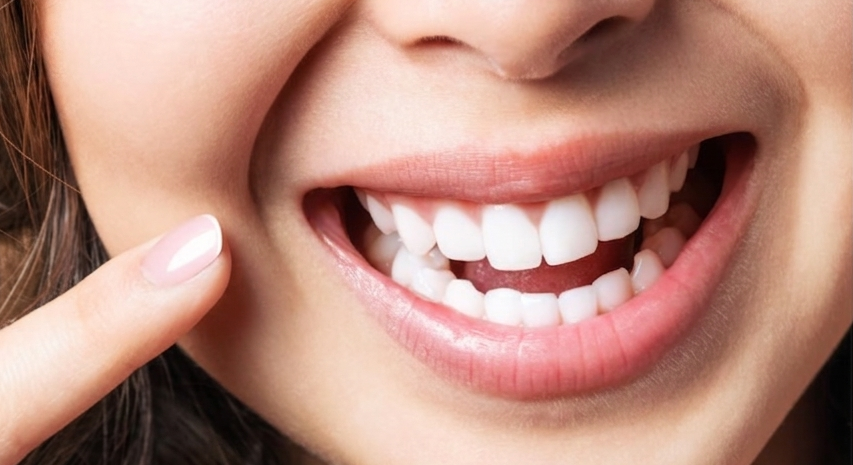
Have you ever had a cavity in a front tooth filled, only to find that several years later the filling had turned yellowish or dull? This problem of discolored dental fillings can often make people feel less confident when smiling broadly.
Fortunately, a research team from the Faculty of Dentistry, Universitas Gadjah Mada (FKG UGM), has found an innovative solution to this problem. Led by drg. Margareta Rinastiti, Ph.D., together with drg. Andina Widyastuti, S.K.G., Sp.KG., they found that applying a special thin protective coating (using nanofiller technology) over a dental filling can significantly prevent discoloration. The coating was even shown to effectively protect fillings from exposure to saliva and carbonated beverages that are commonly consumed in everyday life.
The research, published in Odonto: Dental Journal, is good news for anyone who wants healthy, neat, and aesthetically pleasing teeth without having to repeatedly visit the dentist simply to restore the color of a filling.
Currently, one of the most popular filling materials in dental clinics is resin composite. This material is widely favored because its color can be closely matched to the natural color of the teeth, making the filling virtually invisible.
However, the human oral cavity is actually a rather harsh environment for filling materials. Every day, dental fillings have to withstand temperature changes from hot foods or ice, pressure during chewing, and exposure to chemicals from the foods and beverages we consume.
Scientifically, discoloration of dental fillings can occur in two ways:
External Factors: Coloring agents from foods and beverages we consume, such as coffee, tea, turmeric-based seasonings, or soda, can penetrate and adhere to the surface of a filling as it becomes rougher.
Internal Factors: Chemical reactions can occur within the filling material itself as a result of continuous exposure to saliva.
As the filling surface begins to harden or wear away, extremely small, invisible gaps can appear. These gaps then become places where pigments and bacteria can accumulate. Once a filling has become significantly discolored or yellowed, patients will usually ask the dentist to remove it and replace it with a new one. The problem is that repeatedly removing and replacing fillings requires additional costs and may also remove healthy natural tooth structure that is still intact.
To demonstrate the effectiveness of this nanofiller protective coating, the researchers prepared hundreds of samples from two types of composite filling materials commonly used by dentists: flowable composites (liquid or low-viscosity materials for small gaps) and packable composites (denser, stiffer materials for larger cavities). Some filling samples were coated with the nanofiller protective liquid, similar to applying a clear top coat to nail polish, while others were left uncoated.
All samples were then immersed for seven days in two types of liquids: artificial saliva and a carbonated beverage (cola). Why cola? Because cola has a very low pH, approximately 2.52. High acidity such as this is one of the major factors that can damage and weaken dental fillings. After immersion, the researchers measured changes in color and surface roughness using highly accurate specialized sensors.
The laboratory tests revealed a striking difference between protected and unprotected fillings. Color Change: Fillings without the protective coating underwent substantial discoloration that could be seen with the naked eye. In contrast, fillings coated with the nanofiller protective layer showed minimal changes and retained their bright color. Surface Roughness: Unprotected packable fillings became very rough after immersion in cola, with their roughness exceeding the medically acceptable threshold, making it much easier for bacteria and plaque to adhere. Meanwhile, the surfaces of fillings treated with the protective coating remained smooth and even.
The study also revealed that flowable fillings were more susceptible to discoloration than packable fillings. This is because flowable materials contain more hydrophilic components, allowing food pigments to be absorbed more easily. However, applying the nanofiller protective coating successfully addressed this weakness.
The secret behind the effectiveness of this protective coating lies in the nanosized particles it contains. The protective liquid is applied over the filling, after which its extremely small particles immediately move into the microscopic gaps or uneven pores on the filling surface.
This process creates a very dense, smooth, and uniform protective barrier. This transparent layer acts as a shield, blocking water, saliva, and external coloring agents from entering. Because external substances cannot penetrate the material, chemical degradation inside the filling can be prevented, while food pigments simply slide off without being able to adhere.
Author: drg. Achmad Zam Zam Aghasy, M.Kes., Annisa Dwi Noviyanti
Photo: FreePik
Source DOI: https://doi.org/10.30659/odj.10.1.28-36