
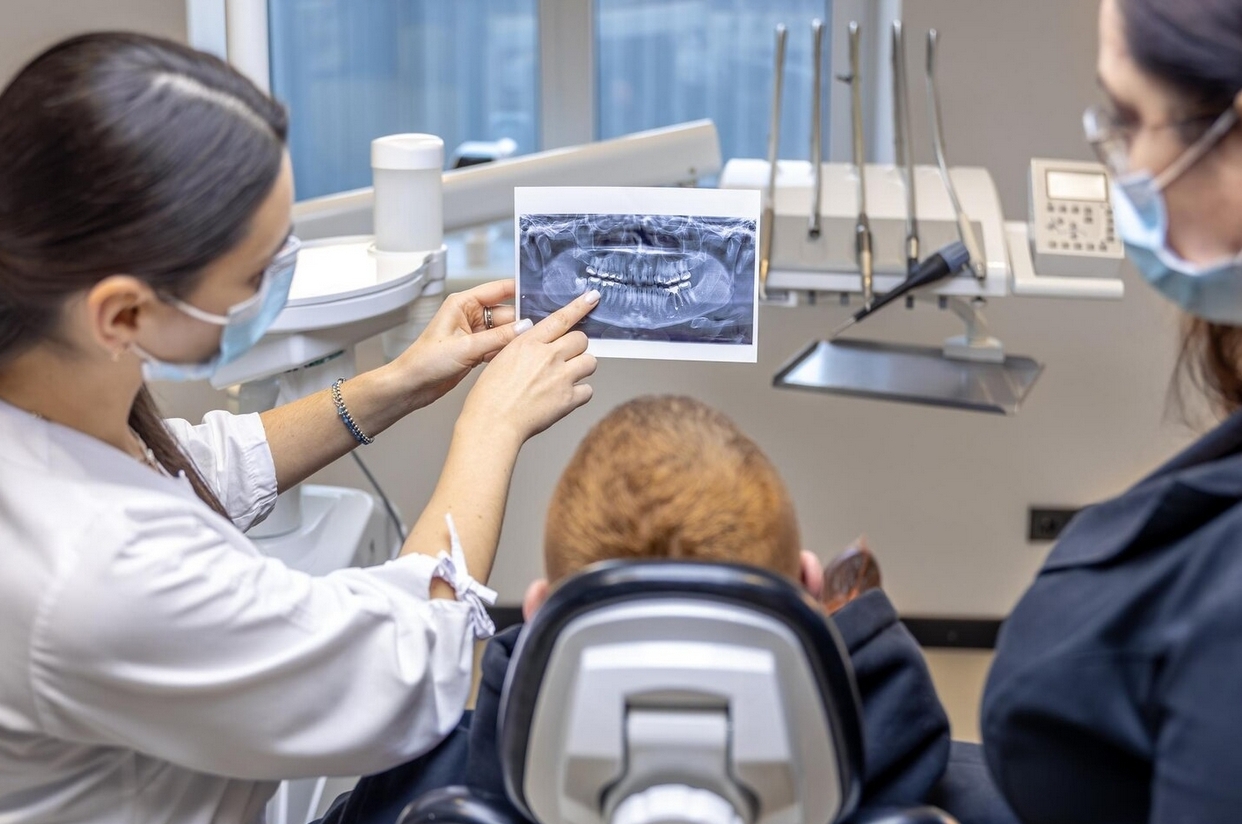
Dental radiology plays a crucial role in diagnosis, dental examination, and evaluation of supporting bone structures. Radiographic imaging assists in assessing periapical conditions, detecting resorption, identifying root positions, evaluating alveolar bone conditions, and more.
However, not all radiological examinations can be conducted using fixed or large equipment. In certain cases, the use of portable dental X-ray units (handheld/portable units) is necessary, particularly for patients with limited mobility, facilities with unstable electrical supply, or emergency situations.
Research conducted by an FKG UGM student, Sefhana Naufal D, under the supervision of drg. Ryna Dwi Yanuaryska, Ph.D. and drg. Rellyca Sola Gracea, Sp.R.K.G(K), entitled “Usaha Proteksi Radiasi Dalam Penggunaan Portable Dental X-ray Unit Bagi Pekerja Radiasi”, examined radiation protection aspects when using portable units, particularly concerning exposure received by operators or radiation workers.
Applications of Portable Units
Portable dental radiology is especially useful in several contexts:
- Patients who are difficult to move (e.g., elderly patients, individuals with disabilities, or medical conditions limiting mobility).
- Mobile clinics or dental services in remote areas with unstable electricity supply, where battery-powered portable units are beneficial.
- Emergency situations or field hospital services.
- Use for rapid screening or field examinations prior to definitive treatment.
Radiological examinations help evaluate alveolar bone height comparisons, detect bone loss, identify root structural abnormalities, and serve as references for restorative–periodontal treatment planning.
Limitations and Risks
The use of portable units also presents several limitations and risks, particularly related to radiation exposure:
- Operator proximity to the radiation source Due to the compact and portable design, operators are often positioned relatively close to the X-ray source, potentially increasing exposure to scattered radiation.
- Suboptimal radiation protection The study noted that some portable devices may lack protective systems such as rectangular collimators or acrylic shields. The use of such protective equipment can significantly reduce radiation exposure to operators.
- Lack of specific standards or regulations for portable units The research highlighted a shortage of specific safety guidelines and information regarding the use of portable dental X-ray units in workplace settings.
- Potential tissue damage if radiation exposure is uncontrolled Radiation exposure may affect not only patients but also operators, assistants, and the surrounding work environment if adequate protection is not provided. Long-term exposure may increase the risk of both deterministic and stochastic radiation effects.
Radiation Protection Measures Based on Research
The study identified several effective protection strategies:
- Use of acrylic shielding to block a portion of scattered radiation.
- Installation of rectangular collimators to reduce radiation field size and focus the beam, minimizing unnecessary scatter.
- Proper positioning of radiation workers during examinations to avoid direct radiation paths and accumulated scatter. Distance and orientation significantly influence exposure levels.
Clinical Implications and Considerations
For the safe and effective use of portable units in periodontal and dental radiology, the following clinical recommendations are advised:
- Ensure operators receive specialized radiation protection training for portable units.
- Use protective equipment such as lead aprons, thyroid shields, and acrylic shields to minimize scattered radiation.
- Utilize rectangular collimators whenever available to narrow the beam and reduce unnecessary exposure.
- Maintain maximum possible distance between the operator and the radiation source during exposure, or use remote triggers when feasible.
- Consider using timers or minimal exposure settings sufficient to obtain diagnostic images while minimizing radiation dose.
- Conduct routine evaluation and maintenance of radiographic equipment to prevent radiation leakage or protective system failure.
***
Dental radiology, particularly with portable units, provides flexible and accessible solutions in situations where fixed equipment is difficult to use. However, this flexibility comes with an increased need for radiation protection, especially for operators. Research indicates that acrylic shielding, rectangular collimators, and proper operator positioning are critical strategies for reducing radiation exposure.
The use of radiological technology must always balance diagnostic benefits against radiation risks, and protective measures are an inseparable component of safe dental radiology practice.
References
SEFHANA NAUFAL D, drg. Ryna Dwi Yanuaryska, Ph.D., drg. Rellyca Sola Gracea, Sp.R.K.G(K), Usaha Proteksi Radiasi Dalam Penggunaan Portable Dental X-ray Unit Bagi Pekerja Radiasi, https://etd.repository.ugm.ac.id/home/detail_pencarian_downloadfiles/960049
Author: Rizky B. Hendrawan | Photo: Freepik

