
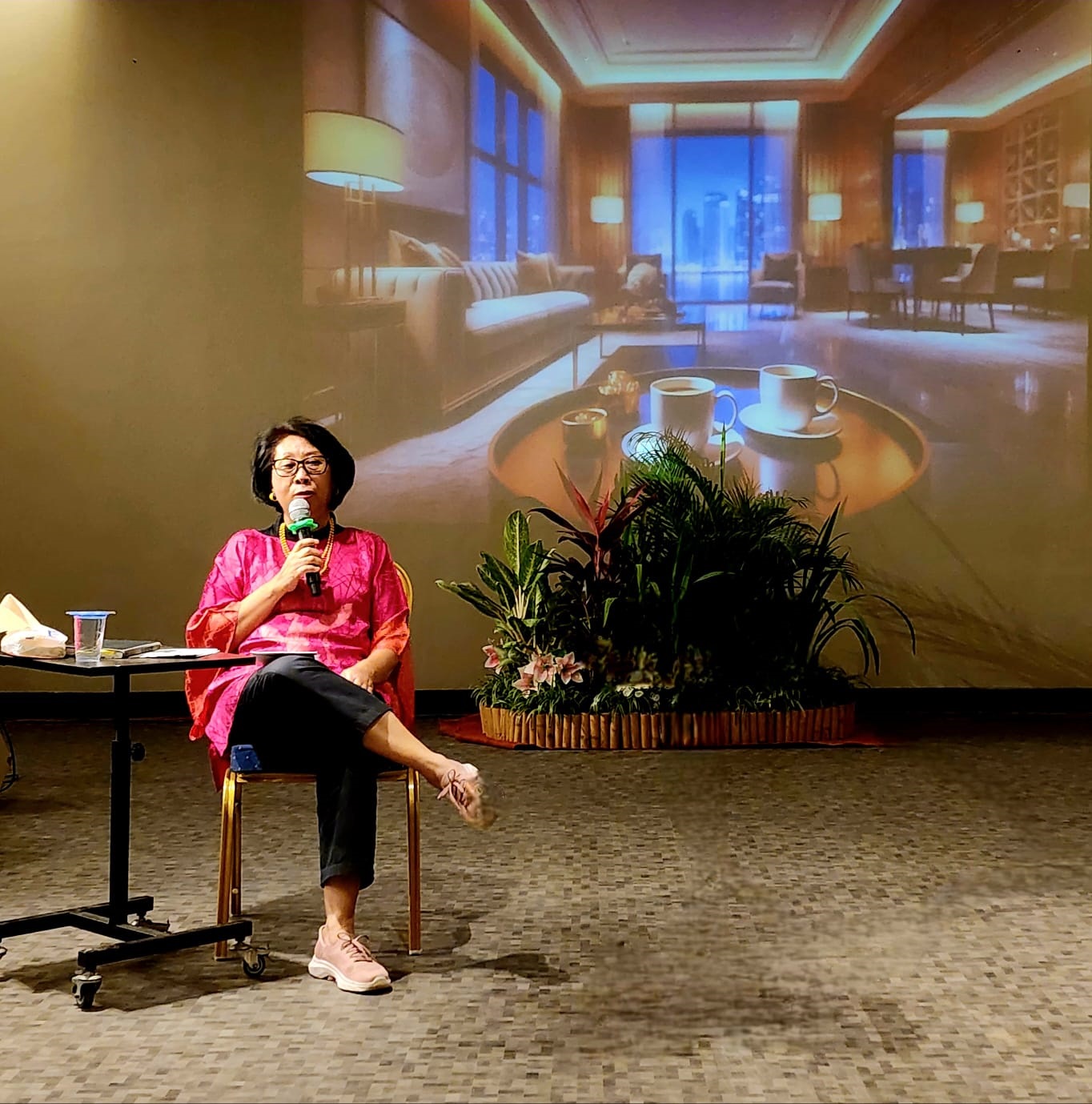
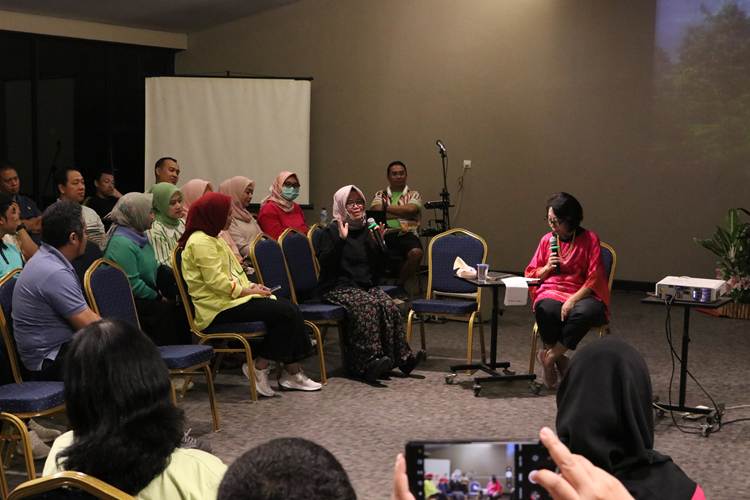
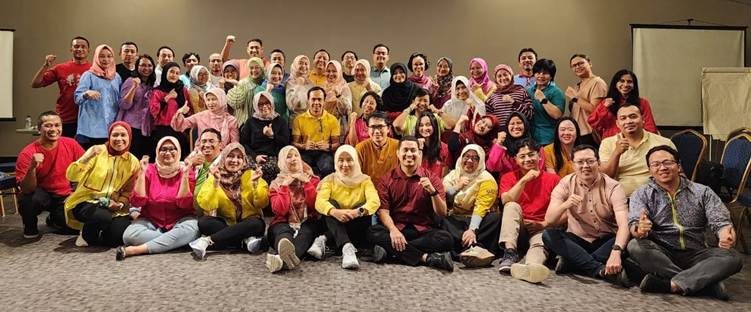
Taking a deep breath, her gaze drifting into the distance as if retracing the corridors of time she had walked for more than a decade, she spoke softly, “Only now do I truly understand that guiding students is not merely about knowledge. It is about the heart,” said Prof. Dr. drg. Widowati Siswomihardjo, MS—affectionately known as Prof. Bundi—during a workshop on strengthening the academic and non-academic character of doctoral (PhD) students.
Those words were more than a metaphor. Throughout her tenure as Head of the Doctoral Program at FKG UGM, she has witnessed how postgraduate education is not merely an academic arena, but a human battleground—filled with fear, exhaustion, panic, mental unpreparedness, family issues, and conflicts with supervisors. Like flipping through a compilation album, she shared several classic stories from the academic environment during the forum.
When a Student Almost “Leapt” Abroad
One of the earliest stories she shared involved a student studying overseas. The student’s promoter, a senior professor, once invited the student to stand on the top floor of the building where they worked.
“Look outside,” the foreign professor said. “You live in a country like paradise. But you never know what’s happening outside.”
The promoter reminded the student that the outside world is full of challenges. Studying abroad is not only about theories and publications, but also about life, adaptation, the urge to give up, and the temptation to escape reality.
“He told me, You have to guide your student with your heart,” the professor recalled. From that moment, she learned that academic supervision is never sufficient without empathy.
A Devout Student Shivering in a Snowy Country
Another story involved a devout male student who went abroad to study while still single. He was interviewed with his professor sitting beside him, offering encouragement. Before departure, the professor advised him to maintain his religious practices but not to push himself excessively.
Three months later, the overseas promoter contacted her. The student had insisted on fasting throughout winter, walking long distances to the mosque at night, until his physical condition deteriorated significantly.
“Please tell him to stop overdoing it,” the promoter pleaded. The professor gently explained to the student that maintaining health is also a form of gratitude. “God is not small,” she told him. “Simply living there is already an act of courage.”
Two years later, the student returned with another unexpected story: he planned to marry his junior. He did not even have enough money for a ring. The professor helped him using her personal funds. Later, when the couple’s first child was born overseas, the wife was assisted by friends of different religions. “People are kind regardless of religion,” the student said upon returning to Indonesia—a life lesson never written in any curriculum.
A Kind Supervisor Who “Turned into a Devil”
Another case was equally complex. A student refused to withdraw as long as the promoter was replaced—even though the promoter had been personally chosen by the student. “He was kind during my master’s degree,” the student said. “Now he’s like a devil.”
The conflict escalated to the rectorate. Communication between lecturer and student collapsed into mutual distrust. Once again, the program head had to intervene—mediating, calming tensions, and untangling problems she had never initiated.
A Student with Two Personalities: Midnight Screams
Among all the stories she shared, the most exhausting involved a direct-entry master’s-to-doctoral student whose promoter was assigned by the department. Coming from outside Java, the student appeared quiet outwardly, but under stress, the situation became extreme.
“We often consulted late at night,” the professor recalled. “When he panicked, he would suddenly scream loudly—his voice echoing.”
Psychologists had to intervene, not only for the student but also for the supervisory team. The student frequently lied, altered research data, and pretended to cry. Dr. Retno even explained scientifically the difference between genuine tears and fake ones.
“We were confused—does this student have two personalities or what?” she said. “Sometimes we felt sorry, but we also had to be firm.”
Countless Other Stories
She had encountered students who were starving, whose families were torn apart by divorce, whose homes were surrounded by political party supporters, to those who arrived on campus with drivers and assistants but were unable to read academic journals.
Some students never studied at home because they had toddlers, yet wanted to graduate quickly without adequate academic preparation. Others arrived with aristocratic airs, their bags and books prepared by assistants. There were also those who cried because they felt “they belonged to no one.”
Each day brought new stories, and not all ended happily. Yet every story left a deep mark.
Ten Difficult Years, Yet Meaningful
The professor closed her reflection with the sentence she had never forgotten since her first day as program head:
“Guide your student with your heart.”
Ten years is not a short time. Some succeeded, some lost their way, some needed to be embraced, others needed firm correction. From all these journeys, she learned one essential truth: postgraduate education is not merely about producing academics, but about accompanying human beings as they discover and confront themselves.
For the professor, it was a responsibility she would never regret.
(Reporter: Andri Wicaksono, S.Sos., M.I.Kom. | Photo: Fajar Budi Harsakti, SE)

