
Rainwater has the potential to become a high-quality source of drinking water when properly managed. This was emphasized by Prof. Dr.-Ing. Ir. Agus Maryono, IPM., ASEAN Eng, who stated that rainwater can not only reduce the risks of drought and flooding, but can also be treated into safe drinking water for household use.
Prof. Agus explained that rainwater quality in Indonesia is generally very good, with low mineral and contaminant levels. Based on his research conducted at more than 50 locations, rainwater was found to have a neutral pH and high clarity. “Rainwater is pure. If it is properly collected and treated, its quality is very safe for consumption,” he stated (9/12).
To make rainwater suitable for drinking, he outlined a relatively simple process. Rainwater is first collected and filtered to remove debris and large particles. It is then passed through an ultraviolet (UV) system to eliminate bacteria and viruses. These steps ensure that rainwater meets health standards before consumption.
In addition to UV technology, households may also use Reverse Osmosis (RO) systems as an advanced filtration method. RO uses high pressure to remove 95–99 percent of salts, minerals, bacteria, viruses, and other contaminants. While widely used for domestic and industrial drinking water, Prof. Agus cautioned that RO systems require high electricity consumption and produce wastewater.
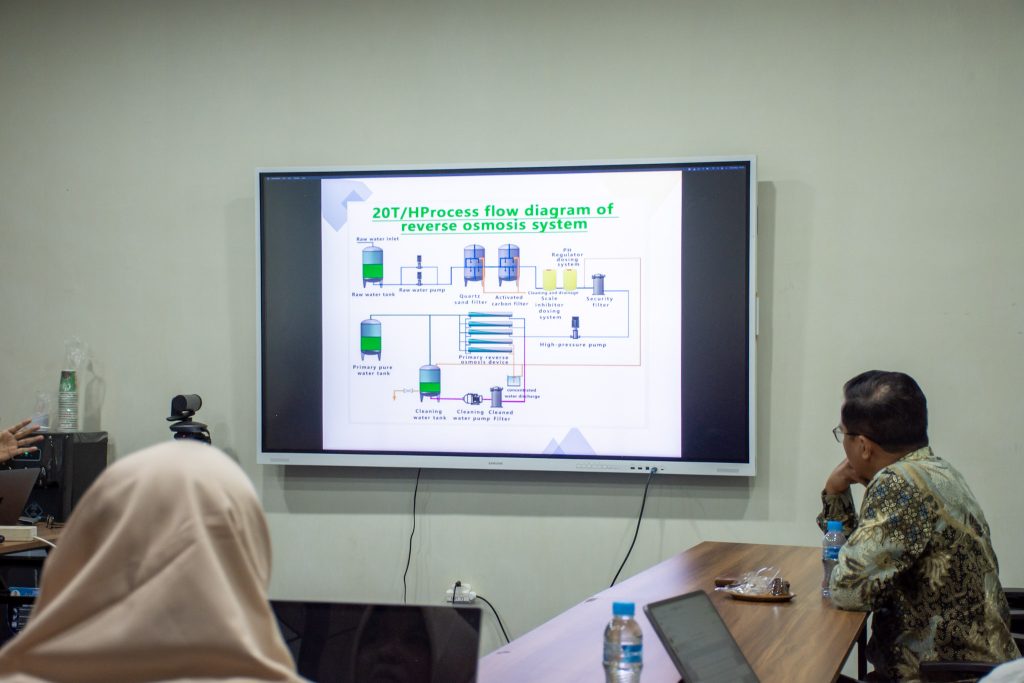
Despite these limitations, he emphasized that the benefits of rainwater harvesting far outweigh the drawbacks. By collecting and utilizing rainwater, households can reduce dependence on groundwater, preserve well reserves, and mitigate drought risks during the dry season.
Prof. Agus also noted that rainwater harvesting has long been practiced in various regions of Indonesia. Communities in areas such as Pontianak, Banjarmasin, and other coastal regions still rely on rainwater as their primary source, particularly where groundwater is brackish or saline.
According to Prof. Agus, Indonesia has great potential to become self-sufficient in clean water if communities begin harvesting and treating rainwater. Simple infrastructure such as storage tanks, filters, and treatment systems could serve as the foundation for a national movement. “If we start from our own homes, within a few years we will see real change,” he concluded.
Author and Photographer: Fajar Budi H.

