
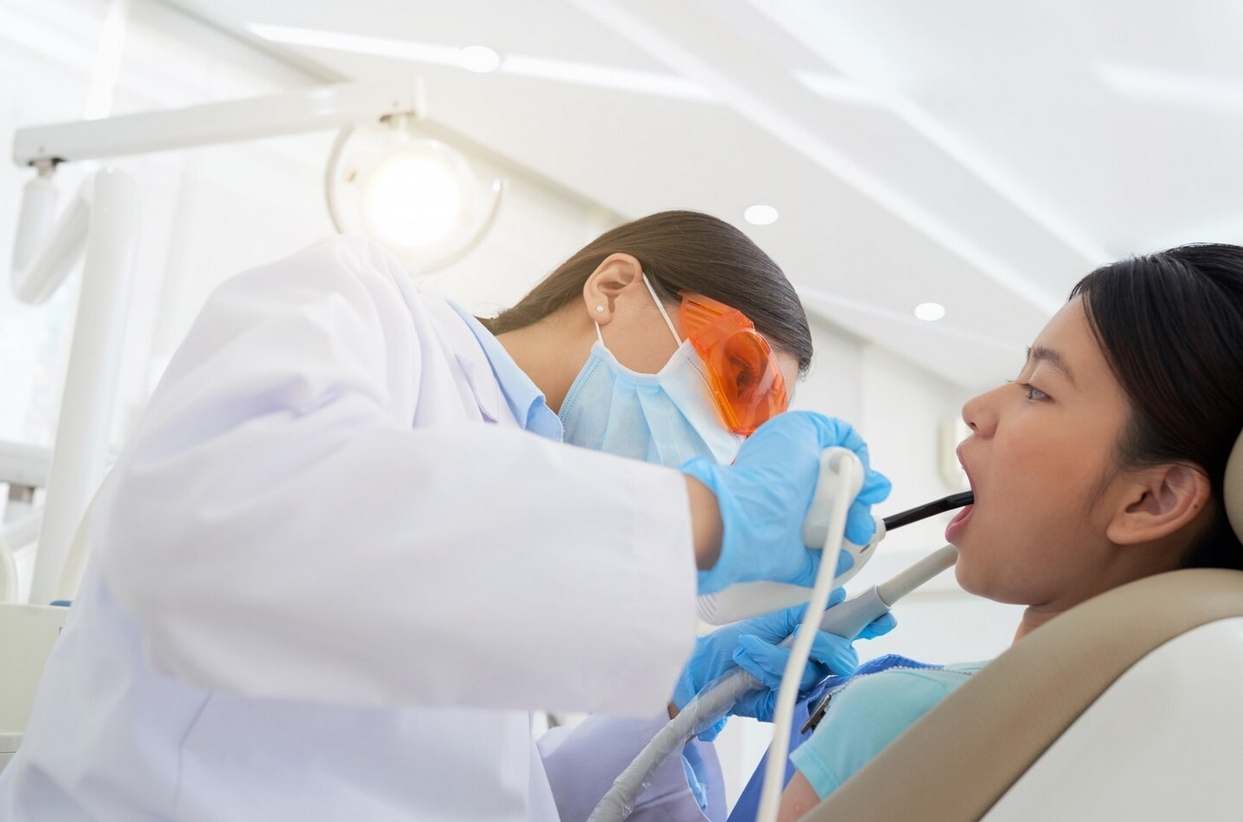
Periodontitis is an inflammatory disease of the supporting tissues of the teeth caused by the interaction between bacteria and the host immune response. One of the first non-surgical treatments commonly applied is scaling and root planing (SRP), which aims to remove plaque and calculus from the root and periodontal surfaces to reduce inflammation. However, SRP procedures leave wounds in the tissues and often cause post-treatment discomfort. Therefore, the use of periodontal dressings after SRP is considered an additional strategy to improve healing and patient comfort.
What Is a Periodontal Dressing?
A periodontal dressing is a protective material or layer placed over treated periodontal tissues after SRP. Its functions include:
- Protecting wounds from mechanical trauma (e.g., irritation from food or oral activities)
- Reducing sensitivity and discomfort in treated tissues
- Temporarily limiting plaque accumulation and helping keep the area cleaner during the early healing phase
Findings from UGM Research
A study conducted by Annisa K, a student of the Faculty of Dentistry, UGM, under the supervision of Prof. drg. Suryono, S.H., M.M., Ph.D., and drg. Nur Rahman Ahmad Seno Aji, MDSc., Sp.Perio(K) MP., entitled “Effectiveness of Periodontal Dressing After Scaling and Root Planing”, concluded several key points based on a narrative review of publications from 2005–2020:
- The addition of periodontal dressing after SRP did not show significant differences in healing compared to SRP alone in terms of pocket depth and clinical attachment level.pocket depth) dan clinical attachment level.
- Use of periodontal dressing for seven days showed better improvement in bleeding index and plaque index compared to use for only three days.
- On the other hand, periodontal dressing was less effective in improving gingival index, reducing microbial counts, or significantly suppressing inflammatory mediators after treatment.
Recommendations for Clinical Practice
Based on these findings, several strategies can be recommended:
- SRP remains the primary step in periodontitis management due to its substantial impact on reducing inflammation and improving tissue adaptation.
- Consider using periodontal dressing for seven days to improve plaque control and gingival bleeding after SRP.
- Evaluate benefits versus cost and patient comfort, as some patients may have low tolerance for dressings or limited ability to return for follow-up visits.
- Clinical monitoring should include bleeding index, plaque index, and gingival parameters to assess whether the dressing provides real benefits in specific cases.
***
Effective periodontal treatment requires a combination of mechanical intervention (scaling and root planing) and proper wound management. UGM research shows that although periodontal dressings do not always improve all clinical or molecular parameters, their use for seven days provides significant improvement in bleeding index and plaque index compared to three-day use or no dressing at all. Therefore, in many cases, adding periodontal dressing for an adequate duration can be part of an effective periodontal protocol.
References
ANNISA K, Prof. drg. Suryono, S.H., MM., Ph.D., drg. Nur Rahman Ahmad Seno Aji, MDSc., Sp.Perio (K) MP., Effectiveness of Periodontal Dressing After Scaling and Root Planing, https://etd.repository.ugm.ac.id/penelitian/detail/194845
Author: Rizky B. Hendrawan | Photo: Freepik

