
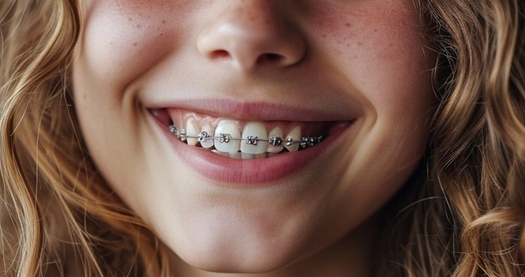
Functional orthodontic treatment is an orthodontic approach that focuses not only on tooth movement but also on regulating jaw growth and the relationship between the upper and lower jaws. Functional appliances are designed to take advantage of a child’s growth phase so that jaw position can be corrected naturally. This approach is considered more effective and efficient than orthodontic treatment in adulthood because bone structures are still plastic and responsive to mechanical stimulation.
Related Research
A study by a Faculty of Dentistry UGM student, Nahdia Amalia Ulfa, under the supervision of Dr. drg. Cendrawasih Andusyana Farmasyanti, M.Kes.Sp.Ort(K) and drg. Raden Roro Paramita Noviasari, Sp.Ort(K), entitled “Comparison of the Frequency Distribution of Orthodontic Patients Based on Gender, Age, Malocclusion, Type of Appliance, With and Without Extraction (At Prof. Soedomo Dental Hospital, Universitas Gadjah Mada, During the 2020–2021 Pandemic),” showed variations in pediatric orthodontic patient characteristics based on age, gender, and malocclusion type. These data reinforce the importance of individualized approaches in determining treatment types, including the selection of appropriate functional appliances according to patient condition and growth phase.
Indications and Optimal Timing
Functional orthodontic treatment is most effective in children aged 7–12 years, when jaw growth is still active. During this period, functional appliances can help correct jaw relationships and prevent more complex malocclusions in the future. Common indications include Class II malocclusion (retruded mandible), mild Class III malocclusion (protruded mandible), and occlusal disturbances due to habits such as thumb sucking or tongue thrusting.
Types of Functional Orthodontic Appliances
Functional appliances can be removable or fixed.
Common examples include:
- Twin Block, consisting of two interlocking plates to advance the mandible.
- Activator and Bionator, used to guide mandibular position toward a more ideal growth direction.
- Functional Regulator (FR), which regulates orofacial muscle function to support balanced jaw growth.
The mechanism of action of these appliances is based on stimulation of bone growth through changes in jaw position, influence on facial muscles, and modulation of pressure on the temporomandibular joint.
Treatment Procedure
The functional orthodontic treatment process involves several key stages:
- Initial diagnosis – radiographic examination, cephalometric analysis, and occlusal evaluation.
- Appliance planning – selection of appliance type according to patient needs.
- Placement and instruction – patients are instructed on appliance use, usually 20–22 hours per day for removable appliances.
- Periodic evaluation – appliance adjustment and monitoring of jaw and dental development.
Treatment success is highly dependent on patient compliance and regular follow-up visits.
Benefits and Limitations
Benefits:
- Utilizes natural jaw growth to correct malocclusion.
- Improves facial balance, masticatory function, and aesthetics.
- May prevent the need for tooth extraction or orthognathic surgery in adulthood.
Limitations:
- Outcomes are highly dependent on active growth timing.
- Requires patient cooperation and discipline.
- Not always effective for severe malocclusion or complex skeletal discrepancies.
***
Functional orthodontic treatment in children is an important preventive and therapeutic measure to maintain balanced jaw growth and tooth positioning. Its success is determined by timing, patient compliance, and family support. A multidisciplinary approach involving orthodontists, pediatricians, and families can help achieve optimal outcomes, in line with the principles of health and well-being in the Sustainable Development Goals (SDGs).
References
Nahdia Amalia Ulfa, Dr. drg. Cendrawasih Andusyana Farmasyanti, M.Kes.Sp.Ort(K) ; drg. Raden Roro Paramita Noviasari, Sp.Ort(K), Perbandingan Distribusi Frekuensi Pasien Ortodonti Berdasarkan Jenis Kelamin, Usia, Maloklusi, Jenis Peranti, Dengan Dan Tanpa Pencabutan (Di Rumah Sakit Gigi Dan Mulut Universitas Gadjah Mada Prof. Soedomo Tahun Pandemi 2020 Dan 2021), https://etd.repository.ugm.ac.id/home/detail_pencarian_downloadfiles/1259243
Author: Rizky B. Hendrawan Photo: Freepik

