
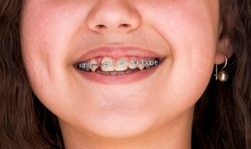
Sleep disorders can be closely related to oral conditions and jaw structures. One of the most relevant conditions in the context of orthodontics is bruxism, a habit of clenching or grinding the teeth that often occurs during sleep. Bruxism can impose excessive loads on teeth, leading to tooth wear, fractures, periodontal tissue damage, and may worsen malocclusion or compromise the stability of orthodontic treatment outcomes.
In managing patients with bruxism who also require orthodontic treatment, treatment strategies must consider the effects of excessive occlusal loading during sleep. A study published in the MKGK Journal of FKG UGM by Siska Septania Krisnanda, drg. Soekarsono Hardjono, Sp.Ort(K), and Dr. drg. Sri Suparwitri, SU, Sp.Ort(K), entitled “Fixed Orthodontic Treatment in Patients with Bruxism Using the Edgewise Technique Combined with a Trainer for Braces”, provides clinical insight into how a combination of appliances can be used to manage this condition.
Case Study: Orthodontics and Bruxism
According to the study:
- A 21-year-old female patient presented with crowding, bidental protrusion, deep overbite, maxillary constriction, linguoversion of tooth 47, and a bruxism habit.
- Diagnosis: Angle Class I malocclusion with Class I skeletal relationship accompanied by bruxism.
- Treatment plan: Fixed orthodontic treatment using the Edgewise technique, combined with a Lingual Arch Bar for maxillary expansion and correction of tooth 47, as well as the use of a Trainer for Braces (T4B) to help reduce the effects of bruxism during treatment.
- Results after 8 months: Improvement in maxillary and mandibular crowding, successful arch expansion, correction of the linguoversion of tooth 47, and a slight reduction in overjet and overbite (from approximately 3.7 mm to 3.5 mm), although treatment was still ongoing.
- Authors’ conclusion: The combination of fixed orthodontic appliances and a Trainer for Braces is effective in assisting malocclusion correction in patients with bruxism.
Mechanisms Linking Bruxism and Orthodontic Treatment
Several aspects must be considered when managing orthodontic patients with bruxism:
- Additional Occlusal Load
During sleep, bruxism generates high repetitive forces on occlusal surfaces. When teeth are undergoing orthodontic movement, these forces may interfere with bone remodeling or place additional stress on supporting tissues. - Stability and Risk of Relapse
Teeth that have been repositioned may relapse or experience adverse effects if occlusal forces are not adequately controlled. - Appliance Wear and Fracture
Bruxism can accelerate wear of brackets and wires or even cause appliance failure, complicating treatment. - Adaptation of Auxiliary Appliances (Splints / Trainers)
Appliances such as splints, night guards, or Trainers for Braces (T4B) can help absorb occlusal forces and protect dental structures during sleep.
Orthodontic Treatment Strategies for Patients with Sleep Disorders / Bruxism
Clinically applicable strategies include:
- Initial Evaluation of Bruxism
- Patient history: grinding habits, sleep noise, jaw pain
- Radiographic imaging, dental models, occlusal analysis
- Collaboration with sleep medicine specialists if secondary sleep disorders are suspected (e.g., sleep apnea)
- Durable Orthodontic Design
- Use of high-strength wires, brackets, and materials
- Archwire design and bending strategies that minimize stress concentration
- Protective / Bruxism Mitigation Devices
- Use of Trainer for Braces (T4B) at night in conjunction with fixed appliances, as demonstrated in the case study
- Alternatives include night guards or occlusal splints compatible with brackets
- Monitoring and Dynamic Adjustment
- Regular follow-ups to assess appliance condition and patient adaptation
- Adjustment of forces if signs of excessive stress or appliance damage appear
- Risk Management and Patient Education
- Educating patients on stress reduction, relaxation techniques, and appliance maintenance
- Monitoring additional sleep disorder symptoms such as snoring or daytime fatigue for holistic care
Challenges and Limitations
- Clinical evidence remains limited; case studies provide guidance but are insufficient for broad generalization.
- Long-term effectiveness of mitigation devices (splints, T4B) requires further research.
- Coordination between orthodontists and sleep specialists may be necessary, particularly for systemic sleep disorders such as sleep apnea.
- Poor patient compliance in using protective appliances or neglecting occlusal pressure can reduce treatment success.
***
In patients with sleep disorders such as bruxism, orthodontic treatment cannot be conducted in isolation. A comprehensive strategy combining fixed orthodontic correction with bruxism mitigation devices (such as a Trainer for Braces) can help reduce the harmful effects of occlusal pressure during sleep. The UGM case study demonstrates that the combination of fixed orthodontics and T4B can improve tooth position and correct malocclusion in patients with bruxism.
References
MKGK, Siska Septania Krisnanda, drg. Soekarsono Hardjono, Sp Ort(K), Dr. drg. Sri Suparwitri, SU, Sp.Ort(K),Fixed Orthodontic Treatment in Patients with Bruxism Using the Edgewise Technique Combined with a Trainer for Braces, https://jurnal.ugm.ac.id/mkgk/article/view/11917
Author: Rizky B. Hendrawan | Photo: Freepik

