
OCTOBER 2025 TRAINING: DENTOMAXILLOFACIAL RADIOLOGY BASED ON CONE BEAM COMPUTED TOMOGRAPHY (CBCT)
The management of endodontic–periodontal lesions (EPL) has entered a new era, marked by multidisciplinary collaboration and the utilisation of advanced technologies. Prof. drg. Diatri Nari Ratih, M.Kes., PhD., Sp.KG., Subsp.KE(K) from the Department of Conservative Dentistry, Faculty of Dentistry, Universitas Gadjah Mada (UGM), presented contemporary EPL management strategies that emphasise accurate diagnosis, minimally invasive therapy, and tissue regeneration using modern biotechnology.
Endo–perio lesions represent a complex condition due to the close interaction between the dental pulp and periodontal tissues. “Disease affecting the pulp can trigger periodontal disorders, and vice versa,” stated Prof. Ratih, highlighting the importance of understanding EPL pathogenesis, which involves microbial factors, trauma, and iatrogenic damage resulting from previous clinical procedures.
Recent studies report that the prevalence of EPL reaches 17.3% in certain populations (Prashaanthi et al., 2021). Modern EPL classification, commonly applied in endodontics, refers to Simon et al. (1972) and the World Workshop on the Classification of Periodontal and Peri-Implant Diseases (2018), which categorise EPL into primary endodontic lesions, primary periodontal lesions, true combined lesions, and iatrogenic lesions.
Accurate Diagnosis for Optimal Management
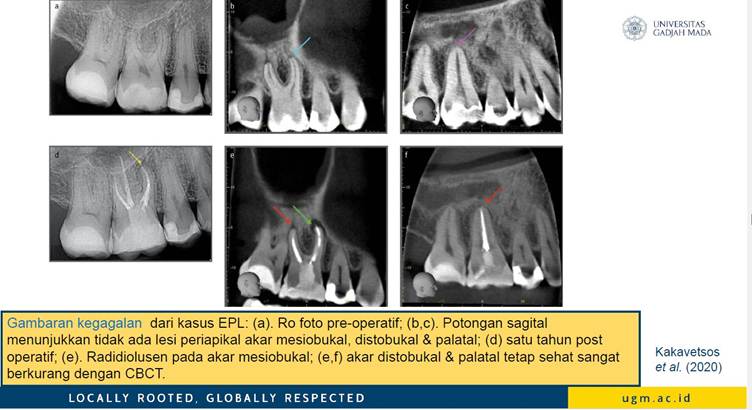
Accurate diagnosis of EPL requires a combination of clinical examination, pulp vitality testing, conventional radiography, and three-dimensional imaging using Cone Beam Computed Tomography (CBCT). CBCT enables more precise identification of root morphology, bone loss, and tissue involvement compared with conventional periapical radiographs. In addition, microbiological testing using Polymerase Chain Reaction (PCR) and Next Generation Sequencing (NGS) supports the selection of effective antimicrobial therapy.
“Accurate diagnosis is the key determinant of EPL treatment prognosis, including assessment of pulp vitality, the severity of periodontal disease, and patient readiness,” explained Prof. Diatri.
Multidisciplinary and Regenerative Therapy
EPL management is carried out through a multidisciplinary approach involving conservative dentistry (endodontics and restorative dentistry), periodontics, and microbiology. Therapeutic strategies include:
- Non-surgical treatment: Multi-visit root canal therapy using calcium hydroxide, followed by periodontal therapy when indicated.
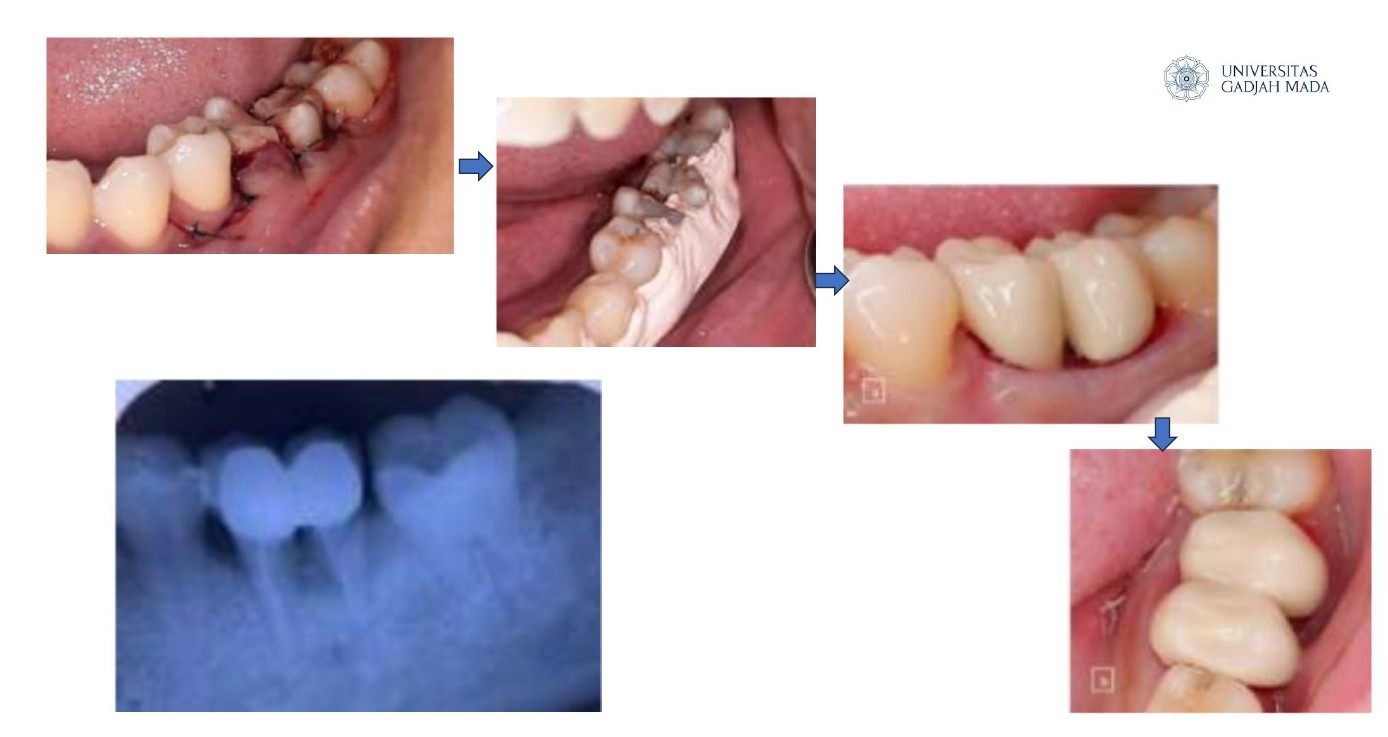
- Conservative surgical treatment: Hemisection, bicuspidisation, and tissue regeneration using Platelet-Rich Fibrin (PRF) and bone grafts.
- Minimally invasive and regenerative therapy: The use of stem cells, lasers, photodynamic therapy, and ozone to accelerate healing of pulpal and periodontal tissues.
PRF, in particular, has been shown to enhance bone healing, stimulate osteoprotegerin production, and facilitate tissue regeneration with minimal risk compared to conventional graft materials.
Integration of Technology and Artificial Intelligence
Three-dimensional bioprinting technology is now being applied to produce customised scaffolds for pulpal and periodontal tissue regeneration, utilising patient-derived cells or bioactive materials. Furthermore, Artificial Intelligence (AI) assists in analysing radiographs and CBCT images, predicting lesion progression, and recommending the most effective treatment protocols.
“With AI, clinicians can make evidence-based decisions more rapidly and accurately, thereby achieving optimal treatment outcomes,” Prof. Ratih added.
Challenges and Future Prospects
Despite significant advances in EPL management, challenges such as cost, accessibility, and patient compliance remain. Nevertheless, ongoing technological progress and research innovation in the endodontic–periodontal field are expected to usher in a new era of holistic dental care. The primary goals are tooth preservation, repair of damaged tissues, and improvement of pulpal and periodontal health.
Through the integration of multidisciplinary approaches, 3D technology, and AI, EPL management not only addresses current clinical problems but also opens new opportunities for more natural and sustainable dental regeneration and restoration.
(Andri Wicaksono | Photo: Prof. Ratih’s materials)

