
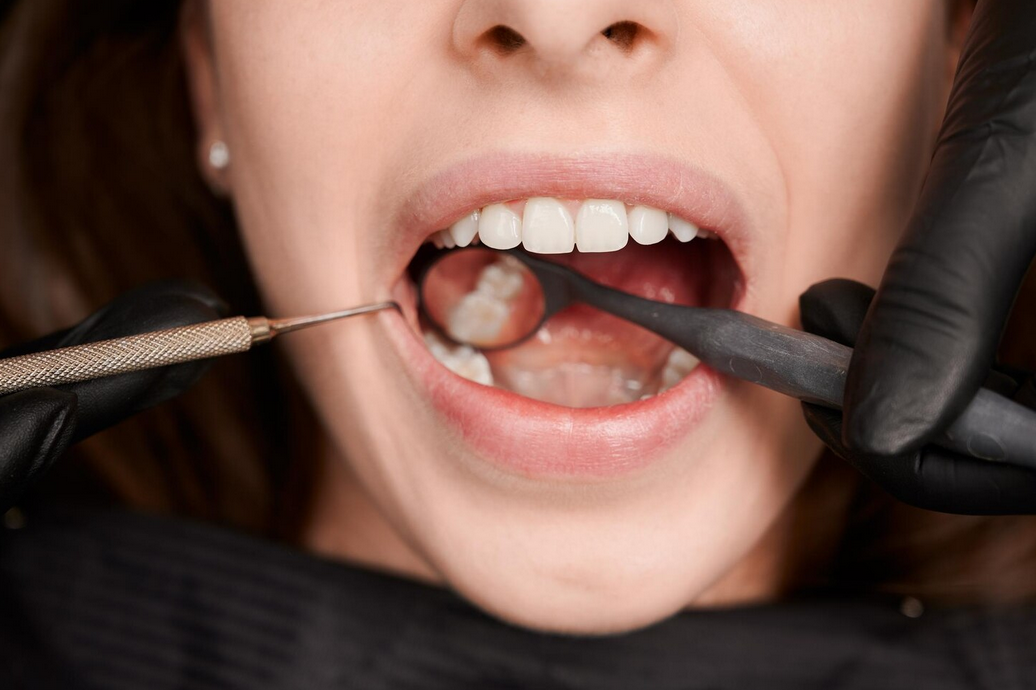
Oral wound healing following procedures such as tooth extraction, flap surgery, implant placement, or soft tissue surgery involves a series of biological processes, including inflammation, tissue proliferation, and remodeling. To accelerate healing, promote tissue regeneration, and reduce the risk of complications, one widely studied adjuvant therapy is Platelet-Rich Plasma (PRP). PRP contains a high concentration of platelets that release growth factors—such as PDGF, TGF-β, and VEGF—which stimulate angiogenesis, cell proliferation, and tissue remodeling.
PRP formulations are often combined with scaffolds (e.g., hydrogels, collagen, chitosan) to improve their physical and rheological properties, making application more practical, enhancing retention at the wound site, and enabling more controlled release of growth factors.
Related Research
A study conducted at Universitas Gadjah Mada (UGM) by a Faculty of Dentistry student, Tutut Prabantari A, under the supervision of drg. Kwartarini Murdiastuti, Sp.Perio(K)., Ph.D., and drg. Sri Pramestri Lastianny, M.S., Sp.Perio(K), entitled “Pengaruh berbagai formulasi hidrogel kolagen kitosan pada Platelet-Rich Plasma terhadap pH, viskositas, dan kelarutan,” investigated how scaffold formulations—specifically collagen–chitosan hydrogel—affect the physical properties of PRP.
The study assessed key physical characteristics of PRP formulated with collagen–chitosan hydrogel, namely pH (acidity level), viscosity (degree of thickness and homogeneity), and solubility (the ability of components to dissolve or disperse within the scaffold). These parameters are critical because they influence PRP stability, adhesion to the wound site, growth factor release, and ease of clinical application.
Clinical Implications of PRP in Oral Wound Healing
Based on theoretical considerations and findings related to the physical properties of PRP–scaffold formulations:
- Effect of pH
- An appropriate pH is essential for cellular activity and growth factor function. Excessively acidic or alkaline conditions may inhibit fibroblast and macrophage activity as well as tissue proliferation.
- Collagen–chitosan hydrogel formulations that maintain a stable pH support an optimal healing environment.
- Viscosity
- Ideal viscosity allows PRP to remain at the wound site without being easily washed away by saliva or tongue movement, while still permitting easy application.
- Hydrogels with controlled viscosity enable gradual and uniform release of growth factors.
- Solubility / Dispersion
- Adequate solubility or dispersion of PRP components within the scaffold is essential to ensure that growth factors are effectively released into the target tissue.
- Poor solubility may result in growth factors being trapped within the scaffold and becoming less effective in promoting regeneration.
- Oral Wound Healing Outcomes
- PRP application, particularly when formulated with scaffolds such as collagen–chitosan hydrogels, may accelerate wound closure, enhance gingival and epithelial tissue formation, and improve bone regeneration in extraction sockets when involved.
- PRP may also help reduce inflammation and pain and potentially hasten the return to normal function, including eating and speaking.
Challenges and Considerations
- Formulation consistency: Variability in PRP between individuals (platelet count and cell quality) and differences in scaffold materials.
- Potential immunological reactions: Especially if the scaffold is not fully biocompatible or contains contaminants.
- Cost and availability: Related to PRP preparation equipment, scaffold materials, and quality control standards.
- Application frequency and infection control: Adequate protocols are necessary to prevent complications.
***
Platelet-Rich Plasma demonstrates significant potential in oral wound healing, particularly when formulated with scaffolds such as collagen–chitosan hydrogels that preserve critical physical properties, including pH, viscosity, and solubility. Well-designed formulations enhance PRP stability at the wound site, allow optimal growth factor release, and effectively support tissue regeneration. Nevertheless, broader clinical studies in humans, standardized formulations, and well-established application protocols are required to ensure safety and efficacy.
References
TUTUT PRABANTARI A, drg. Kwartarini Murdiastuti, Sp.Perio(K)., Ph.D., drg. Sri Pramestri Lastianny, M.S, Sp.Perio (K), PENGARUH BERBAGAI FORMULASI HIDROGEL KOLAGEN KITOSAN PADA PLATELET-RICH PLASMA TERHADAP PH, VISKOSITAS, DAN KELARUTAN, https://etd.repository.ugm.ac.id/home/detail_pencarian_downloadfiles/329887
Author: Rizky B. Hendrawan | Photo: Freepik

