
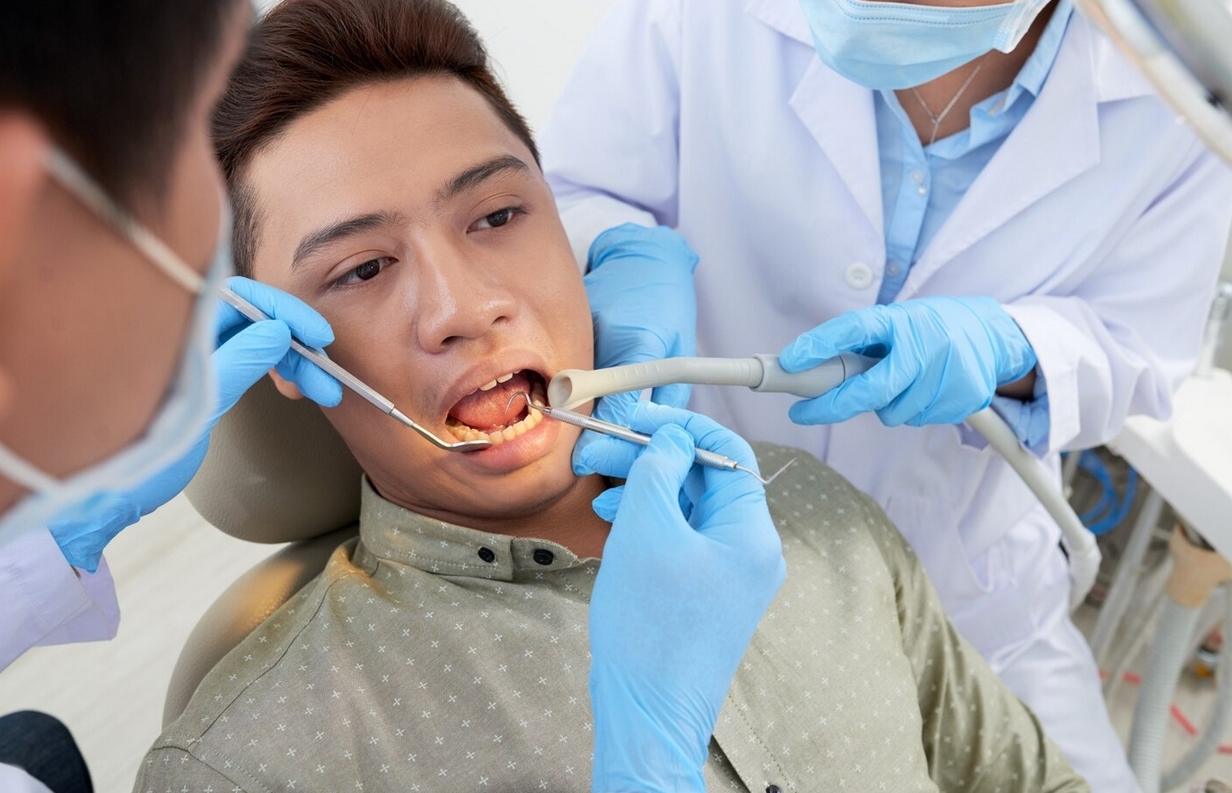
Periodontal disease is a chronic inflammatory condition affecting the supporting tissues of the teeth, including the gingiva, periodontal ligament, and alveolar bone. The primary cause of this disease is bacterial infection within the subgingival plaque biofilm. Microbiological studies play a crucial role in understanding the etiology, pathogenesis, and control strategies of periodontal disease.
One of the microorganisms most frequently associated with periodontitis is Prevotella intermedia, a Gram-negative anaerobic bacterium that contributes to the progression of periodontal inflammation. A study conducted by a student of the Faculty of Dentistry, Universitas Gadjah Mada (UGM), Aulia Feby Akhadia, under the supervision of Prof. drg. Suryono, S.H., M.M., Ph.D. and drg. Sri Pramestri Lastianny, M.S., Sp.Perio(K), entitled “The Inhibitory Potential of Propolis Active Gel (Propagel) on the Growth of Prevotella intermedia ATCC 25611”, highlights the importance of microbiological research in identifying natural antimicrobial agents that may support periodontitis therapy.
Microbiology of Periodontal Disease
Periodontal disease is caused by a complex interaction between pathogenic microorganisms and the host immune response. The main bacteria involved include:
- Porphyromonas gingivalis
- Prevotella intermedia
- Aggregatibacter actinomycetemcomitans
- Tannerella forsythia
Colonization by these bacteria produces proteolytic enzymes and toxins that damage periodontal tissues and trigger immune responses, further exacerbating alveolar bone destruction. Microbiological studies help identify dominant pathogens and their virulence mechanisms, forming the basis for the development of antimicrobial therapies and potential vaccines.
Findings from UGM Research
The UGM study on Propolis Active Gel (Propagel) demonstrated that propolis, which is rich in flavonoids and polyphenols, has inhibitory effects on the growth of Prevotella intermedia ATCC 25611.
Laboratory results showed that:
- Certain concentrations of Propagel were able to inhibit bacterial colony growth.
- This antibacterial activity is attributed to active compounds in propolis that disrupt bacterial cell walls and suppress metabolic activity
- Therefore, Propagel has potential as an adjunctive therapy in non-surgical periodontal treatment such as scaling and root planing.
These findings reinforce the role of microbiology in the development of natural-based therapies targeting specific microorganisms responsible for periodontitis.
Development Directions and Clinical Implications
- Improvement of Microbiological Diagnostics
- Early detection of causative bacteria allows more targeted treatment.
- Microbiological examination can be used to determine individual infection profiles.
- Targeted and Natural Antimicrobial Therapy
- Penelitian seperti Propagel membuka jalan bagi penggunaan fitoterapi lokal yang ramah jaringan dan minim resistensi.
- This supports the trend of green dentistry in modern dental practice
- Holistic and Sustainable Approach
- Understanding microbiology strengthens preventive strategies, including oral hygiene education, dietary management, and control of systemic risk factors.
***
Microbiology plays a critical role in understanding the etiology and pathogenesis of periodontal disease. Through microbiological approaches, more effective and sustainable therapies can be developed. Research from UGM demonstrates that natural products such as Propolis Active Gel have antimicrobial potential against Prevotella intermedia, one of the main bacteria associated with periodontitis. With continued advancement in microbiological research and natural therapies, periodontal care can become more effective, safer, and environmentally friendly in the future.
References
AULIA FEBY AKHADIA, Prof. drg. Suryono, S.H., M.M., Ph.D. ; drg. Sri Pramestri Lastianny, M.S., Sp.Perio(K), Potensi Daya Hambat Propolis Active Gel (Propagel) terhadap Pertumbuhan Bakteri Prevotella intermedia ATCC 25611, https://etd.repository.ugm.ac.id/home/detail_pencarian_downloadfiles/1287961
Author: Rizky B. Hendrawan | Photo: Freepik

