
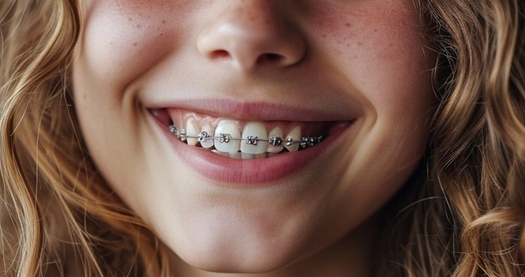
The gingiva (gums) is an essential component of the tooth-supporting system, together with the periodontium (ligaments, cementum, and alveolar bone). Healthy gingiva protects tooth roots from microbial invasion, maintains attachment integrity, and supports optimal distribution of masticatory forces. When gingival inflammation (gingivitis) or advanced tissue damage occurs, the supporting structures of the teeth may weaken, ultimately compromising tooth stability. In orthodontic contexts—particularly with fixed orthodontic appliances—the gingiva often experiences additional challenges due to increased plaque retention and oral hygiene difficulties. A study conducted by FKG UGM student Sally Suhardiyanti, under the supervision of drg. Soekarsono Hardjono, Sp.Ort(K), and drg. Cendrawasih A.F., M.Kes., Sp.Ort(K), entitled “Perbedaan Status Kesehatan Gingiva pada Remaja dan Orang Dewasa Pemakai Alat Ortodontik Cekat”, highlights differences in gingival health between adolescent and adult fixed orthodontic appliance users, offering insight into the importance of gingival health for maintaining tooth stability.
Research Findings
Key findings from the study include:
- Sample: 40 fixed orthodontic appliance users (18 adolescents and 22 adults) with appliance use ranging from 6 months to one year.
- Gingival health assessment: Conducted using the Gingival Index (GI) by Loe & Silness (1963) across all tooth regions with a periodontal probe.
- Results:
- Mean GI score in adolescents: 0.2191 (SD ≈ 0.192515)
- Mean GI score in adults: 0.11364 (SD ≈ 0.182979)
- Mann–Whitney test showed p = 0.029 (< 0.05), indicating a statistically significant difference.
- Conclusion: The severity of gingivitis was higher in adolescents than in adults among fixed orthodontic appliance users.
These findings suggest that gingival conditions are strongly influenced by age and oral hygiene behavior in the context of orthodontic appliance use.
The Relationship Between Healthy Gingiva and Tooth Stability
Based on periodontal principles and the study results, healthy gingiva supports tooth stability through:
- Protection against microbial invasion
Healthy gingiva acts as a mechanical barrier against plaque, pathogenic bacteria, and toxins. Inflamed gingiva allows greater microbial penetration into the sulcus, leading to ligament and alveolar bone destruction. - Maintenance of periodontal attachment integrity
Healthy gingiva preserves the continuity of the junctional epithelium and gingival fibers attached to the tooth. Inflammation or recession can weaken this attachment. - Distribution of mechanical load
Non-inflamed gingiva helps evenly distribute chewing forces without causing excessive localized pressure on ligaments or bone. - Stability of tooth position
Healthy gingiva with appropriate sulcus depth helps maintain tooth position within its socket. Chronic inflammation may lead to alveolar bone resorption and tooth mobility. - Predictive factor in orthodontics
Tooth stability after orthodontic movement depends not only on root movement and applied forces but also on surrounding periodontal and gingival health. Inflamed or damaged gingiva can compromise post-treatment stability.
Clinical Implications and Recommendations
Based on research findings and biological understanding of gingiva, the following clinical recommendations are proposed:
- Routine gingival examination and monitoring
Before and during orthodontic treatment using GI or oral hygiene indices. - Targeted oral hygiene education for orthodontic patients,
including proper brushing techniques, interdental floss, interdental brushes, or special orthodontic brushes to prevent plaque accumulation around brackets. - Early intervention when inflammation appears,
such as light scaling or local antiseptic application, to maintain optimal gingival conditions. - Age-specific monitoring,
as adolescents are more susceptible to gingivitis than adults during fixed appliance use, requiring closer supervision. - Selection of gingiva-friendly bracket designs and materials
with low profiles, smooth surfaces, and minimal plaque retention potential.
***
Healthy gingiva plays a crucial role in maintaining tooth stability by protecting against bacterial invasion, preserving periodontal attachment integrity, and supporting biomechanical load distribution. The study “Perbedaan Status Kesehatan Gingiva pada Remaja dan Orang Dewasa Pemakai Alat Ortodontik Cekat” demonstrates that adolescent orthodontic patients tend to exhibit higher gingivitis scores than adults, highlighting the significant influence of age and hygiene control.
To optimize tooth stability—both under normal conditions and during or after orthodontic treatment—maintaining gingival health must remain a priority in dental clinical practice.
References
SALLY SUHARDIYANTI, drg. Soekarsono Hardjono,Sp.Ort.(K); drg. Cendrawasih A.F.,M.Kes.,Sp.Ort.(K), PERBEDAAN STATUS KESEHATAN GINGIVA PADA REMAJA DAN ORANG DEWASA PEMAKAI ALAT ORTODONTIK CEKAT, https://etd.repository.ugm.ac.id/penelitian/detail/76014
Author: Rizky B. Hendrawan | Photo: Freepik

