
Periodontitis, or chronic gum inflammation, remains a common dental health issue among the population. Its prevalence reaches up to 74% of the population. This disease not only causes gum inflammation but also damages the supporting tissues of the teeth and can gradually destroy the jawbone. If left untreated, teeth may become loose and eventually fall out on their own.
One medical approach used to address bone damage caused by periodontitis is Guided Bone Regeneration (GBR). This is a surgical technique that uses barrier membranes to protect the area of bone intended for regeneration. The membrane functions to prevent soft tissue (such as connective tissue) from filling the space reserved for new bone growth.
However, current membrane technologies still have weaknesses. Some membranes arenon-resorbable, meaning patients must undergo a second surgery for removal. On the other hand,resorbablemembranes often degrade too quickly before new tissue formation occurs, resulting in less-than-optimal healing outcomes.
Addressing this issue, Muhammad Hidayat Syahruddin, a doctoral student at the Faculty of Dentistry UGM, developed an innovative solution. He designed a new GBR membrane using modern three-dimensional (3D) printing technology in a honeycomb-like structure. The primary material used is poly-L-lactic acid (PLLA), a biocompatible polymer that degrades gradually in sync with new tissue growth.
He then coated the PLLA membrane with carbonate apatite (CHA) containing silver ions (Ag-CHA), combined with polyvinyl alcohol (PVA) to improve flexibility and water absorption. Theoretically, the silver ions, which replace part of the calcium in CHA molecules, provide a natural antibacterial effect—critical since areas around the teeth are highly prone to infection. Hidayat has proven the membrane’s ability to inhibit the growth of and kill six major periodontitis-causing bacteria, including Porphyromonas gingivalis.
“The main goal of this innovation is to create a ‘smart’ membrane that not only supports bone growth but also protects against bacteria, degrades in a controlled manner, is safe, and does not require additional surgery for removal,” said Hidayat, a student of the Master’s-to-Doctoral Program for Outstanding Undergraduates (PMDSU), supervised by promotor Prof. Ika Dewi Ana, and co-promotors Rahmi Anggraeni from BRIN’s Preclinical and Clinical Medical Research Center, Dyah Irnawati, and Natalia Beshchasna from the Fraunhofer Institute for Ceramic Technologies and Systems (IKTS) in Germany. “Currently, infections often occur before and after surgery. In such conditions, implants placed in the body cannot function optimally. We can no longer rely on antibiotics because they will worsen antimicrobial resistance,” Hidayat continued. Hidayat began his doctoral program through the PMDSU track in 2022, after graduating from his bachelor’s and professional degrees at Hasanuddin University.
Hidayat’s dissertation continues the efforts of UGM’s research team, under his supervisor’s coordination, to engineer and functionalize CHA for antibacterial properties. “We already have a proven CHA technology base that has been translated into various innovative products at UGM. Hidayat developed silver ion substitution in CHA to coat the designed membrane. In the future, there is still potential for biomedical development approaches. For example, coating the smart membrane with a self-assembled surfaceso that when bacteria or other active molecules attack, the membrane surface self-organizes to protect the healing area,” explained Ika as promotor.
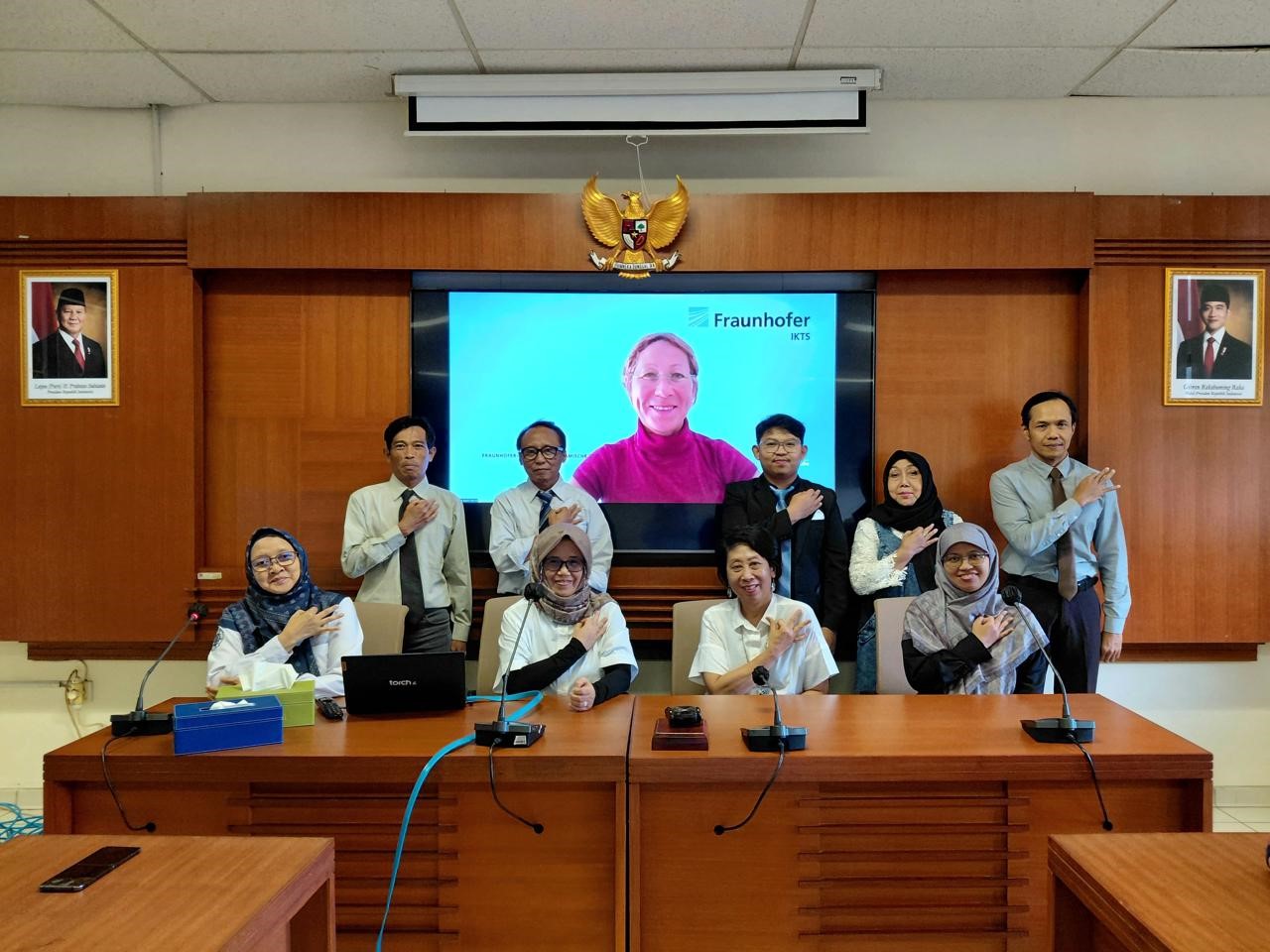
“This research opens opportunities for the development of safer, more effective, and more comfortable infection treatments, such as for periodontitis or other conditions requiring implantation. This technology is expected to be a breakthrough for dentists and periodontitis patients in the future. This is what we always emphasize to our students: Let us start from the end. Think about what final contribution research will provide to society,” said Widowati Siswomihardjo, Head of the Doctoral Program in Dental Science, who on 31 July released several doctoral students for the July 2025 graduation period.
Author : FKG Public Relations | Editor: Andri Wicaksono
Photo: Doc. Doctoral Program in Dental Sciences

