
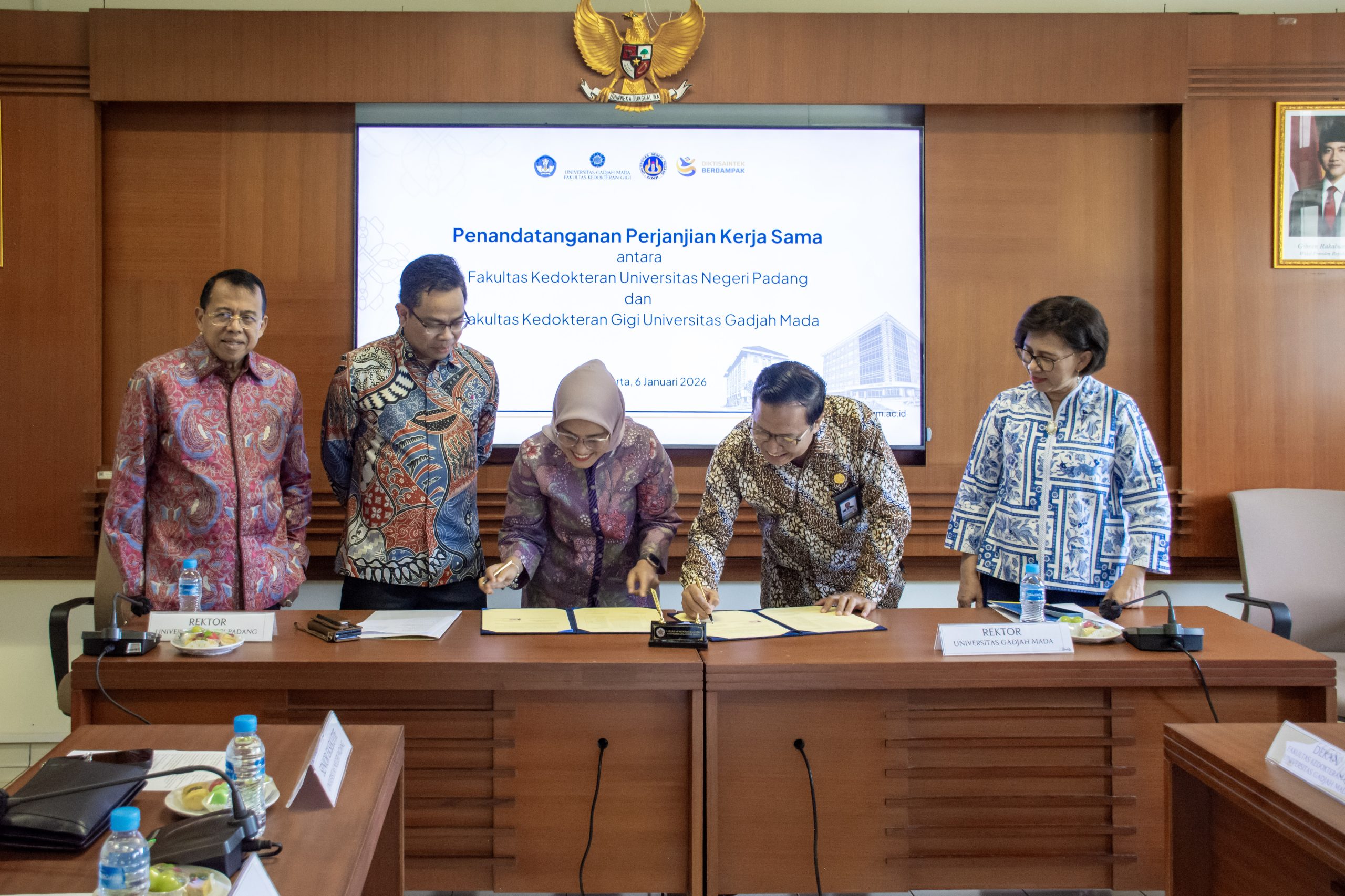
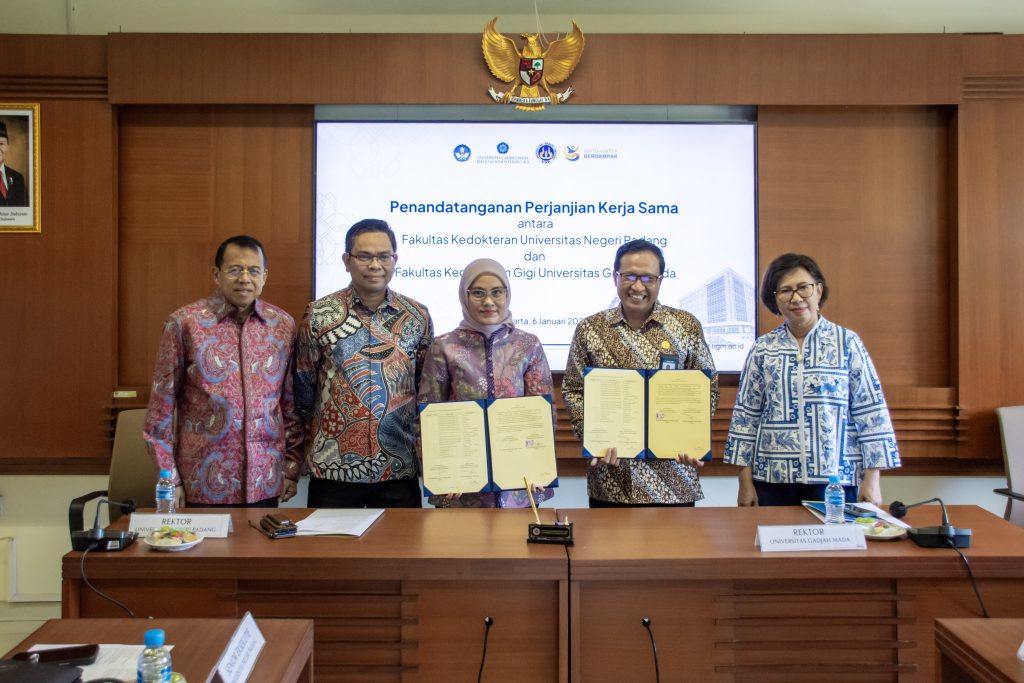
Yogyakarta, January 6, 2026. The signing of a Cooperation Agreement (PKS) between the Faculty of Dentistry at Universitas Gadjah Mada (FKG UGM) and the Faculty of Medicine at Universitas Negeri Padang (FK UNP) was more than a ceremonial academic event. The partnership marks a strategic effort to strengthen the foundation of national dental education amid persistent disparities in access to oral healthcare services across Indonesia. The agreement was signed by UNP Rector Dr. Ir. Krismadinata, S.T., M.T., and UGM Rector Prof. dr. Ova Emilia, M.Med.Ed., Sp.OG(K)., Ph.D.
The collaboration opens opportunities for joint initiatives in education, research, community service, and scientific publication. Beyond that, it positions UGM as the mentoring institution for the development of UNP’s dental education program—an essential step, considering that establishing and managing a faculty of dentistry is significantly more complex than operating a general medical faculty.
The Urgent Need for Dentists
Indonesia continues to face longstanding challenges in oral health. Public visits to dentists remain below 10 percent. This situation is influenced not only by public fear or hesitation but also by the limited number and uneven distribution of dentists, particularly in remote areas.
“Everyone has teeth, but not everyone has access to a dentist,” remarked the UGM Rector in her address. This reality underscores why UNP’s initiative to establish and develop dental education is viewed as a national strategic move, not merely an institutional interest.
Learning from UGM’s People-Centered Tradition
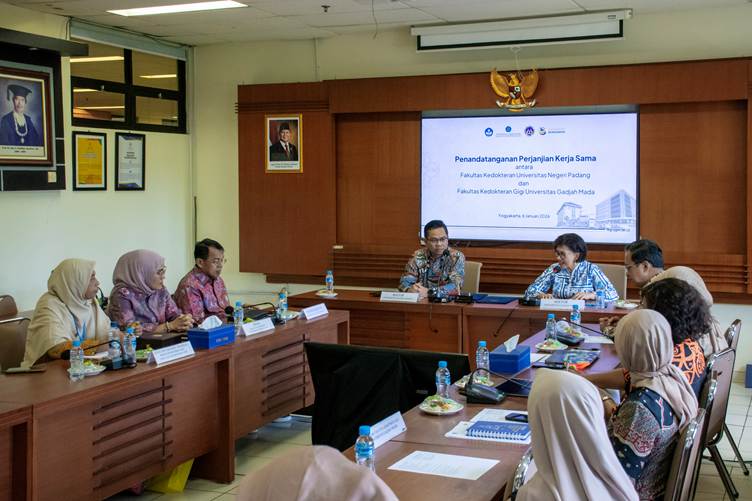
In his remarks, UNP Rector Dr. Ir. Krismadinata, S.T., M.T., emphasized that choosing UGM as a partner was deliberate. Beyond its internationally recognized academic and research reputation, UGM is known for a distinctive characteristic that is difficult to replicate: its strong commitment to community-oriented education.
UGM has long been recognized for producing medical professionals willing to serve in remote areas. UNP seeks to adopt this value—shaping future dentists who excel not only in competence but also in social empathy and dedication to service.
“We want to ensure that future dental graduates are not merely professionals pursuing comfort, but individuals who truly love their profession and serve the community,” the UNP leader stated.
More Than a Signature on Paper
Both institutions agreed that the cooperation agreement must not remain a mere administrative document. Follow-up plans include joint lectures, collaborative research, co-authored scientific publications, and integrated community service programs.
As the mentoring institution, UGM affirmed its commitment to provide serious and rigorous guidance. Although such an approach is sometimes perceived as “demanding,” it serves as a quality assurance mechanism to ensure that the development of dental education proceeds comprehensively and sustainably.
UGM’s experience mentoring newly established dental faculties in various regions has demonstrated promising outcomes, including high graduation rates among early cohorts—evidence that consistent guidance accelerates institutional maturity.
Building an Ecosystem for Oral Health Education
More broadly, the UNP–UGM partnership reflects a new direction for higher education development—particularly in oral health—in Indonesia: collaborative, quality-based, and community-oriented. Universities are no longer working in isolation, but strengthening one another to address national challenges.
Amid the continuing shortage and uneven distribution of dentists, this collaboration is expected to become a model for inter-university partnerships in producing professional, ethical, and service-oriented healthcare providers.
Ultimately, this partnership is not only about UNP and UGM, but about how higher education plays an active role in ensuring the public’s fundamental right to accessible and quality oral healthcare.
(Reporter: Andri Wicaksono, Photographer: Fajar Budi Harsakti)

