
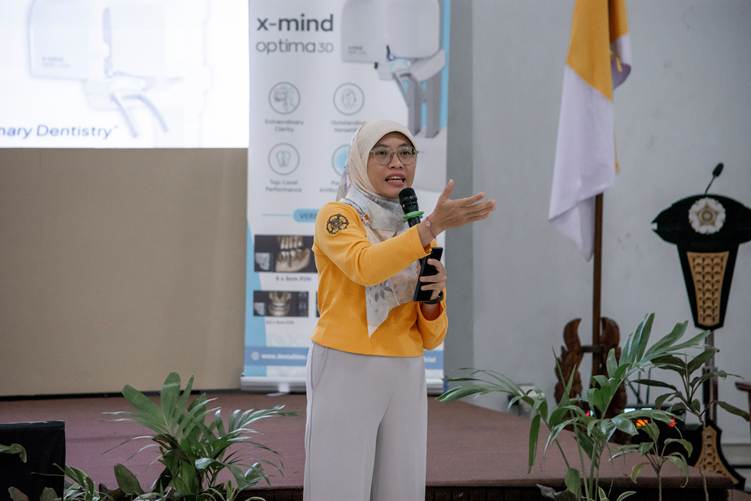
In a training room at the Faculty of Dentistry, Universitas Gadjah Mada (FKG UGM), fourteen dentists specializing in dental radiology from various regions across Indonesia gathered. They were not merely attending a technical course. Behind the Advanced Cone Beam Computed Tomography (CBCT) training for dental implants lies a fundamental issue: a shortage of dental radiology specialists and inequality in national oral healthcare services.
The second batch of training, organized by the Department of Dental and Dentomaxillofacial Radiology at FKG UGM in collaboration with the Interdisciplinary Dentistry Skills Development Center (IDSDC) and the Indonesian Dental Radiology Association (IKARGI), serves as a microcosm of the structural challenges in Indonesia’s dental education and healthcare system.
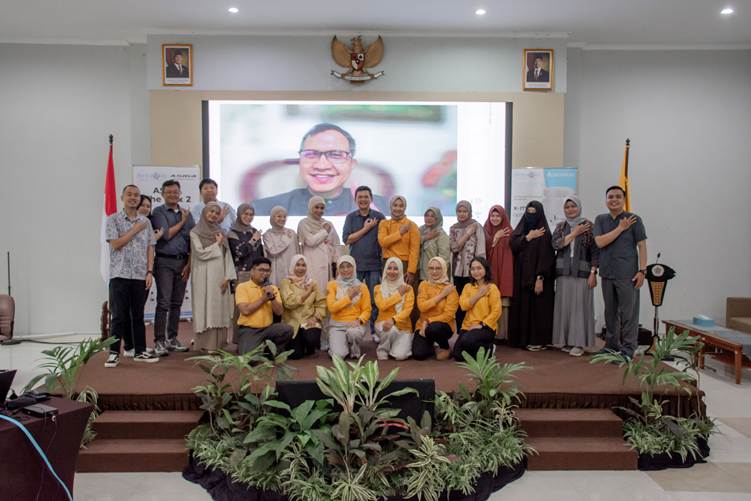
Dr. Rini Widyaningrum, DDS, M.Biotech., Chair of the February 2026 CBCT Training Committee, stated in her remarks that Batch 1 was held at the end of 2025 with 19 participants, while Batch 2 in February 2026 included 14 participants. She expressed hope that the CBCT Radiology Training at FKG UGM would continue in order to “capture” developments in the evolving world of dental radiology.
Dental Radiology: A Strategic Yet Scarce Competency
In his opening address, the Dean of FKG UGM, Prof. Suryono, DDS, SH, MM, PhD, openly acknowledged that the need for dental radiology specialists remains far from being met, particularly outside Java.
“The need for dental radiology specialists is very high. In many regions, access to dental radiology services remains a serious issue,” he said.
This statement reflects more than ceremonial rhetoric. Internal data from dental education institutions indicate that the number of dental radiology graduates does not match the rapid growth of clinics, hospitals, and imaging technologies—especially CBCT, which has become the gold standard for dental implant planning, oral surgery, and complex endodontic procedures.
As a result, some healthcare facilities operate CBCT units without specialist supervision, rely on cross-disciplinary interpretations that may not always be adequate, or even delay services due to the lack of qualified personnel.
CBCT Is Not Just a Tool, but a Clinical Responsibility
The training emphasized one key point: CBCT is not a neutral technology. It requires clinical competence, ethical awareness, and interdisciplinary collaboration.
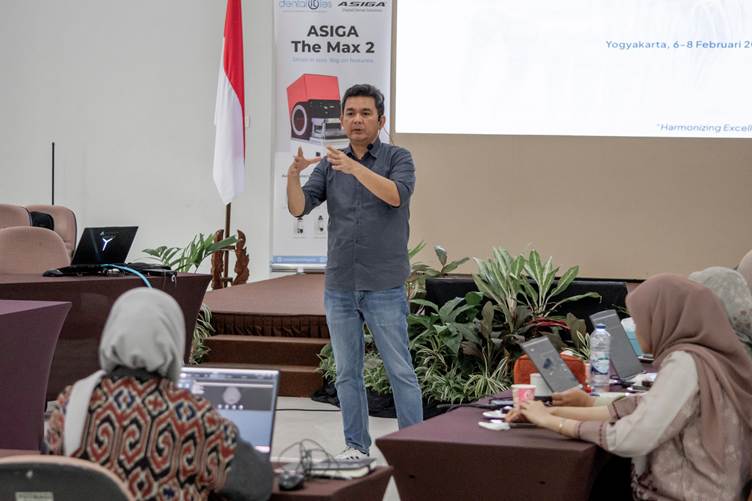
The main speaker, Dr. M. Novo Perwira Lubis, DDS, Sp.RKG, Subsp.Rad.D (K), who is also Chair of IKARGI, stressed that dental radiologists can no longer function passively as “image readers.”
“Implant planning is part of the radiologist’s competence. We cannot simply assess the bone. We must understand prosthodontic, periodontal, and oral surgery needs. This is the era of collaborative digital dentistry,” Novo emphasized.
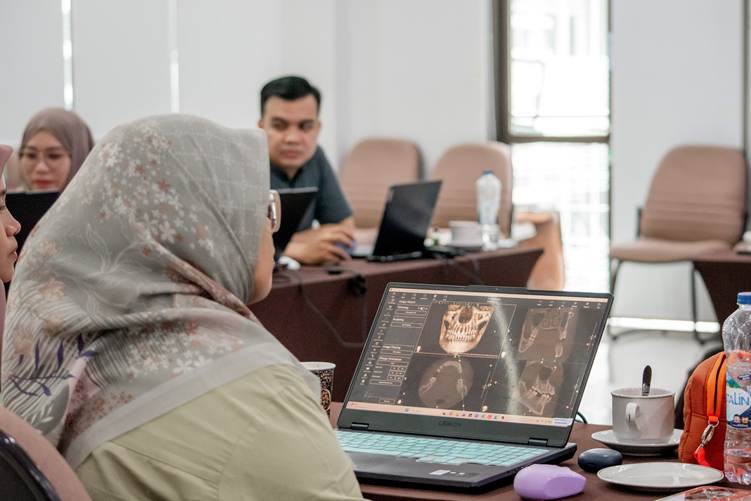
During practical sessions, participants developed implant plans using prosthetic-driven planning, integrated STL data from intraoral scans, and utilized AI-assisted nerve tracing. This approach positions radiologists as strategic clinical decision-makers, not merely technical operators.
Most participants came from outside Yogyakarta, including South Kalimantan, South Sulawesi, Bali, West Java, and regional hospitals in Balikpapan and Bandung.
Many were residents or practitioners who traveled long distances to access advanced training—an indicator that knowledge transfer remains centralized in major cities.
Prof. Suryono explicitly mentioned the need for affirmative policies prioritizing local candidates in specialist education, a statement rarely expressed so candidly in academic forums.
Regulation, Recognition, and the Role of the State
The training was also integrated with the Ministry of Health’s Satu Sehat system, including material uploads, post-tests, and certification. This reflects efforts toward formalizing competencies, while also raising an important question:
Are regulations from the Ministry of Higher Education and the Ministry of Health sufficiently adaptive to developments in digital dentistry?
Without strong affirmative policies—such as scholarships, regional quotas, or accelerated establishment of specialist programs—trainings like this risk becoming isolated events rather than systemic solutions.
More Than Just a Workshop
The CBCT training at FKG UGM was more than an academic agenda. It signaled a paradigm shift—from sectoral education toward collaborative education.
Amid increasingly sophisticated technological demands, the question is no longer whether Indonesia needs more dental radiologists, but how quickly the nation can respond to the growing role of dental radiology before the gap widens further.
Reporter: Andri Wicaksono, Photographer: Fajar Budi Harsakti

