
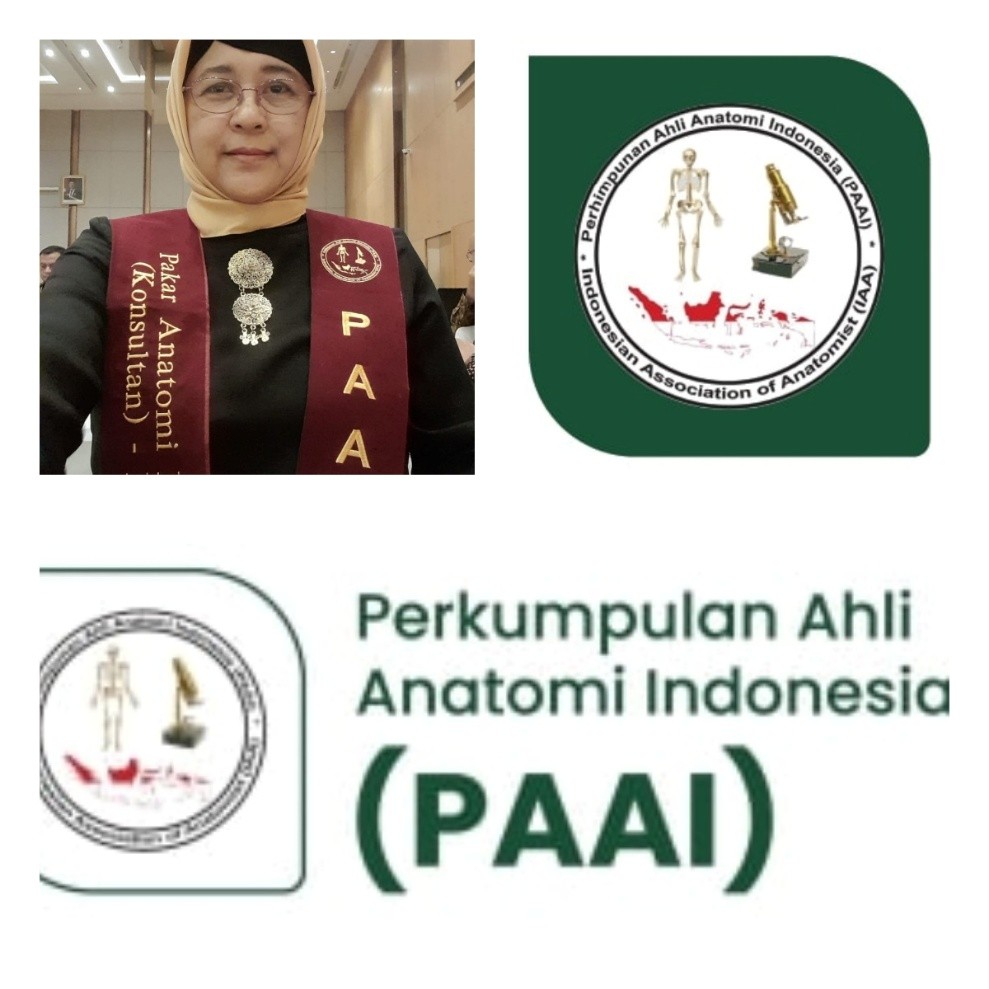
“Anatomy is often taught separately from clinical sciences, even though anatomical understanding is essential in diagnosis and medical procedures,” — Dr. drg. Anne Handrini Dewi, M.Kes., PAK (K)
The challenges of medical anatomy in Indonesia include limitations in educational facilities and anatomy laboratories. Many medical institutions do not yet have complete and modern anatomy laboratories. The use of cadavers (human bodies) for learning remains limited due to regulations, costs, and availability. The integration of technology in anatomy education is also uneven. The use of 3D simulation, virtual reality, and augmented reality has not been evenly implemented across institutions, and intensive training is needed for lecturers to effectively utilize these technologies. In addition, curricula are not yet fully integrated. Anatomy is often taught separately from clinical sciences, even though anatomical understanding is fundamental for diagnosis and medical interventions.
Challenges of Anatomy in Dentistry
Shortage of dentists and educators
- Indonesia has only around 40,000 dentists, far below the ideal need of more than 90,000.
- This affects the distribution of dental education and services, including the quality of dental anatomy teaching.
Adaptation to digital technology
- Dentists are required to master 3D imaging, AI in diagnostics, and telemedicine.
- Dental anatomy must be taught using digital approaches to remain relevant to modern practice.
Limited local research and publications in dental anatomy
- Many dental anatomy references still rely on foreign literature.
- Population-based research in Indonesia is needed to support more accurate diagnosis and treatment.
Lack of specialization in forensic dental anatomy
Forensic dentistry is critical in identifying victims of disasters or criminal cases, yet there are still very few experts and limited attention in this field. drg. Anne views anatomical expertise not merely as a title, but as a mandate for scientific development. The vision and mission she plans to develop include:
- Developing research in dentistry, particularly in anatomy and histology.
- Planning regular workshops in anatomical dissection.
- Developing anatomy education, especially practical training for anatomy laboratory staff.
- Planning the development of an anatomy laboratory at FKG UGM.
Planning the development of an anatomy laboratory at FKG UGM.

