
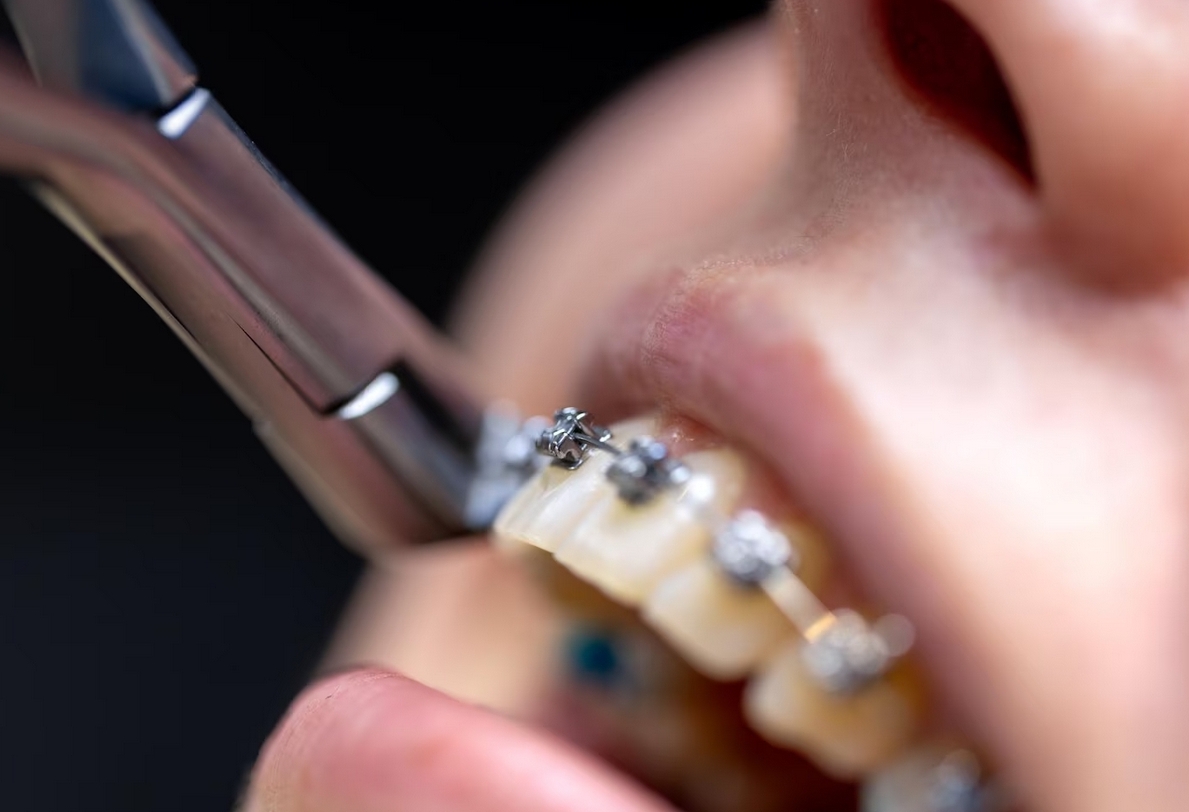
Advances in orthodontic technology have enabled the use of temporary anchorage devices (TADs), one of the most popular being orthodontic miniscrews. This article discusses the safety and effectiveness of miniscrews in orthodontic treatment, including success factors, potential risks, and clinical considerations.
As an additional reference, the study entitled “Pengaruh Implantasi Subkutan Logam Kobalt Kromium sebagai Bahan Alternatif Mini Screw Orthodontics terhadap Reaksi Jaringan” is used to review the potential of alternative materials for miniscrews.
Background
What Are Orthodontic Miniscrews?
Orthodontic miniscrews are small screws inserted into the alveolar bone or maxillofacial structures to serve as anchorage for tooth movement without relying on other teeth. Their use enables more effective tooth movement while minimizing unwanted dental displacement.
Uses and Benefits
- Provide stable anchorage, reducing undesirable tooth movement.
- Expand orthodontic indications, particularly in complex cases such as molar intrusion or distal molar movement.
- Improve control over the direction and magnitude of orthodontic forces.
- Reduce the need for additional appliances such as headgear or transpalatal arches
Miniscrew Safety
Risks and Complications
Although generally safe, miniscrews are not risk-free. Potential complications include:
- Damage to tooth roots or periodontal tissues due to improper placement.
- Miniscrew failure caused by mobility or loosening.
- Inflammation of the surrounding soft tissues.
- Potential screw fracture if material quality or insertion technique is suboptimal.
Factors Affecting Safety and Stability
- Cortical bone thickness at the insertion site influences initial stability.
- Proper insertion technique and site selection help prevent injury to tooth roots, maxillary sinuses, or nerves.
- Screw design, diameter, and operator experience play critical roles in success.
- Patient oral hygiene significantly affects the risk of infection and inflammation.
Effectiveness of Miniscrews in Orthodontic Treatment
Evidence of Effectiveness
- Miniscrews provide more stable anchorage
- They are effective for molar intrusion, distal movement, and anterior tooth retraction.
- Guided insertion techniques improve accuracy and reduce failure risk.
When Miniscrews Are Highly Recommended
- In cases requiring absolute anchorage.
- For complex orthodontic treatments requiring high levels of movement control.
- When conventional anchorage methods fail to provide adequate results.
Limitations
- Not all cases succeed without complications; early failure can prolong treatment time.
- Requires excellent oral hygiene maintenance.
- Effectiveness depends on case selection, technique, and clinician experience.
Alternative Materials and Local Research
Research conducted by Dr. drg. Ananto Ali Alhasyimi, MDSc, Sp. Ort, Subsp.DDTK(K), Prof. Dr. drg. Siti Sunarintyas, M.Kes., and Prof. dr. Marsetyawan HNE, M.Sc. Ph.D., entitled “Pengaruh Implantasi Subkutan Logam Kobalt Kromium sebagai Bahan Alternatif Mini Screw Orthodontics terhadap Reaksi Jaringan”, indicates that cobalt–chromium alloy has potential as an alternative material for orthodontic miniscrews. Biocompatibility is a critical consideration, as the material must not provoke adverse tissue reactions.
These findings emphasize that success depends not only on technique but also on appropriate material selection to ensure patient safety.
Clinical and Practical Considerations
- Before insertion: perform radiographic evaluation, ideally using CBCT, to determine a safe placement site.
- Patient consultation: explain benefits, risks, and the need for follow-up care.
- Insertion technique: ensure high sterility, correct angle and depth, and appropriate screw size selection.
- Monitoring: regularly assess tissue condition, screw stability, and oral hygiene.
- Contingency planning: prepare alternative anchorage sites or methods in case of miniscrew failure.
***
The use of orthodontic miniscrews represents an important innovation in orthodontics, providing improved control over tooth movement and enhancing treatment effectiveness. When applied using proper techniques, biocompatible materials, and adequate maintenance, miniscrews are proven to be both effective and safe. Research on cobalt–chromium materials as alternative miniscrew options highlights the importance of biocompatibility in achieving long-term success. Therefore, the decision to use miniscrews should carefully consider clinical benefits, patient safety, and long-term monitoring readiness.
References
Dr. drg. Ananto Ali Alhasyimi, MDSc, Sp. Ort, Subsp.DDTK(K), Prof. Dr. drg. Siti Sunarintyas, M.Kes. ; Prof. dr. Marsetyawan HNE, M.Sc. Ph.D., PENGARUH IMPLANTASI SUBKUTAN LOGAM KOBALT KROMIUM SEBAGAI BAHAN ALTERNATIF MINI SCREW ORTHODONTICS TERHADAP REAKSI JARINGAN, https://etd.repository.ugm.ac.id/penelitian/detail/238076
Author: Rizky B. Hendrawan | Photo: Freepik

