
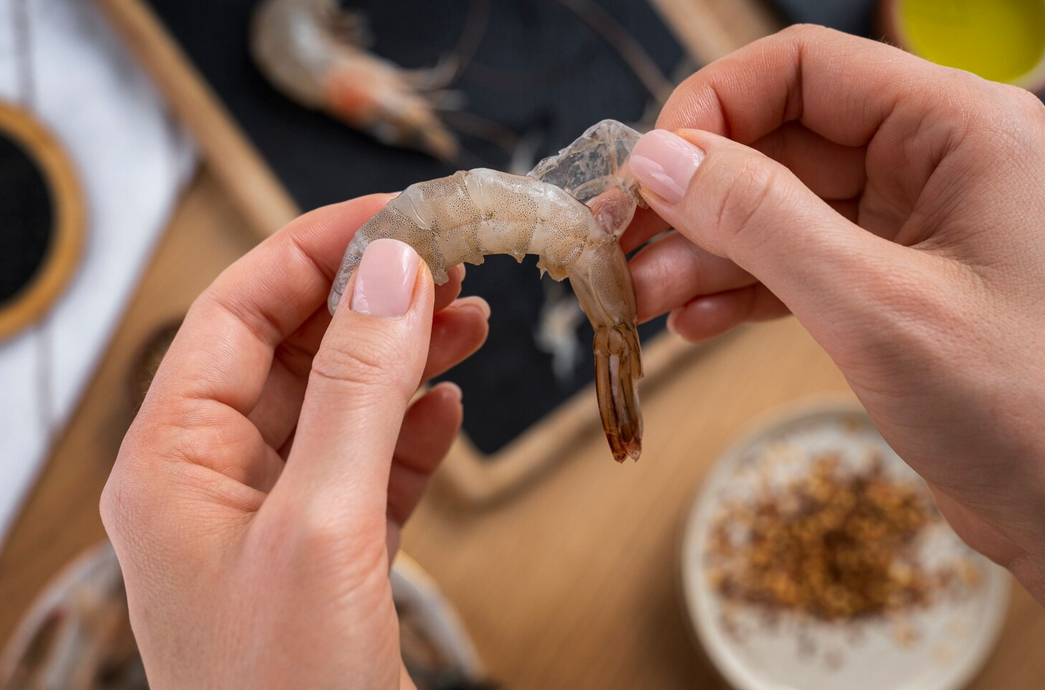
Nanocomposite materials in restorative dentistry are attracting increasing attention due to their unique ability to enhance mechanical properties and antibacterial activity of restorative materials such as composite resins. One widely studied bioactive candidate is nanochitosan derived from giant freshwater prawn shells.
Potential of Nanochitosan in Inhibiting Biofilm Formation
Research conducted by an FKG UGM student, Tira Aisah Puspasari, under the supervision of Prof. drg. Tetiana Haniastuti, M.Kes., Ph.D. and Prof. Dr.rer.nat. apt. Triana Hertiani, S.Si., M.Si., entitled “Potensi Nanokitosan dari Kulit Udang Galah Dalam Menghambat Pembentukan dan Degradasi Biofilm Streptococcus mutans and Streptococcus sanguinis”, revealed several important findings:
- Nanochitosan derived from giant freshwater prawn shells can inhibit biofilm formation and partially degrade the biofilm of S. sanguinis and S. mutans in vitro.
- A concentration of 0.5% was the most optimal in inhibiting and degrading both types of bacterial biofilms.
The study also showed that the Minimum Inhibitory Concentration (MIC) of nanochitosan against S. sanguinis was 0.5%, while for S. mutans it was 0.25%.
Additional Evidence from Other Studies
Studies on chitosan extracts (non-nano size) have also demonstrated antibiofilm effectiveness:
- For example, chitosan extract from giant freshwater prawn shells at a concentration of 0.4% showed effectiveness comparable to chlorhexidine in inhibiting S. sanguinis adhesion.
- Other studies reported that chitosan concentrations of 0.2%, 0.4%, and 0.8% were also effective in inhibiting S. sanguinis biofilm formation.
- Against S. mutans, nanochitosan at a concentration of 0.25% demonstrated better degradation effects than chlorhexidine in inhibiting and degrading biofilms.
Application of Nanocomposites in Restorative Dental Resin
In addition, literature reviews state that the incorporation of chitosan nanoparticles into composite resin can enhance antibacterial effectiveness without significantly compromising the mechanical properties of the resin, provided that the dosage is appropriate.
Potential Risks and Challenges
Despite their promise, the use of nanomaterials is not without risks. In general, nanoparticles may pose potential toxicity risks, as their extremely small size allows them to penetrate cells or tissues, potentially causing cellular dysfunction, inflammation, and even systemic effects depending on the type, form, and level of exposure.
In the oral context, potential risks include:
- Gingival or pulpal tissue sensitivity – local reactions to nanoparticles that have not yet been fully explored.
- Systemic dissemination – concerns that nanoparticles may be released and enter the bloodstream, with long-term effects that are not yet fully understood.
- Long-term compatibility – the sustainability of antibacterial properties without affecting the integrity and aesthetics of restorations requires further investigation.
***
Nanochitosan-based nanocomposites derived from giant freshwater prawn shells show great potential as antibiofilm agents against S. mutans and S. sanguinis. This is supported by optimal effectiveness in the concentration range of 0.25%–0.5%. Combined with evidence that chitosan nanoparticles can enrich resin with antibacterial properties without weakening its mechanical characteristics, nanocomposites represent an attractive innovation in restorative dentistry.
However, long-term safety and toxicological challenges must not be overlooked. Before widespread clinical adoption, further studies are required on biosecurity, safe dosage, material stability, and tissue responses.
References
Tira Aisah Puspasari, Prof. drg. Tetiana Haniastuti, M.Kes., Ph.D., Prof. Dr.rer.nat. apt. Triana Hertiani, S.Si., M.Si., Potensi Nanokitosan dari Kulit Udang Galah Dalam Menghambat Pembentukan dan Degradasi Biofilm Streptococcus mutans dan Streptococcus sanguinis, https://etd.repository.ugm.ac.id/penelitian/detail/219362
Author: Rizky B. Hendrawan | Photo: Freepik

