
On day 21 after intentional replantation, type I collagen levels in the group treated with Mineral Trioxide Aggregate (MTA) reached 68.42 ng/dL. That figure was nearly twice as high as the 47.84 ng/dL recorded in the control group and substantially higher than the self-adhesive resin cement group, which remained at 37.52 ng/dL. This striking difference is more than a matter of statistics. It raises a highly practical question: Which material is safest and most effective for bonding a vertically fractured tooth before replanting it in the jaw?
A study published in the August 2022 edition of Majalah Kedokteran Gigi Klinik (MKGK) UGM sought to answer that question. Researchers from the Department of Conservative Dentistry, Faculty of Dentistry, Universitas Gadjah Mada—Dr. drg. Raphael Tri Endra Untara, M.Kes., Sp.KG(K), Dr. drg. Yulita Kristanti, M.Kes., Sp.KG.(K), and drg. Andina Widyastuti, S.K.G., Sp.KG.—conducted an experimental study involving 27 male New Zealand rabbits to compare two materials used to seal fracture lines.
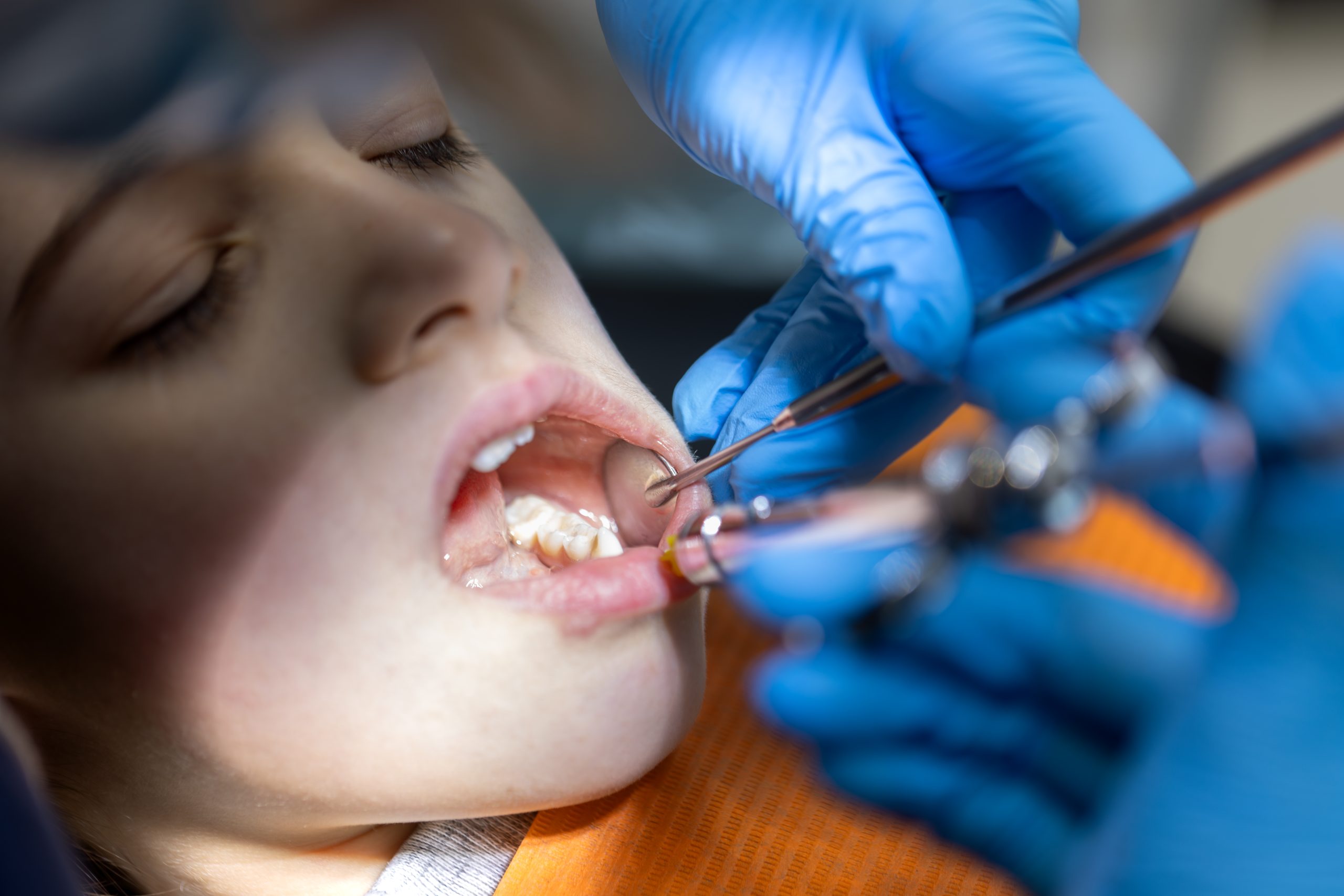
A vertical fracture is a crack that runs along the long axis of a tooth, extending from the crown to the root. Unlike horizontal fractures, which are generally easier to identify, vertical fractures can remain hidden, with the tooth root still embedded in its socket. One available treatment option is intentional replantation. The tooth is deliberately extracted, treated outside the mouth, and then returned to its original socket during the same visit.
The success of this procedure depends heavily on how tightly the fracture line can be sealed. Even the smallest gap can provide a space for bacteria or fluids to accumulate, potentially compromising the entire treatment. The two materials tested in this study were MTA, a cement-based material widely used in endodontics because of its biocompatibility, and self-adhesive resin cement, a newer resin-based material that does not require surface pretreatment and can be applied in a single step.
Why was type I collagen chosen as an indicator? When a tooth is extracted for replantation, the periodontal ligament is also disrupted. The tooth socket undergoes an injury that triggers a complex healing response, progressing from hemostasis and inflammation to proliferation and maturation. During the proliferative phase, fibroblasts actively synthesize collagen. Type III collagen is initially predominant but is gradually replaced by type I collagen, which is thicker and stronger and serves as the structural backbone of newly formed connective tissue.
Type I collagen levels were measured from rabbit blood serum using an enzyme-linked immunosorbent assay (ELISA) on days 7, 14, and 21 after surgery. The results revealed markedly different healing trajectories among the groups.
“Type I collagen formation was higher with MTA application than with self-adhesive resin cement.” — Dr. drg. Raphael Tri Endra Untara, M.Kes., Sp.KG(K), et al., MKGK UGM, 2022
During the first week, all three groups showed comparable collagen levels of approximately 40–41 ng/dL, with no significant differences. By the second week, however, the pattern began to diverge sharply. The MTA group increased to 48.09 ng/dL, while the control group rose slightly to 45.38 ng/dL. Meanwhile, the resin cement group declined to 36.13 ng/dL.
The decline in the resin group was not an anomaly. The researchers explained that self-adhesive resin cement contains potentially cytotoxic components, including TEGDMA (triethylene glycol dimethacrylate) and fluoride. Because the material fills the entire fracture line, including the root canal, not all areas can be exposed evenly to LED light during polymerization. Areas that fail to polymerize completely can release free monomers such as Bis-GMA, UDMA, HEMA, and camphorquinone. These compounds can inhibit fibroblast activity and suppress collagen formation.
MTA, by contrast, has demonstrated good biocompatibility. Periodontal ligament fibroblasts maintain normal morphology and are able to attach to the surface of set MTA. In connective tissue, MTA produces little inflammatory reaction and may even promote tissue regeneration.MTA, by contrast, has demonstrated good biocompatibility. Periodontal ligament fibroblasts show normal morphology and are able to attach to the surface of set MTA. In connective tissue, MTA induces little inflammatory response and may even promote tissue regeneration.
These findings have direct implications for endodontic practice. MTA is not a new material, but this study reinforces its position as a biologically safer option than self-adhesive resin cement for intentional replantation in cases of vertical fractures. The mean difference of 30.90 ng/dL between the MTA and resin cement groups at week three, with a significance level of p < 0.05, is difficult to ignore.
Of course, this study was conducted in rabbits, and further research in humans is needed to confirm the findings clinically. For now, however, when a dentist is faced with a vertically fractured tooth and must choose a bonding material, the available data provide serious grounds for consideration. The tooth may be salvageable, and the choice of material could determine whether the surrounding tissues heal properly or are instead hindered by toxicity working silently beneath the surface.
Authors: drg. Achmad Zam Zam Aghasy, M.Kes. & Annisa Dwi Noviyanti
Photo: FreePik
Source DOI: https://doi.org/10.18905/jodu.38.2_101