
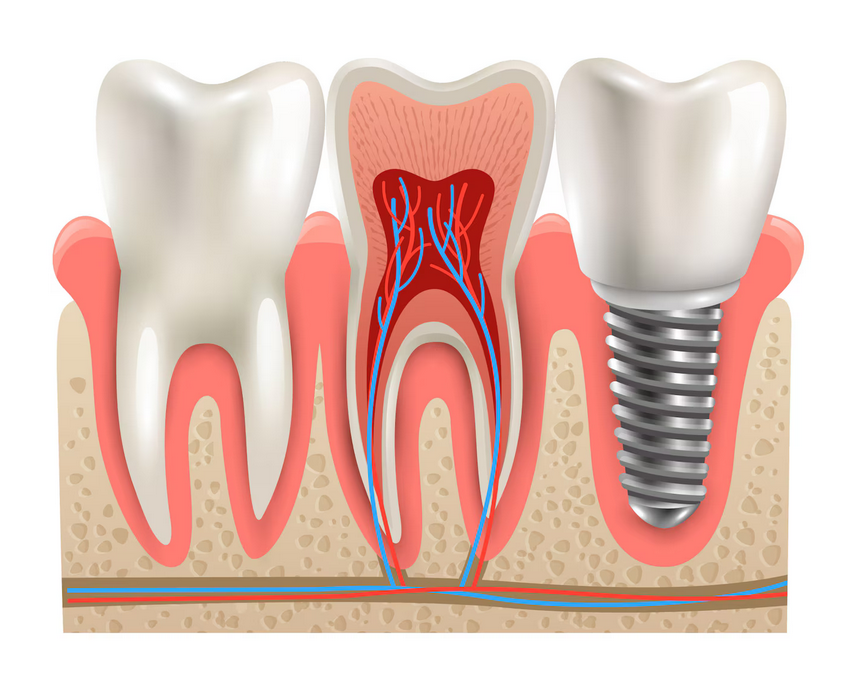
In dentistry, dental implants have become an effective solution for replacing missing teeth. One of the key factors influencing implant success is the interaction between the implant surface and the surrounding bone tissue and blood. Surface modification of implants is an actively developing research area aimed at improving osseointegration and biocompatibility.
Modified implant surfaces are designed to enhance cell adhesion, accelerate bone cell proliferation, and reduce the risk of complications such as bleeding during placement. Common surface modification methods include chemical etching, oxide coating, and layered deposition techniques such as sputtering. Through these approaches, surface properties such as roughness, chemical composition, and surface energy can be controlled to influence biological behavior at the implantation site.
Basic Concepts of Surface Modification
- Surface roughness: Appropriate roughness enhances bone attachment. Surfaces that are too smooth may hinder osseointegration, while excessive roughness may increase inflammation.
- Surface chemical composition: Oxide layers such as aluminum oxide (Al₂O₃) can improve biocompatibility and corrosion resistance.
- Surface energy and protein interaction: Surface energy affects protein adsorption and cell adhesion, which in turn influence bone cell proliferation and differentiation.
- Biological stability: Surface modifications must remain stable in the oral environment, including exposure to saliva, mechanical loading, and pH changes.
Common Surface Modification Methods
- Acid Etching
- Purpose: To create micro-roughness without damaging the implant core.
- Biological effect: Enhances bone cell adhesion and accelerates osseointegration.
- Consideration: Etching time must be controlled to avoid surface damage.
- Aluminum Oxide (Al₂O₃) Coating via Sputtering Sputtering
- Purpose: To add a chemically and mechanically stable oxide layer.
- Biological effect: Improves biocompatibility and modifies interactions with blood and tissues.
- Consideration: Coating thickness and uniformity are critical for long-term performance.
Related Research Case
A study focused on the effect of acid etching duration on titanium dental implants coated with Al₂O₃ using the sputtering method and its relationship to hemolysis percentage in in vitro studies. This research explored how surface treatment affects blood response upon contact with the implant, which is important for understanding early biocompatibility after placement. This aligns with research conducted by Faculty of Dentistry UGM student Adella Syvia Maharani, under the supervision of drg. Murti Indrastuti, M.Kes., Sp.Pros(K), and Dr. drg. Suparyono Saleh, Sp.Pros(K), entitled “Pengaruh Lama Etsa Asam pada Implan Gigi Titanium dengan Pelapisan Alumunium Oksida (Al2o3) Metode Sputtering terhadap Persentase Hemolisis (Kajian In Vitro)”.
Practical Implementation and Clinical Considerations
- Method selection: Properly controlled acid etching followed by Al₂O₃ coating via sputtering can produce more biocompatible surfaces and support faster osseointegration.
- Surface characterization: Post-modification analysis of roughness (profilometry), chemical composition (XPS or EDS spectroscopy), and coating stability under oral conditions is essential.
- Biological evaluation: In vitro tests such as hemolysis assays, osteoblast viability, and cell adhesion tests provide early insight into biological responses.
- Safety and regulation: Clinical implementation requires long-term safety evaluation, compliance with biocompatibility standards, and relevant regulatory approval.
***
Surface modification of dental implants is a key strategy to improve clinical performance through enhanced osseointegration and biocompatibility. The appropriate selection of techniques, such as controlled acid etching and Al₂O₃ coating via sputtering, can contribute to more favorable biological responses, particularly in interactions with blood and bone tissues. Strong literature support linking surface modification, chemical properties, and biological response is essential to inform safer and more effective implant design.
References
Adella Syvia Maharani, drg. Murti Indrastuti, M.Kes., Sp.Pros(K) ; Dr. drg. Suparyono Saleh, Sp.Pros(K), Pengaruh Lama Etsa Asam pada Implan Gigi Titanium dengan Pelapisan Alumunium Oksida (Al2o3) Metode Sputtering terhadap Persentase Hemolisis (Kajian In Vitro), https://etd.repository.ugm.ac.id/penelitian/detail/226609
Author: Rizky B. Hendrawan | Photo: Freepik

