
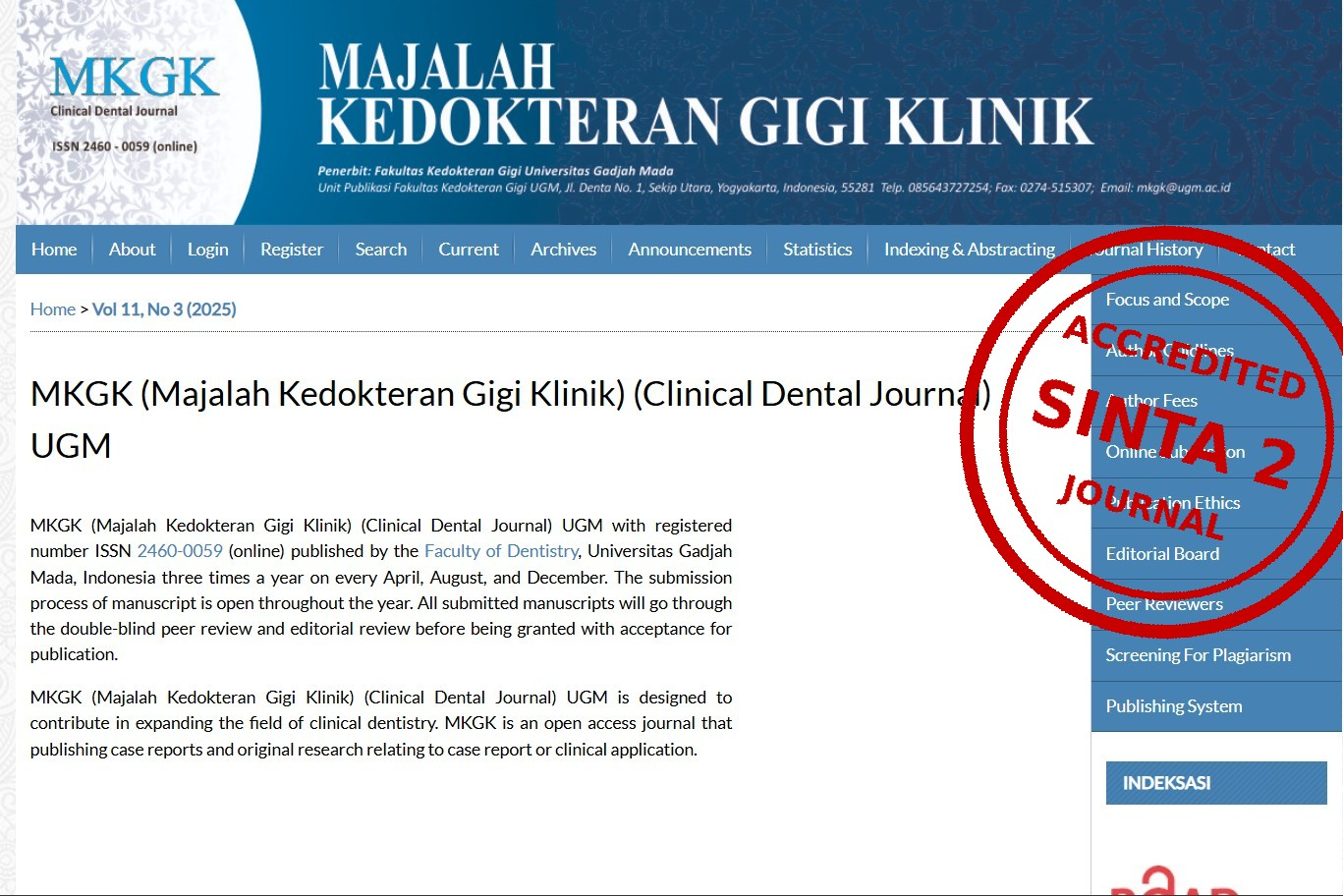
Persistence and collaboration, driven by a commitment to maintaining standards and improving the quality of scientific journals, have finally paid off. Majalah Kedokteran Gigi Klinik (MKGK), managed by the Faculty of Dentistry at Universitas Gadjah Mada (FKG UGM), has officially achieved national accreditation at SINTA Rank 2—an important milestone marking national recognition of the journal’s scientific quality in dentistry.
This achievement is stated in the Decree of the Director General of Research and Development No. 2/C/C3/KPT/2026, announced through the notification letter for the 2025 Period 2 scientific journal accreditation results.
For Editor-in-Chief Dr. drg. Rini Widyaningrum, M.Biotech., Sp.RKG, this success did not come overnight, but through a long journey that began with simple efforts to sustain publication and gradually build a strong, high-quality scientific journal ecosystem.
Born from Academic Needs
MKGK was established in 2015 in response to a real need within the academic dental community. At the time, many scientific works—particularly case reports from residents—lacked adequate publication platforms.
According to Sasmita Gandawanti, SE, the journal administrator, before MKGK was established, most manuscripts were published in Majalah Kedokteran Gigi (MKG), which has since evolved into Majalah Kedokteran Gigi Indonesia (MKGI). However, as submission volumes increased, publication space became limited.
“At that time, the number of submissions was very high. That’s why in 2015, it was decided to create a new journal, MKGK, specifically to publish clinical case reports from dentists,” she explained.
As a result, clinical cases handled by residents in teaching hospitals no longer remained merely academic reports but could serve as scientific references for the broader dental community.
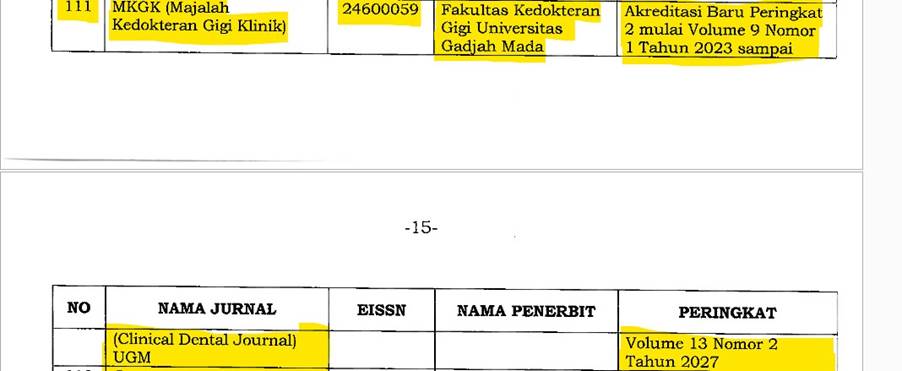
Source: Surat Keputusan Direktur Jenderal Riset dan Pengembangan Nomor 2/C/C3/KPT/2026
Sustaining Publication Amid Limitations
However, MKGK’s early journey was not easy. The biggest challenge was maintaining consistent publication. The journal is published three times a year—April, August, and December—but in its early years, the number of submissions often fell short of filling a full issue.
Editor in Chief MKGK, drg. Rini explained that maintaining the publication schedule often required extra effort.
“The most important thing was ensuring the journal was published regularly. Our biggest challenge was sustaining publication,” she said.
In such circumstances, the solidarity of the academic community played a crucial role. Many lecturers, researchers, and clinicians voluntarily contributed manuscripts to keep the journal running.
“I even asked senior colleagues and peers to contribute manuscripts,” Dr. Rini recalled, reflecting on the journal’s early struggles.
Behind the Scenes of MKGK
MKGK’s success is also inseparable from the strategic work of its editorial and administrative teams. Continuous improvements have been made, from enhancing article quality and accelerating the review process to strengthening editorial governance.
The roles of peer reviewers and editors have been expanded to ensure that each article meets increasingly rigorous scientific standards.
Behind the scenes, journal administrators play a vital role. Managing editorial systems, manuscript layout, and meeting indexing standards requires precision and dedication.
“Journal administrators play a crucial role in managing both MKGK and MKGI, including in the process toward national accreditation,” drg. Rini emphasized.
Institutional Support from FKG UGM
MKGK’s journey toward SINTA 2 accreditation has also been strongly supported by FKG UGM, which has consistently provided encouragement and facilities to improve journal governance and scientific reputation.
“The faculty has always supported and provided facilities so MKGK can grow and achieve national accreditation,” drg. Rini said.
This support has become a key foundation in strengthening the culture of scientific publication within the faculty.
The editorial team hopes that MKGK will continue to serve as a publication platform for various scientific works in dentistry, ranging from case reports and research findings to literature reviews.
“Moving forward, we aim to continuously improve governance and open opportunities for authors from various institutions, including international contributors,” drg. Rini added.
Another goal now being pursued is international indexing, which would bring MKGK closer to the global scientific stage.
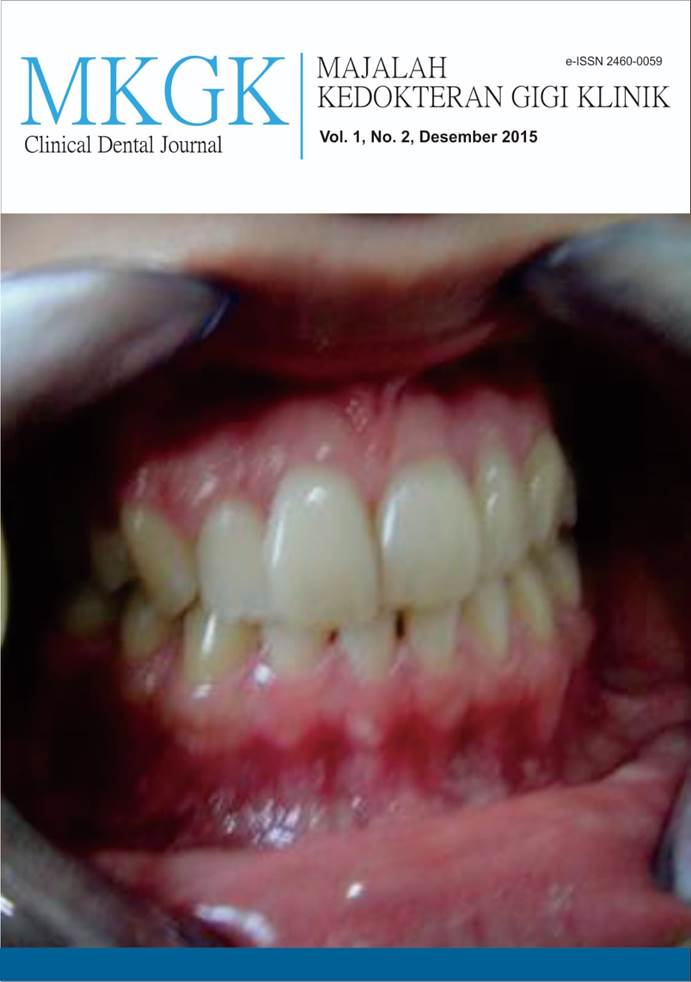
Source: Archives of the MKGK FKG UGM Journal Manager
MKGK’s SINTA 2 accreditation stands as a symbol that persistence, collaboration, and commitment to scientific quality can transform limitations into achievement.
Amid global demands for high-quality academic publications, MKGK’s journey serves as a reminder that scientific progress begins with consistent, patient, and dedicated hard work.
(Reporter: Andri Wicaksono, S.Sos., M.I.Kom)