
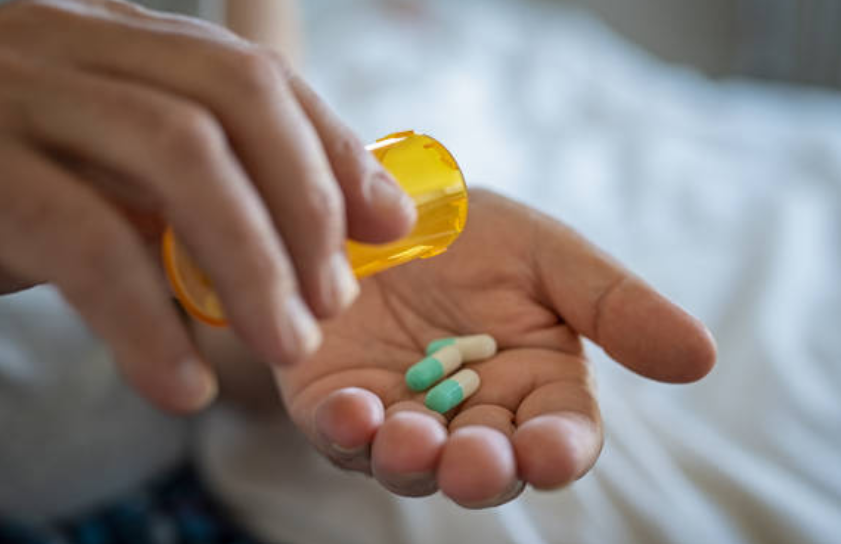
More than half of the residents surveyed in Godean District, Sleman, Yogyakarta, chose to purchase antibiotics on their own from pharmacies without a doctor’s prescription when experiencing gum problems. The reasons were simple: it was cheaper, faster, and did not require waiting in line. This finding emerged from a study published in the December 2022 edition of Majalah Kedokteran Gigi Klinik (MKGK) UGM, led by drg. Mayu Winnie Rachmawati, M.Sc., Ph.D., from the Department of Dental Biomedical Sciences, FKG UGM. The study involved 203 respondents in Godean throughout 2022 and highlighted the practice of antibiotic self-medication for periodontal disease—a condition involving inflammation of the gums and tooth-supporting tissues, with cases reaching 60% of the Indonesian population.
Sore Gums, the Pharmacy as the Go-To Option
Periodontal disease is not merely a case of swollen gums. This condition involves chronic inflammation that can damage the gums, the bone supporting the teeth, and even the periodontal ligament—the tissue that connects the teeth to the jawbone. If left untreated, it can eventually lead to tooth loss.
However, many people are unaware of the extent of the problem. Embarrassment about having their gum condition examined by a dentist, limited information about the dangers of the disease, and long distances to healthcare facilities lead many people to choose a shortcut: purchasing antibiotics on their own.
Of the 203 respondents studied, 44.6% agreed with practicing antibiotic self-medication when experiencing periodontal disease. A total of 18.2% stated that their main reasons were that it was cheaper, faster, and more convenient. Meanwhile, 32.1% admitted that they did not like going to the dentist.
“Self-medication becomes an option for the community to improve affordability in treatment,” Rachmawati and her team wrote in the paper.
Who Is Most Likely to Do It?
The study data revealed a fairly specific profile. Women dominated this self-medication practice, accounting for 81.2% of respondents who agreed with it. This is associated with the fact that women are indeed more susceptible to periodontal problems—hormonal changes throughout a woman’s life cycle, from puberty to pregnancy, increase the sensitivity of gum tissue.
The 17–25-year-old age group accounted for the largest proportion, at 22.6%. Young adults in this age range tend to be more independent in seeking health information through the internet or online consultation applications, and then make their own treatment decisions without verification from healthcare professionals.
Interestingly, those with lower levels of education were not the group most likely to practice self-medication. Quite the opposite—respondents with a high school education dominated (23.1%), followed by university graduates. Students at schools and universities were the occupational group with the highest tendency toward self-medication, reaching 51.7%. Having sufficient knowledge about medications does not always lead to the right decision; sometimes, it instead makes people feel confident enough to treat themselves.
In terms of income, the group earning more than IDR 2,000,000 per month was actually the most likely to practice self-medication (16.7%). This contradicts the common assumption that self-medication is practiced only by lower-income groups who cannot afford to see a doctor.
The Hidden Danger Behind Convenience
There is a price to be paid for this convenience. Antibiotics taken without an accurate diagnosis are not only ineffective but can also be dangerous. In the management of periodontal disease, antibiotics are actually used only as adjunctive therapy to support mechanical treatment such as scaling and root planing—not as the primary treatment that can stand alone.
Taking antibiotics indiscriminately, particularly without the proper dosage and duration, accelerates the emergence of drug-resistant bacteria. A study in Yogyakarta cited in this paper showed that amoxicillin was the antibiotic most commonly purchased without a prescription (77%), with an average consumption duration of only five days—which may not necessarily correspond to the clinical needs of each patient.
Antibiotic resistance is not an abstract threat of the future. It is already happening, and every antibiotic pill taken without an appropriate indication contributes to an increasingly serious global health problem.
Alarming Numbers Behind an Everyday Habit
BPS data from 2019 recorded that 71.46% of Indonesians practiced self-medication—a figure that has continued to increase from year to year. In the Special Region of Yogyakarta, the 2021 National Socioeconomic Survey showed that 80.68% of residents treated themselves. Meanwhile, the prevalence of dental and oral diseases in Yogyakarta reached 65.6%, with periodontitis accounting for 74.1%—yet only 16.4% of cases were treated by dental healthcare professionals.
The gap between the number of people affected and the number who actually receive professional treatment is at the root of the problem. As long as access to dentists continues to feel distant, expensive, or inconvenient, pharmacies will remain the “first clinic” for many people experiencing dental problems.
The question now is not only about public knowledge, but also about how easily the healthcare system can make people feel that they do not need to take such a risky shortcut.
Authors: Achmad Zam Zam Aghasy, DDS, M.Kes.; Hazra Alifia Muharam
Photo: Pexels
Source DOI: 10.1186/2047-2994-1-38