
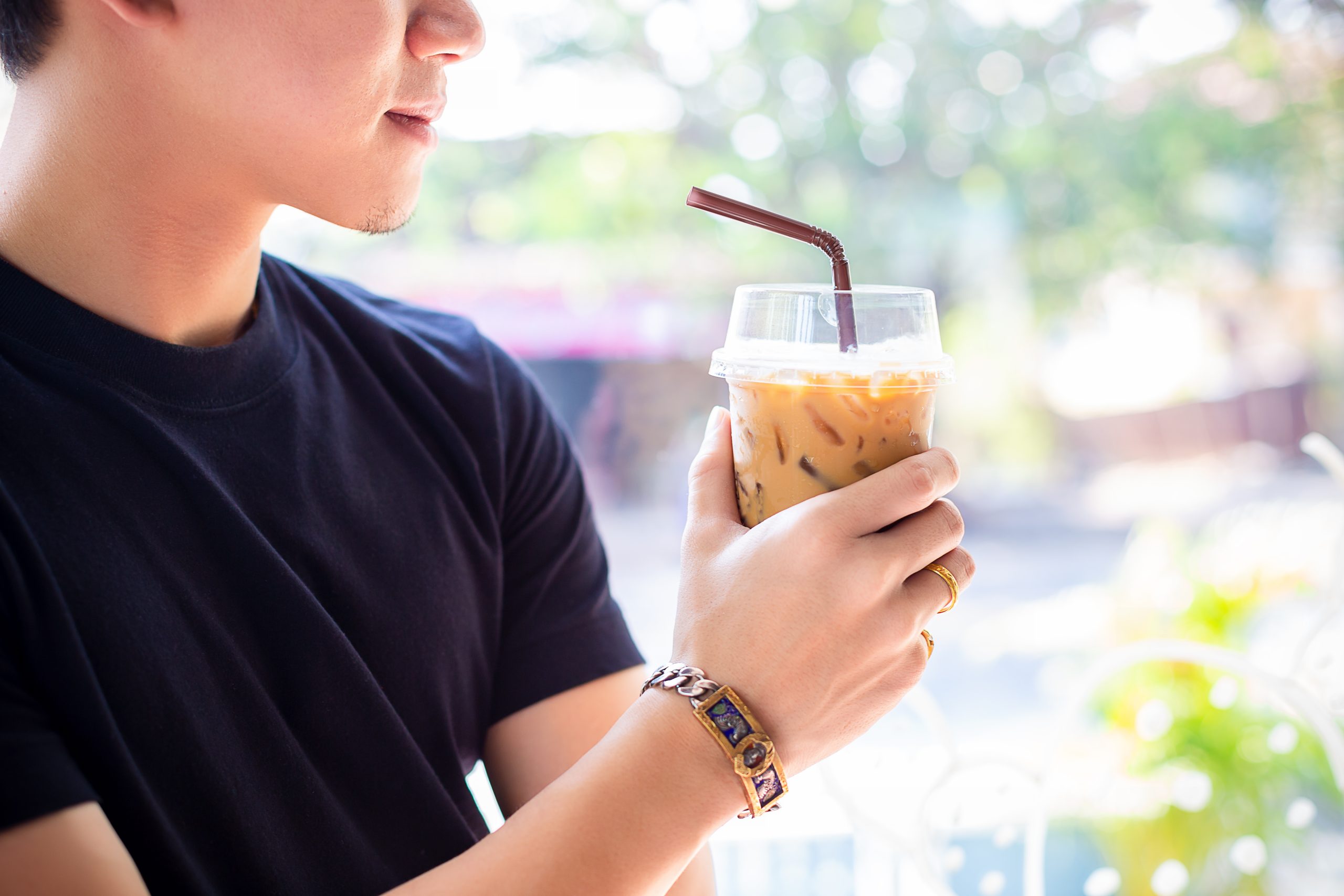
For millions of fans of trendy beverages, sipping bubble tea while chewing its chewy tapioca pearls is an almost instinctive ritual. Yet beneath that familiar experience, biochemical processes are quietly taking place in the oral cavity—and researchers at the Faculty of Dentistry, Universitas Gadjah Mada, wanted to find out exactly what happens.
Prof. Dr. drg. Juni Handajani, M.Kes., Ph.D., PBO, together with two students from the Dental Hygiene Study Program at FKG UGM, Dinda Kusumajati and Hania Fathiyah, designed an experimental study to measure the effects of bubble tea consumption on salivary α-amylase (SAA) and phosphate levels. The findings were published in the proceedings of BioMIC 2021 through the BIO Web of Conferences platform.
When Boba Becomes a Dual Stimulus
The question behind the study was simple, yet rarely asked: does chewing tapioca pearls in bubble tea produce a different effect on saliva compared with drinking regular tea alone?
To answer this question, the research team recruited 15 subjects aged 21–22 years, providing a total of 60 saliva samples. The study was carefully designed: during the first week, each subject consumed bubble tea with tapioca pearls for three days as the intervention group. The following week, they switched to tea without boba as the control. Saliva was collected every morning between 9:00 a.m. and 12:00 p.m., with each collection lasting one full minute, on the first day before treatment and the third day after treatment.
SAA levels were measured using an ELISA kit based on optical density at a wavelength of 405 nm, while phosphate levels were measured using a semiquantitative test kit. Statistical analyses were performed using ANOVA, the Kruskal-Wallis test, t-tests, and Pearson correlation, with a significance threshold of p < 0.05.
The results showed a meaningful difference. SAA levels after bubble tea consumption were significantly higher than those observed in the tea-without-boba group. Phosphate levels also increased in both groups, although the difference between the two groups did not reach statistical significance.
Two Stimulation Pathways, One Hard-Working Gland
Why did bubble tea appear to be more effective at increasing SAA? The answer lies in two stimulation mechanisms working simultaneously.
When a person chews soft, chewy tapioca pearls, mechanical stimulation occurs, activating the muscles involved in mastication and generating nerve impulses through parasympathetic pathways involving the glossopharyngeal (CN IX), facial (CN VII), vagal (CN X), and trigeminal (CN V) nerves. At the same time, the sweetness of the beverage provides chemical stimulation. Together, these two stimuli synergistically promote secretion by the parotid glands, which are responsible for approximately 80% of the body’s SAA production.
Tea without boba provides only chemical stimulation. Without the chewing component, mechanical impulses are not generated, and the parotid glands therefore operate at a lower level of stimulation.
This increase in SAA is not without consequences. The enzyme breaks down carbohydrates in bubble tea, potentially lowering salivary pH. This is where phosphate plays a role: phosphate ions function as one of saliva’s buffering systems, converting into HPO₄²⁻ and H₂PO₄⁻ as acidity increases, thereby helping stabilize the pH of the oral cavity.
“Consumption of bubble tea and tea without boba can increase salivary α-amylase (SAA) and phosphate levels. Chewing tapioca pearls in bubble tea can improve saliva quality through the salivary buffering mechanism.” — Prof. Dr. drg. Juni Handajani, M.Kes., Ph.D., PBO, et al., BioMIC 2021
The correlation between SAA and phosphate was statistically significant (p < 0.05), with an r value of 0.451, indicating a moderate correlation. This means that increases in SAA were accompanied by increases in phosphate, although the relationship was not perfectly linear.
Boba Is More Than Just a Trend: Clinical Questions Remain
The study did not stop at confirming that bubble tea increases SAA and phosphate levels. It also highlighted an important point that warrants attention.
The highest phosphate concentration measured after bubble tea consumption was 83.33 mg/L, equivalent to 0.877 mmol/L. This figure remains well below the standard reference for stimulated saliva, which is approximately 5.69 mmol/L. The researchers suspected that this limitation may have resulted from the conditions under which samples were collected independently by the subjects during the COVID-19 pandemic, without direct supervision by the research team.
The study also leaves an important question open: could regular bubble tea consumption play a role in phosphate transport through NPT2b, a sodium-dependent phosphate transporter located on the basolateral membrane of acinar cells? The answer awaits further research.
What has been established is that a beverage often regarded as little more than a treat for the taste buds can in fact interact with fundamental biological systems: the chemical balance of saliva, tooth enamel defense, and the risk of dental caries. For dental clinicians and oral health researchers, boba is no longer merely a trend—it is a variable worth considering.
Source DOI: https://doi.org/10.1051/bioconf/20214105001
Authors: Anny Anggraini; drg. Achmad Zam Zam Aghasy, M.Kes.
Photo: Freepik