
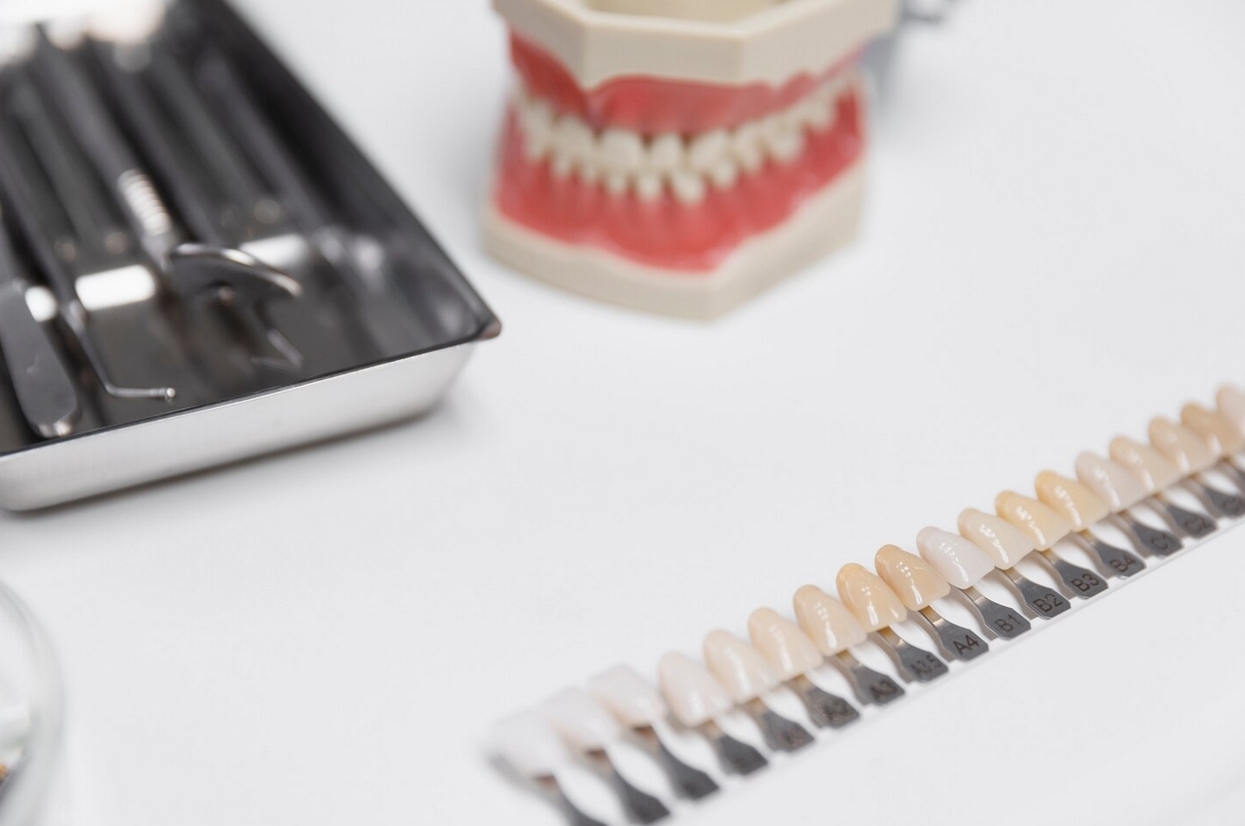
In dental restorations, especially crowns, aesthetics is one of the main factors besides strength, durability, and clinical fit. Traditional materials such as metal or porcelain-fused-to-metal (PFM) have aesthetic limitations: dark margins, visible metal reflections, and possible metal color influence on the porcelain layer. Therefore, new materials that can provide a balance between natural aesthetics and adequate mechanical properties are highly desirable.
One material that has received significant attention is zirconia. Research conducted by Nicholas (a student at FKG UGM), under the supervision of drg. Murti Indrastuti, M.Kes., Sp.Pros.(K) and Dr. drg. Sri Budi Barunawati, M.Kes., Sp.Pros(K), titled “Zirconia and Its Use in Prosthodontics,” shows that zirconia offers several advantages for fixed restorations, veneers, single crowns, bridges, abutments, and posts.
Common Types of Zirconia Used
The study describes several types of zirconia used in prosthodontics:
- Y-TZP (Yttrium Cation-Doped Tetragonal Zirconia Polycrystal) — zirconia stabilized with yttrium ions to maintain its strong tetragonal structure.
- Mg-PSZ (Magnesium Cation-Doped Partially Stabilized Zirconia) — partially stabilized with magnesium, providing modified mechanical properties.
- ZTA (Zirconia Toughened Alumina) — a composite of zirconia and alumina to enhance material toughness.
Aesthetic Advantages of Zirconia
Based on research:
- Natural color and appearance
Zirconia is considered more aesthetic than metal. Because it does not have a metal substructure beneath the porcelain (as in PFM), there is no metal color influencing the porcelain layer, resulting in a more tooth-like appearance. - Translucency capability
However, zirconia is not as translucent as glass-ceramic materials. In highly aesthetic anterior regions, glass-ceramics may still be superior in terms of light transmission and transparency. - Metal-like mechanical strength
Zirconia has mechanical properties similar to metal: high strength, resistance to masticatory loads, and resistance to fracture and wear. Thus, while aesthetics is a focus, zirconia also provides sufficient strength for clinical use.
Limitations and Considerations
Despite its advantages, the study also notes several limitations:
- Lower translucency compared to glass-ceramics → restorations may appear slightly “heavy” or less natural when used in anterior teeth, especially with thicker zirconia.
- Issued of low temperature degradation (LTD) — structural degradation due to moisture or low temperature that can affect long-term stability.
- Processing and finishing techniques are critical to achieve optimal aesthetics: from tooth preparation, crown design, coloring, glazing or polishing, to bonding with any substructure. (Although the study focuses more on general characteristics and applications rather than specific finishing line comparisons.)
Clinical Application: More Aesthetic Crowns
To maximize aesthetics when using zirconia crowns:
- Use higher-translucency zirconia variants for anterior or smile zone applications.
- Prepare crowns to allow sufficient thin porcelain/glass-ceramic layering for light transmission without over-preparation that weakens tooth structure.
- Adjust color with glazing or shading to match adjacent teeth.
- Ensure smooth final surfaces (polish/glaze) to avoid excessive reflection or a “plastic” appearance.
- Manage margins properly to avoid visible lines or discoloration at crown edges (although zirconia generally does not require metal substructures).
***
Zirconia is a restorative material that offers an attractive combination of natural-like aesthetics and high mechanical strength. Although it has some limitations, such as lower translucency compared to glass-ceramics and potential degradation under certain conditions, selecting the appropriate zirconia type and applying proper preparation and finishing techniques can maximize aesthetic outcomes.
In choosing more aesthetic crowns, zirconia has become a leading option compared to traditional metal and PFM, especially in areas where aesthetics are critical. However, for anterior applications, more translucent zirconia variants or combinations with glass-ceramics may be needed to achieve optimal visual results.
References
NICHOLAS, drg. Murti Indrastuti, M.Kes., Sp.Pros.(K), Dr. Dr. drg. Sri Budi Barunawati, M.Kes., Sp.Pros(K), Zirconia and Its Use in Prosthodontics, https://etd.repository.ugm.ac.id/penelitian/detail/204687
Author: Rizky B. Hendrawan | Photo: Freepik

